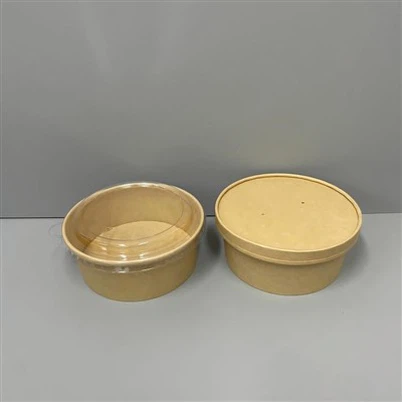
Consumer Report: What Material Secrets Do Disposable Soup Containers Hold?
Leave a message
Consumer Report: What Material Secrets Do Disposable Soup Containers Hold?
Ever wonder what your soup container is really made of? The material secrets of disposable packaging can surprise you. Understanding them is key to ensuring your meal is safe and delicious.
The material secrets of disposable soup containers involve understanding their capacity for safety, heat resistance, eco-friendliness, and impact on food quality. Key elements to decode are food-grade certifications, the container's ability to withstand hot liquids without leaking or harming the food, its environmental footprint (recyclability/degradability), and how material design affects freshness and taste preservation.

In my "20+ years of experience" at Amity Packaging, I've seen materials evolve dramatically. It is no longer just about basic paper. Jonh and I believe in empowering our clients with deep insights into products, materials, and processes. We know that the material secrets of a soup container are not just about cost; they are about safety, performance, and sustainability. Let's peel back the layers and discover what really goes into making a truly excellent disposable soup container, ensuring your peace of mind and your soup's quality.
Safety Certification: Are Food-Grade Labels Our First Line of Defense?
Are you unknowingly risking your customers' health? Uncertified containers can leach harmful substances into food. Discover why "food-grade labels" are non-negotiable.
Yes, food-grade labels are absolutely our first line of defense in ensuring the safety of disposable soup containers. These "safety certifications" confirm that the materials used are approved for direct contact with food, preventing harmful chemical transfer, protecting consumer health, and validating compliance with critical industry standards.

When "I think about food safety," my mind immediately goes to certifications. My "15 years in disposable packaging manufacturing" has taught me that a "food-grade label" is not just a sticker; it is a promise. It is the core of what we do at Amity Packaging. The question, "Safety Certification: Are Food-Grade Labels Our First Line of Defense?" gets a resounding "yes" from me. Jonh, with his deep understanding of raw materials, constantly emphasizes that we only use ingredients tested and approved. We ensure our materials meet strict quality controls to give our clients confidence. This is how we protect both the consumer and the brand.
The Critical Role of Food-Grade Labels in Consumer Health
"Safety Certification" through "Food-Grade Labels" is indeed the "first line of defense" for disposable soup containers. These labels represent rigorous testing and compliance with national and international health standards. They are critical for ensuring public trust and preventing the insidious pathway of harmful chemicals from packaging into food, especially when exposed to heat, which can accelerate chemical migration.
1. Verifying Material Safety and Non-Toxicity:
The most fundamental aspect of a food-grade label is its assurance that the container materials are non-toxic. This means the paper, coatings (like PE or PLA), adhesives, and inks used have been tested to ensure they do not contain heavy metals, phthalates, BPA, or other substances that could leach into food. For hot soup, this is particularly important because heat can increase the solubility of certain compounds. A container without this certification offers no guarantee against such contamination, potentially exposing consumers to substances that could cause anything from allergic reactions to long-term health issues. Our "strict quality control" process at Amity mandates that all our raw materials come with appropriate food-grade certifications, including those from FDA (U.S.) and EU food contact regulations.
2. Regulatory Compliance and Legal Protection:
Operating within the food service industry means adhering to stringent local and international regulations regarding food contact materials. Using certified food-grade packaging is not optional; it is a legal requirement in most markets. Suppliers and restaurants found using non-compliant packaging face hefty fines, product recalls, and severe damage to their reputation. "Food-Grade Labels" serve as official documentation of compliance, offering both legal protection and peace of mind. For our clients who engage in "international export & logistics support," we ensure that their packaging meets the specific food safety standards of their target countries. Jonh always reviews these regulations with our clients.
3. Building Consumer Trust and Brand Integrity:
In an era where consumers are increasingly health-conscious and informed, the presence of clear food-grade certifications builds immense trust. It signals that a brand prioritizes consumer well-being and adheres to ethical manufacturing practices. A brand that openly displays these labels on its products communicates transparency and responsibility. Conversely, a lack of such a label can raise suspicion and undermine consumer confidence. This translates directly to brand integrity and customer loyalty. Choosing certified materials is a core tenet of our mission to "deliver high-quality, eco-friendly, and safe paper packaging solutions."
| Certification Aspect | Why it's the "First Line of Defense" | Risk without Certification | Amity's Approach to Safety Certification |
|---|---|---|---|
| Material Toxicity | Prevents harmful chemical leaching | Chemical contamination, health risks | FDA/EU compliant materials, verified suppliers |
| Regulatory Adherence | Ensures legal operation and avoids penalties | Legal liabilities, brand damage | Constant monitoring of global food contact laws |
| Consumer Confidence | Builds trust, signals commitment to health | Loss of customer loyalty, negative publicity | Transparency, verifiable certifications for all products |
| Quality Assurance | Guarantees consistent, safe material composition | Inconsistent quality, unpredictable risks | Traceability, batch testing, supplier audits |
In conclusion, "Safety Certification" through distinct "Food-Grade Labels" is undeniably our "First Line of Defense." It is a fundamental benchmark that assures consumers their disposable soup container is safe. It protects both health and brand integrity.
Heat Resistance Testing: Is a Container's "Pressure Tolerance" Key to Leak and Burn Prevention?
Does your soup container sometimes buckle or leak under heat? This might be more than an inconvenience; it could be a safety risk. Discover why "pressure tolerance" is crucial.
Yes, a container's "pressure tolerance" is absolutely key to leak and burn prevention during "heat resistance testing." This quality ensures the container material and structure can withstand the internal pressure and thermal stress from hot soup. It maintains integrity, preventing leaks, warping, or weakening that could lead to spills and potential burns.

When we deal with hot soup, the container faces immense stress. "I've personally witnessed" containers fail dramatically due to poor heat resistance. This is why "Heat Resistance Testing" is such a critical step. My "20+ years of experience" in this industry has shown me that a container's "pressure tolerance" is not just a feature; it is about safety. Jonh, with his "Degree in Mechanical Engineering," leads our efforts in this area. At Amity Packaging, our "strict quality control" includes rigorous tests to ensure our containers handle extreme heat without compromise. This directly prevents leaks and burns, giving customers complete confidence.
Engineering for Thermal Stability and Structural Integrity
"Heat Resistance Testing" is paramount for disposable soup containers, revealing their "pressure tolerance." This quality is "key to leak and burn prevention" in the real-world scenario of holding hot liquids. The ability of a container's material and structure to withstand high temperatures without degradation or failure is directly linked to consumer safety and product performance.
1. Understanding Thermal Stress and Internal Pressure:
When hot soup fills a container, several forces come into play. The heat itself can soften paper fibers and coatings, reducing structural rigidity. Simultaneously, the hot liquid generates steam, creating internal pressure within the often-sealed environment. Without adequate "pressure tolerance," this combination of thermal stress and internal pressure can cause:
Material Softening and Warping: The container may lose its shape, leading to an uneven rim and a compromised lid seal.
Adhesive or Seam Failure: Heat can weaken the bonds along side seams and the base, turning robust connections into vulnerable leak points.
Lid Dislodgement or Deformation: A lid not designed to withstand internal pressure may pop off, or deform, leading to spills. Our "material & structure consultation" focuses heavily on selecting materials (like those with advanced PE or PLA coatings) specifically engineered to resist these thermal effects.
2. The Role of Material Composition and Layering:
The material secrets for high heat resistance lie in the container's composition and construction. For paper-based containers, this usually involves:
High-Density Paperboard: Thicker, stronger paper fibers provide a robust core that resists softening.
Multi-Layered Coatings: Specialized coatings, often multiple thin layers, create a more effective barrier against heat penetration and liquid absorption. These coatings must maintain their integrity at high temperatures.
Double-Wall Construction: This is a superior method where an air gap between two paperboard layers significantly reduces heat transfer, keeping the outer wall cooler and maintaining the soup's temperature. This structural design is crucial for handling hot liquids safely. Amity's "double-wall paper cups" are a direct result of this understanding.
3. Preventing Leaks and Burns:
The direct consequence of poor "pressure tolerance" is often leakage and the risk of burns.
Leak Prevention: A container designed for hot liquids must be completely liquid-tight. Any material or structural weakness under heat can lead to leaks, creating mess and potential injury.
Burn Prevention: Beyond containing the liquid, excellent heat resistance ensures the container's exterior remains safe to touch. This means preventing burns to customers or delivery personnel during handling. "Precise insulation" plays a vital part in this, allowing the golden temperature of the soup to be maintained internally while the container exterior remains cool enough.
| Heat Resistance Aspect | How it Relates to "Pressure Tolerance" | Risk Without Adequate Tolerance | Amity's Approach to Heat Resistance |
|---|---|---|---|
| Material Integrity | Withstands softening, maintains rigidity | Container collapse, warping | High-density paperboard, advanced coatings |
| Seam Strength | Adhesives and seams hold under heat and pressure | Leaks, catastrophic failure | Strong heat seals, robust adhesive application |
| Lid Performance | Stays secure, resists internal steam pressure | Lid pops off, spills, rapid heat loss | Precision lid fits, pressure-relief options |
| External Temperature | Outer surface remains temperate for handling | Burn hazard, uncomfortable to carry | "Double-wall paper cups," effective insulation |
By prioritizing "Heat Resistance Testing" and ensuring high "Pressure Tolerance," we guarantee containers not only contain soup but also proactively prevent leaks and burns. This is a fundamental aspect of safety and customer satisfaction that directly shapes a container's excellence.
Eco-Friendliness: Are Recyclability and Degradability the Green Choice Behind the Material?
Are your "disposable" containers creating endless waste? The environmental impact of packaging is undeniable. Discover how material choices can make your brand truly green.
Yes, "recyclability and degradability" embody the "green choice" behind disposable container materials. Opting for materials that can be efficiently recycled, composted, or biodegrade significantly reduces environmental impact, conserves resources, and moves toward a circular economy, aligning with eco-conscious brand values.

As a manufacturer, I feel a deep responsibility for our planet. My "20+ years of experience" has brought me face-to-face with the environmental impact of disposable products. This is why "Eco-Friendliness" is not just a trend for us; it is a core value. The question, "Eco-Friendliness: Are Recyclability and Degradability the Green Choice Behind the Material?" has driven much of our innovation. At Amity Packaging, our "Sustainability Commitment" means we constantly explore "renewable and biodegradable materials." We champion "PLA bio-based" coatings and "FSC-certified" paper because we believe the "green choice" is also the smart choice for the future.
Material Choices and Their Environmental Footprint
"Eco-Friendliness" is a defining quality for disposable soup containers, and "recyclability and degradability" are undeniably the "green choice behind the material." As consumers and businesses increasingly prioritize sustainability, the environmental footprint of packaging has become a critical consideration. Material choices directly impact resource consumption, pollution, and waste management strategies.
1. The Power of Recyclability:
Recyclability means that a used container can be collected, processed, and transformed into new products, reducing the need for virgin resources. For paper-based soup containers, effective recyclability depends on two main factors:
Paper Fiber Quality: The base paperboard must be made from fibers strong enough to be reprocessed multiple times.
Coating Compatibility: Traditional PE coatings can make paper cups difficult to recycle in standard paper recycling streams because the plastic needs to be separated from the paper. Innovative materials like certain types of PLA coatings or dispersion coatings are designed to be more compatible with existing paper recycling infrastructure. Choosing materials that are widely accepted in curbside recycling programs is key to ensuring that the container truly contributes to a circular economy. Our efforts include sourcing "renewable paper from responsibly managed forests" to start the cycle right.
2. The Promise of Degradability (Compostability/Biodegradability):
Degradability refers to a material's ability to break down naturally after disposal:
Compostability: Certified compostable materials (often including PLA and certain paperboards) are designed to break down into nutrient-rich humus, water, and CO2 in industrial composting facilities. This requires specific conditions of heat and moisture.
Biodegradability: While a broader term, it means breaking down into natural elements over time. For packaging, certifiable biodegradation usually refers to industrial composting. Choosing compostable materials is particularly beneficial where widespread composting infrastructure exists, offering an end-of-life solution that returns organic matter to the earth. Amity is a leader in this area, using "biodegradable coatings (PLA bio-based) instead of traditional plastic lining."
3. Reducing Environmental Impact and Supporting a Circular Economy:
The cumulative effect of choosing recyclable and degradable materials is profound:
Reduced Landfill Waste: Fewer containers end up in landfills, mitigating methane emissions and preserving land resources.
Conservation of Resources: Recycling saves trees, water, and energy compared to producing new materials from scratch.
Lower Carbon Footprint: Manufacturing recycled or bio-based materials generally consumes less energy and produces fewer greenhouse gas emissions.
Brand Alignment: Opting for green materials aligns a brand with consumer values for environmental responsibility, enhancing its image as a conscious and forward-thinking entity. This empowers us to partner with clients to "promote eco-friendly paper products."
| Eco-Friendly Aspect | How Material Choice Enables It | Environmental Impact Gained | Amity's Eco-Driven Mindset |
|---|---|---|---|
| Recyclability | Compatible coatings, high-quality fiber | Reduced virgin material use, energy saving | "FSC-certified" paper, recyclable coating options |
| Compostability | Bio-based polymers (PLA), certifiable breakdown | Diverts waste from landfill, creates compost | "PLA bio-based" coatings, compostable paper |
| Renewable Resources | Sourcing from managed forests, plant-based materials | Reduced reliance on fossil fuels, sustainable sourcing | "Sourcing renewable paper," bio-based materials |
| Waste Reduction | Efficient breakdown, reuse potential | Less landfill, lower pollution | Optimized production, waste reduction goals |
In summary, for "Eco-Friendliness," "REcyclability and Degradability" are the definitive "green choice behind the material" for disposable soup containers. These material secrets drive manufacturers towards sustainable practices. They provide consumers with environmentally responsible options. They ensure packaging supports a healthier planet.
Design Details: How Do Materials Impact Freshness and Taste Experience?
Does your soup lose its vibrancy in transit? The material of your container does more than hold liquid; it actively influences how your soup tastes and feels.
Materials directly impact soup freshness and taste experience through their barrier properties, preventing moisture loss or absorption. They also influence oxygen permeation, which can alter flavors, and thermal mass, which maintains optimal serving temperature. Selecting the right material density and coatings ensures the soup's intended flavor, texture, and aroma are preserved from kitchen to consumer.

The dining experience begins long before the first spoonful. It starts with the integrity of the food. "I often tell my clients" that the material choice is a silent partner in the kitchen. The question, "Design Details: How Do Materials Impact Freshness and Taste Experience?" is about maintaining the chef's vision. My "20+ years of industry expertise" confirms that materials are not neutral. Jonh's focus on "raw material selection" ensures that every container from Amity protects the nuances of flavor and texture. We know that the right material is key to preserving both "freshness and taste experience" for every delivered meal.
The Subtleties of Material Science in Flavor Preservation
"Design Details," particularly concerning material choices, profoundly "impact freshness and taste experience" in disposable soup containers. Beyond merely containing the liquid, the material acts as a microenvironment, influencing everything from the soup's temperature and texture to its aromatic compounds and susceptibility to external contaminants. These subtle material secrets are crucial for delivering a culinary experience that matches the chef's intent.
1. Barrier Properties Against Moisture and Oxygen:
The primary way materials impact taste and freshness is through their barrier properties.
Moisture Barrier: Hot soup generates steam, and external humidity can try to penetrate. The container's coating (e.g., PE or PLA) must effectively block both ingress and egress of moisture. If moisture escapes too quickly, soup can cool faster and dry out. If external moisture gets in, it can make crispy elements soggy. An effective barrier maintains the soup's intended consistency and heat.
Oxygen Barrier: While less critical for hot soup than for long-shelf-life products, oxygen permeation can still lead to oxidation of fats and flavor degradation, especially for delicate broths with oils or specific herbs. Materials with good oxygen barrier properties help retain the vibrant flavors and fresh aromas of the soup. Our "material & structure consultation" tailors specific coatings to address these nuanced requirements.
2. Thermal Mass and Insulation:
The material's thermal properties directly affect the soup's temperature trajectory. Materials with higher thermal mass and effective insulation (like those used in "double-wall" construction) ensure the soup:
Stays Hotter Longer: Preventing premature cooling means flavors do not become muted, and the soup is enjoyed at its intended "golden temperature."
Preserves Aroma: As discussed previously, heat retains volatile aromatic compounds. Effective insulation means these aromas are sealed in and released robustly upon opening, rather than dissipating prematurely. This enhances the overall sensory experience. Jonh's team constantly evaluates new materials for their insulating capabilities.
3. Preventing Odor and Flavor Transfer:
Low-quality materials can off-gas chemicals or plastics, directly tainting the soup's aroma and taste. Even subtle odors from recycled content or poorly cured inks can drastically reduce the enjoyment of a premium soup. "Pure materials," free from these issues, ensure that the container itself is completely neutral, allowing the soup's authentic flavors to dominate. This means the material does not impart any foreign taste or smell.
4. Structural Integrity and Texture Preservation:
The firmness and rigidity of the container's material protect the soup from external physical changes that impact taste. For instance, a container that collapses or deforms due to weak material can cause ingredients to mix prematurely or crush delicate garnishes. This directly affects the intended texture profile, which is a significant part of the taste experience. A robust material maintains the soup's structure and the integrity of individual ingredients.
| Material Impact Factor | How it Affects Soup Freshness/Taste | Consequences of Poor Material Choice | Amity's Material Solution |
|---|---|---|---|
| Moisture Barrier | Prevents water ingress/egress, maintains consistency | Soggy ingredients, dried-out soup | PE/PLA coatings, multi-layer structures |
| Oxygen Barrier | Limits oxidation, preserves delicate flavors | Stale/off-flavors, loss of vibrancy | Engineered coatings and film layers |
| Thermal Mass/Insulation | Maintains optimal eating temperature, preserves aroma | Lukewarm soup, muted flavors, weak aroma | Double-wall construction, insulated coatings |
| Odor Neutrality | Prevents chemical/paper smells from tainting soup | Unpleasant odors/tastes in soup | Virgin fiber, food-grade inks & adhesives |
| Structural Rigidity | Protects ingredients from crushing, prevents leaks | Premature mixing, compromised textures | High-quality paperboard, custom structures |
Understanding these "Design Details" and how materials "Impact Freshness and Taste Experience" transforms disposable soup containers from simple vessels into sophisticated tools for culinary preservation. By optimizing material secrets, Amity ensures every spoonful delivers the intended sensory delight.
Conclusion
Decoding material secrets of disposable soup containers reveals key qualities: "safety certification" is the primary defense, "heat resistance testing" ensures leak/burn prevention through "pressure tolerance," "recyclability and degradability" signify the green choice, and "design details" greatly "impact freshness and taste experience."