Liquid Logistics For Large Events: How Can You Serve 1,000 People's Beverage Needs Simultaneously Without Chaos?
Leave a message
"Liquid Logistics" for Large Events: How Can You Serve 1,000 People's Beverage Needs Simultaneously Without Chaos?
Imagine managing drinks for 1,000 thirsty guests all at once. The thought of spills, queues, and chaos can be overwhelming.
To serve 1,000 people simultaneously at a large event, "liquid logistics" needs careful planning. This means using standardized paper cups for efficient distribution, having clear safety protocols to prevent spills and burns, and establishing effective waste management. This ensures a smooth, quick, and hygienic beverage service for everyone.
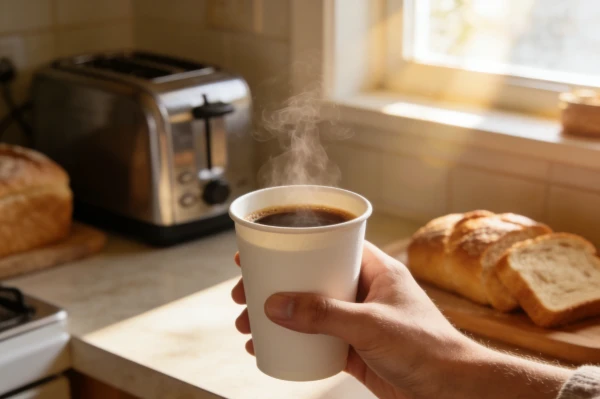
My 20+ years in the disposable paper packaging industry at Amity have shown me that serving drinks to large crowds is not just about the liquid itself. It is about "liquid logistics"-the art and science of getting beverages to many people quickly and safely. Jonh, my co-founder, and I have seen firsthand how the right packaging and planning can turn potential chaos into smooth operations. "Our mission: Empower everyone who uses paper cups and bowls to truly understand paper packaging," and this includes large-scale event management. Let us explore "How Can You Serve 1,000 People's Beverage Needs Simultaneously Without Chaos?"
Peak Flow Challenge: How Do You Go From Centralized Supply to Distributed Collection Seamlessly?
Are you worried about bottlenecks as hundreds of people rush for drinks? Moving liquid from one source to many hands is a big test.
Overcoming the "peak flow challenge" from centralized supply to distributed collection needs smart staging and clear pathways. You must set up multiple serving points, pre-portion drinks where possible, and use easy-to-handle disposable cups. This reduces wait times and moves people through quickly and without fuss.

Having worked in paper cup manufacturing for over two decades, I have seen many events. The "peak flow challenge" is always at the top of an organizer's mind. Jonh and I specialize in "tailor-made solutions" and often advise clients on how to manage this. "Our mission: Empower everyone who uses paper cups and bowls to truly understand paper packaging," and that includes understanding the flow of people and products. Let us dive deeper into "How Do You Go From Centralized Supply to Distributed Collection Seamlessly?"
Orchestrating High-Volume Drink Distribution
The "Peak Flow Challenge" at large events is a critical test of "liquid logistics." It means moving a large volume of beverages from a central point to hundreds or thousands of individuals simultaneously. This requires careful planning to avoid long queues, frustration, and potential spillage, going from a "centralized supply to distributed collection."
Firstly, Strategic Placement of Serving Stations. The most effective way to manage distributed collection is to create multiple "satellite" serving stations instead of one central point. Place these stations strategically around the event area, especially near high-traffic zones or where people gather. Each station should have well-defined entry and exit points to guide the flow of people. For very large events, Jonh often suggests color-coding or numbering stations to help attendees find their way back easily. This prevents crowding and reduces walking distances for guests.
Secondly, Pre-portioned and Ready-to-Serve Beverages. To speed up service at peak times, drinks should be as close to "ready-to-serve" as possible. This might mean pre-filling large beverage dispensers for self-service or pre-pouring non-carbonated drinks into paper cups just before the flow begins. For hot drinks, having pre-heated water or coffee in insulated containers at each station means staff only need to pour and hand over. This "assembly line" approach minimizes the time each person spends at the counter. Our advanced production lines ensure that paper cups are ready for these kinds of rapid fire operations.
Thirdly, Efficient Supply Chain to Each Station. The centralized supply, often a main storage area or a refrigerated truck, must efficiently resupply each satellite station without interruption. This means a dedicated team for replenishment, using trolleys or dollies to move bulk containers of drinks and fresh stacks of paper cups. This internal logistics chain should run parallel to the guest service, out of sight and without interfering with guest flow. This is where our "efficient production & delivery" ethos is critical, ensuring our clients have a steady supply of cups throughout the event.
| Stage of Flow | Key Strategy | Benefit | Amity Connection |
|---|---|---|---|
| Central Supply | Bulk storage, organized inventory | Ensures constant availability | "Mass production & packaging" support |
| Internal Transport | Dedicated replenishment teams, clear routes | Stations always stocked, no service delays | Our reliable supply chain |
| Serving Stations | Multiple points, clear entry/exit | Reduces queues, distributes crowd | Provide standardized cups for fast service |
| Portioning | Pre-fill or quick-pour methods | Speeds up individual transactions | Cups designed for various liquid volumes |
| Guest Flow | Clear signage, easy access to bins | Smooth movement, reduced congestion | Easy-to-handle, disposable cups |
Therefore, going from "centralized supply to distributed collection seamlessly" is a "peak flow challenge" that can be conquered with strategic station placement, pre-prepared beverages, and an efficient internal supply chain. This planning ensures beverages are always available, services are quick, and guests enjoy a smooth experience without chaos, all supported by the reliable and simple use of paper cups.
Standardized Units: Is the Assembly Line of Portioning, Transporting, and Distributing the Key?
Do you believe order and speed are impossible when serving thousands of people? The right approach makes all the difference.
Yes, using "standardized units" creates an "assembly line" for portioning, transporting, and distributing, which is key to success at large events. Paper cups of uniform sizes allow for consistent portion control, efficient stacking and packing for transport, and rapid, error-free handing out at serving stations, making the entire process streamlined and fast.

My years of observation, particularly in "mass production & packaging," have taught me the power of standardization. Jonh, with his "15 years in disposable packaging manufacturing," understands this at a deep level. "We deliver high-quality, eco-friendly, and safe paper packaging solutions tailored to customers' needs," making sure our products fit this "assembly line" logic perfectly. Let us see "Is the Assembly Line of Portioning, Transporting, and Distributing the Key?"
Precision and Speed Through Uniformity
The concept of "standardized units" transforming into an "assembly line of portioning, transporting, and distributing" is not merely efficient; it is the fundamental backbone for managing "liquid logistics" at large events. This uniformity creates predictable processes that allow for incredible speed and accuracy.
Firstly, Consistent Portioning. Standardized paper cup capacities (like 250ml, 350ml, 500ml) are crucial for portion control. Event organizers want to ensure fair service and manage inventory. When every cup is the same size, staff can quickly fill them to a consistent level, whether using automated dispensers or manual pouring. This reduces waste from over-serving and prevents customer complaints about under-serving. It also helps in budgeting and ordering, as the exact number of servings per bulk container is known. My team at Amity focuses on "tailor-made solutions" including precise volume controls.
Secondly, Efficient Transport and Storage. Paper cups are light, durable, and stack tightly. This makes them incredibly efficient for transport from our factory to the event, and then from the central supply area to individual serving stations. A stack of 100 cups takes up minimal space. This tight packing reduces storage requirements both before and during the event. It also speeds up restocking, as staff can grab a full sleeve of cups and quickly replace an empty one. Our "efficient production & delivery" relies on this inherent efficiency of the paper cup design.
Thirdly, Rapid Distribution and Error Reduction. At the point of service, standardized cups streamline operations. Staff do not need to identify different cup types or match lids to unusual sizes. Every lid for a 350ml cup fits every 350ml cup from that batch. This consistency dramatically speeds up service time per guest. It also reduces errors, like handing out the wrong size or spilling due to an ill-fitting lid. The simple act of grabbing a cup, filling it, and handing it over becomes a smooth, repetitive motion, enabling service to thousands without major hiccups.
| Aspect of Assembly Line | How Standardized Units Contribute | Benefit at Large Events | Amity's Contribution |
|---|---|---|---|
| Portioning | Uniform cup sizes, consistent fills | Accurate inventory, fair serving | Precise cup capacities, "strict quality control" |
| Transport | Stackable, lightweight design | Reduced space, easier logistics | Optimized packaging for bulk delivery |
| Storage | Compact sleeves, minimal footprint | Efficient pre-event and on-site storage | Products designed for space efficiency |
| Distribution (Service) | Universal fit for lids/cups | Fast, error-free hand-outs | Consistent product sizing, reliable materials |
| Overall | Predictable, repeatable actions | Higher throughput, less waste | "Mastering the Art of Disposable Paper Product Manufacturing" |
Therefore, implementing "standardized units" to create an "assembly line of portioning, transporting, and distributing" is absolutely critical for large event beverage service. This uniformity brings precision, speed, and efficiency to every stage, making it possible to provide rapid, high-quality service to thousands of people simultaneously without chaos.
Safety and Control: How Do You Prevent Spills, Burns, and Waste Pile-Ups Effectively?
Are you concerned about accidents at your event from hot drinks or overflowing bins? Safety is key, especially with big crowds.
To prevent spills, burns, and waste pile-ups effectively at large events, a proactive approach to "safety and control" is essential. This means using double-wall paper cups for hot drinks, promoting spill-resistant lids, and placing clearly marked, frequent recycling and waste bins accessible to all guests. This creates a safer, cleaner environment for everyone.

"Strict quality control" is one of Amity's "advantages." Jonh and I take safety very seriously because we know it reflects on the entire event. Preventing accidents is part of our commitment to "delivering high-quality, eco-friendly, and safe paper packaging solutions." We want guests to enjoy their time without worries. Let us investigate "How Do You Prevent Spills, Burns, and Waste Pile-Ups Effectively?"
Proactive Measures for a Safe Event Environment
Effective "safety and control" is non-negotiable for large events, where the risk of "spills, burns, and waste pile-ups" increases with crowd size. Disposable paper cups, when thoughtfully selected and managed, become integral to a proactive safety strategy.
Firstly, Mitigating Burn Risks with Proper Cup Selection. For hot beverages, single-wall paper cups can become too hot to handle directly. This creates a burn risk, especially in crowded areas where people might bump into each other. The solution is to use "double-wall paper cups" or paper cups with sleeves. These layers create an insulating air gap, making the cup comfortable to hold even with boiling liquids. This simple design feature drastically reduces the chance of burns and accidental drops. At Amity, we offer "disposable paper cups (hot & cold, double-wall, PE/PLA coated)" specifically for this reason, ensuring safety from the first sip.
Secondly, Preventing Spills with Secure Lids and Smart Service. Spills are messy, create slip hazards, and ruin the guest experience. Using well-fitting, splash-proof or sip-through lids with a tight seal is crucial, especially for moving crowds. Our lids are designed to provide a secure fit, minimizing leakage. Beyond packaging, event staff must be trained to fill cups to an appropriate level (not overflowing) and to hand them over steadily. Designated "no-spill" zones or surfaces for placing drinks can also help.
Thirdly, Managing Waste for a Clean and Safe Event. "Waste pile-ups" are not just unsightly; they can attract pests and create tripping hazards. An effective waste management plan includes:
Abundant, Accessible Bins: Place a sufficient number of clearly marked waste and recycling bins throughout the venue, especially near serving stations and high-traffic areas.
Clear Labeling: Ensure bins are clearly labeled for "Recyclables" (paper cups, lids, etc.) and "General Waste" to encourage proper sorting.
Frequent Collection: Have a dedicated team for waste collection, constantly emptying bins to prevent overflow. As part of our "sustainability commitment," we encourage clients to set up proper recycling infrastructure for our "renewable and biodegradable materials."
| Safety Challenge | Proactive Solution (using paper cups) | Benefit (Safety/Control) | Amity Product/Service |
|---|---|---|---|
| Burns from Hot Drinks | Double-wall cups or sleeves | Comfortable handling, reduced burn risk | "Double-wall" paper cups |
| Spills/Leaks | Secure, tight-fitting lids, proper filling | Dry surroundings, no slip hazards | High-quality "lids" |
| Waste Pile-Ups | Clearly marked, frequent bins, recyclable cups | Clean venue, less tripping risk | Compostable/Recyclable products, "material & structure consultation" |
| Service Accidents | Staff training, stable serving areas | Smooth, safe distribution | Easy-to-handle, stable cup designs |
Therefore, a strong focus on "safety and control" is vital for large events. By choosing appropriate paper cups like "double-wall" options, using well-fitting lids to prevent spills, and implementing a robust waste management system, organizers can effectively "prevent spills, burns, and waste pile-ups," creating a safe, clean, and enjoyable environment for all attendees.
Efficiency Evidence: What Are the Time and Cost Advantages Compared to Other Containers?
Do you ever wonder if using reusable cups at a big event is truly more efficient or cost-effective? The visible costs tell only part of the story.
Compared to other containers, disposable paper cups offer significant "efficiency evidence" in terms of time and cost advantages. They remove the need for washing, transporting returns, and potential breakage or loss of reusable items. This results in faster service, lower labor costs, reduced logistical complexities, and a consistent, hygienic solution crucial for large-scale events.

At Amity Packaging, we pride ourselves on "mastering the art of disposable paper product manufacturing." Jonh and I consistently evaluate the full picture for our clients, often helping them understand the hidden benefits of disposables. "Our mission: Empower everyone who uses paper cups and bowls to truly understand paper packaging," and that includes the economic logic. Let us break down "What Are the Time and Cost Advantages Compared to Other Containers?"
The Untapped Savings of Disposable Solutions
Seeking "efficiency evidence" by comparing disposable paper cups to reusable containers, especially for large events, reveals significant "time and cost advantages." While reusables might seem more eco-friendly at first glance, their logistical and operational burdens can far outweigh their perceived benefits in high-volume, short-burst service scenarios.
Firstly, Massive Time Savings in Service and Cleanup.
Service Speed: As discussed earlier, single-use cups enable an "assembly line" approach. There is no fumbling with different cup types or cleaning, which keeps queues moving quickly. This speed is invaluable at peak times, maximizing guest satisfaction.
Post-Event Cleanup: The biggest time saver for disposables is the elimination of washing. After an event, reusable cups need to be collected, transported to a washing facility, sorted, washed (using water, energy, and detergent), dried, inspected, and then stored. This entire process is labor-intensive and time-consuming. With disposable paper cups, staff simply collect them and place them into designated recycling or waste bins, significantly reducing post-event labor hours and allowing for quicker venue turnover.
Secondly, Substantial Cost Reductions in Labor and Logistics.
Labor Costs: The labor required for collecting, washing, and re-stocking reusable cups is a major, often underestimated, expense. Each hour saved on these tasks directly reduces operational costs for the event organizer. With "efficient production & delivery" and standardized products, disposables greatly cut down on this.
Logistics Costs: Returning reusable cups to a central washing facility involves transportation, which incurs fuel, vehicle maintenance, and driver wages. For large volumes, this can be significant. Then, the clean cups must be transported back to storage or to the next event. Disposables have a simpler, one-way logistics chain for the event itself, ending with waste management.
Breakage/Loss/Damage: Reusable items are subject to breakage, loss, or damage, requiring capital expenditure for replacement. Disposable cups, by definition, eliminate this ongoing cost.
Thirdly, Guaranteed Hygiene and Brand Consistency. Each guest receives a new, pristine paper cup, which offers "hygienic assurance" that is difficult to match with even the most diligently washed reusable. This also protects the brand's reputation for cleanliness and safety. Our "strict quality control" guarantees each cup is delivered ready for use without concern.
| Advantage Category | Disposable Paper Cups (Benefit) | Reusable Containers (Challenge/Cost) | Operational Impact at Events |
|---|---|---|---|
| Service Time | Rapid fill and hand-off | Slower (due to cleaning, varying sizes) | Reduced queues, increased guest satisfaction |
| Cleanup Time | Quick disposal into bins | Extensive collection, washing, drying | Faster venue turnover, lower labor |
| Labor Costs | Minimal for post-use handling | High for washing, sorting, inspection | Significant long-term savings |
| Logistics Costs | Simple one-way waste transport | Complex two-way transport for cleaning/return | Reduced carbon footprint, less operational overhead |
| Hygiene | Guaranteed fresh for each user | Requires thorough sanitation, perceived risk | Elevated safety, peace of mind for guests |
| Breakage/Loss | Not applicable | Ongoing replacement costs, inventory management | Predictable expenses, no capital risk for cups |
Therefore, the "efficiency evidence" overwhelmingly supports "time and cost advantages" of disposable paper cups compared to other containers for large events. By eradicating the need for washing, complex reverse logistics, and handling ongoing replacement costs, disposables streamline operations, reduce labor, and ensure consistent hygiene, making them the most practical and often the most economically sound choice for serving thousands simultaneously.
Conclusion
Mastering "liquid logistics" for large events demands smart choices. Using standardized paper cups overcomes "peak flow challenges," creates an "assembly line" for distribution, ensures "safety and control" from spills and burns, and offers clear "efficiency evidence" in time and cost.