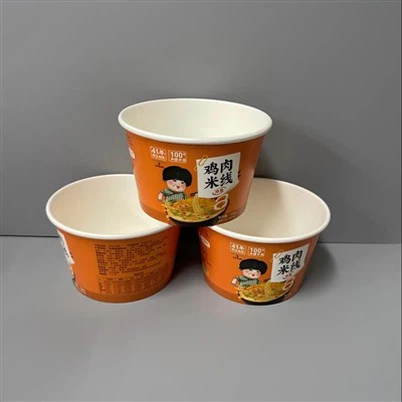
The Restaurant Owner's Soup Container Dilemma: The Triangular Trade-Off Between Cost, Experience, And Brand?
Leave a message
The Restaurant Owner's Soup Container Dilemma: The Triangular Trade-off Between Cost, Experience, and Brand?
Restaurant owners face tough choices daily. How do they balance budgets against customer smiles and brand image? The soup container reveals a complex trade-off that impacts everything.
Restaurant owners face a triangular dilemma when selecting soup containers: balancing visible costs with invisible risks, ensuring functional reliability for customer experience, and recognizing packaging's role as a silent brand spokesperson. An optimal solution requires contextual evaluation, considering specific business needs, target customers, and regulatory environments to find the right balance.

In my "20+ years of experience" at Amity Packaging, I've seen this dilemma play out countless times. I know the pressures restaurant owners face. My mission is to help them navigate these choices. The humble soup container is not just a vessel; it reflects strategic business decisions. It can make or break a customer's experience and a brand's reputation. Let's delve into this complex trade-off.
Cost: The Dilemma of Visible Costs vs. Invisible Risks?
Are you focused only on the sticker price of containers? Cheaper options can seem appealing. But what hidden costs and risks are you overlooking in the pursuit of savings? The true cost involves unforeseen damages and customer dissatisfaction.
For restaurant owners, the "visible costs" of soup containers, such as purchase price, often overshadow "invisible risks" like spills, customer dissatisfaction, and potential brand damage. Balancing this dilemma means understanding that a low immediate cost can lead to higher long-term expenses through reputation loss or operational disruptions, making the cheapest option often the most expensive.

Cost is often the first thing restaurant owners consider. It is a critical factor for any business's bottom line. However, focusing solely on the "visible costs" of paper soup containers, like the unit price, can be misleading. In my "15 years in disposable packaging manufacturing," I have guided many clients through this. Jonh and I understand that an initial low price can quickly escalate when considering "invisible risks." For example, a container made of thinner material might cost less upfront. Yet, if it leaks, the cost of a spilled meal, a refund, and a lost customer far outweighs the initial saving. Our "tailor-made solutions" consider both initial purchase prices and long-term value. We ensure safety and performance, which prevents these hidden costs.
Beyond the Unit Price
The "Dilemma of Visible Costs vs. Invisible Risks" for restaurant owners highlights a common pitfall: prioritizing immediate savings over potential long-term losses. While the unit price of a soup container is easy to quantify, the full cost impacts operational efficiency and customer loyalty.
1. Visible Costs: The Direct Outlay
Purchase Price: This is the most straightforward cost. It includes the per-unit price of the containers, lids, and any customization. Bulk orders often reduce this.
Storage and Logistics: Cost related to warehousing, inventory management, and delivery fees for the containers themselves are also visible.
2. Invisible Risks: Hidden Expenses and Opportunities
Product Failure:
Leaks and Spills: A container that leaks results in messy deliveries, ruined orders, customer complaints, and cleanup time. Each spill costs money in product replacement and labor.
Poor Insulation: Soup arriving cold reduces customer satisfaction. This might lead to bad reviews or lost repeat business, affecting future revenue.
Customer Dissatisfaction:
Negative Impact: A poor packaging experience (e.g., container collapsing, lid not sealing) directly impacts the customer's overall meal enjoyment. This leads to reduced repeat business and negative word-of-mouth.
Refunds and Compensation: Resolving complaints often involves offering refunds, discounts, or free meals, adding direct costs.
Operational Inefficiencies:
Extra Handling: Flimsy containers might require double bagging or extra care. This slows down service and increases labor costs.
Waste: Containers that are not easily recyclable or compostable can incur higher waste disposal fees in some regions.
Brand Damage:
Reputation Loss: A restaurant known for messy or unreliable packaging quickly loses trust. This is hard to rebuild. Our "strict quality control" aims to prevent this.
Lost Sales: A damaged brand reputation directly translates to fewer orders and lower sales over time.
| Cost Category | Examples of Visible Cost | Examples of Invisible Risk | Amity's Value Proposition |
|---|---|---|---|
| Direct Purchase | Unit price of container and lid | Spoilage, double bagging | Competitive pricing, durable products |
| Logistics | Shipping, storage for inventory | Increased labor for re-packaging | "Efficient Production & Delivery" |
| Product Failure | N/A | Refunds, lost food, cleaning, lost customer | Leak-proof designs, quality materials |
| Customer Experience | N/A | Negative reviews, decreased loyalty | Reliable performance, positive feedback |
| Brand Impact | N/A | Damaged reputation, lost sales | Consistent quality, brand protection |
By understanding the "Dilemma of Visible Costs vs. Invisible Risks," restaurant owners make informed choices. They know that investing in reliable, high-quality soup containers, like those from Amity, is not just an expense. It is a strategic decision that protects their profits and their brand.
Experience: Is Functional Reliability the Bottom Line for Your Customers?
Do you sometimes assume all packaging performs the same? Your customers often experience the difference, even if you do not. Is functional reliability truly the most important thing?
Functional reliability is indeed the bottom line for customer experience because a soup container must deliver on basic promises: no leaks, temperature retention, and ease of use. Failure in these aspects directly leads to dissatisfaction, regardless of the meal quality. Reliable packaging ensures the food arrives as intended, making it crucial for positive perception and repeat business.

For the customer, the "Experience" starts the moment they receive their order. It continues until their meal is finished. In my "20+ years of experience," I have learned that "Functional Reliability" is not just a nice-to-have; it is "the bottom line" for that positive experience. A delicious soup in a leaky container becomes a frustrating mess. A well-crafted meal that arrives cold is a disappointment. Jonh always emphasizes that our products must "enhance product performance." This means designing containers that maintain optimal food temperature, prevent spills, and are easy to handle. At Amity, we focus on material and structure to ensure that reliability.
The Critical Role of Performance in Customer Satisfaction
"Functional Reliability as the Bottom Line" emphasizes that a soup container's basic performance is paramount to customer satisfaction. A meal's quality is often overshadowed by packaging failures. Therefore, the container must consistently deliver on its core functions to ensure a positive customer experience.
1. Leak-Proof Assurance:
Preventing Messes: There is nothing more frustrating than a leaky container turning a meal into a disaster in transit. A secure, leak-proof seal is fundamental. It prevents spills in bags, on clothes, or in cars. This directly impacts the customer's mood and perception of the restaurant.
Maintaining Integrity: The lid must stay on and the container walls must hold up to the liquid. Our "strict quality control" includes testing for leak resistance, which customers directly benefit from.
2. Temperature Retention:
Serving as Intended: Soup is meant to be eaten hot. Reliable insulation ensures that the food arrives at an enjoyable temperature. This is crucial for soups, stews, and other hot liquids.
Material Selection: Double-wall paper cups or specific coatings (like PE/PLA liners) help maintain temperature more effectively than standard single-wall options. Jonh's "material & structure consultation" helps clients choose the best options for their needs.
3. Ease of Use and Handling:
Comfortable Grip: The container should be easy to hold, even when hot. Some designs offer textured surfaces or outer layers that prevent fingers from burning.
Simple Opening: Lids should be easy to remove without excessive force or risk of spilling hot contents.
Sturdy Construction: A container that buckles or collapses when handled is a major annoyance. It makes eating difficult and creates a perception of cheapness.
Microwaveability: For leftovers or meals meant to be reheated, microwave-safe containers add significant practical value.
| Performance Aspect | Customer Expectation | Impact of Failure | Amity's Contribution to Reliability |
|---|---|---|---|
| Leak-Proof Seal | No spills, clean transport | Messy food, ruined items, negative mood | Secure lid designs, quality seams and coatings |
| Heat Retention | Hot food stays hot until consumption | Cold food, dissatisfaction | Double-wall options, insulating materials |
| Structural Integrity | Container holds shape, easy to handle | Collapsing, difficult to eat from | Sturdy paper board, robust construction |
| Ease of Opening | Simple lid removal without struggle or spill | Frustration, potential burns | User-friendly lid designs |
| Material Safety | Food-safe, no strange taste/odor | Health concerns, unpleasant experience | Food-grade certified materials, no harmful chemicals |
"Functional Reliability" is the unwritten contract between a restaurant and its customer when it comes to takeout. By consistently delivering on these core aspects, restaurant owners build trust and ensure a positive "Experience," encouraging repeat business and strong customer loyalty.
Brand: Is Packaging as the Silent Brand Spokesperson for Your Business?
Do you see your packaging as just a necessary cost? Or do you recognize it as a powerful, silent marketing tool that speaks volumes about your brand's commitment?
Packaging acts as a silent brand spokesperson by communicating quality, care, and identity long after the food is consumed. It offers a tangible extension of the restaurant's values and aesthetic. High-quality, branded containers elevate perception, whereas generic or flimsy options cheapen the brand image, significantly influencing customer loyalty and recognition.

In my experience, "Packaging as the Silent Brand Spokesperson" is not just a marketing slogan; it is a profound truth. I have seen countless times how businesses leverage our "logo & printing customization" to tell their story. A well-designed, functional soup container reinforces a restaurant's identity. It acts as a mini-billboard in the customer's hands. Jonh and I believe packaging reflects your brand's commitment to quality. A flimsy, generic container suggests a lack of care, regardless of the food inside. But a sturdy, branded container tells a story of attention to detail and pride. This translates into stronger "brand value" and "customer recognition."
Packaging as a Brand Extension
"Packaging as the Silent Brand Spokesperson" underscores the critical role that soup containers play in shaping and reinforcing a restaurant's identity. It is often the first physical interaction a customer has with a brand's off-premise offering. This makes it a powerful, non-verbal communicator of quality, values, and aesthetic.
1. Visual Identity and Branding:
Logo and Colors: Custom printing allows restaurants to display their logo, brand colors, and unique designs. This reinforces brand recognition and creates a consistent visual identity even outside the restaurant walls. We offer "logo & printing customization" specifically for this.
Aesthetic Appeal: Attractive, well-designed packaging enhances the overall presentation of the food. It elevates the perceived value of the meal, making it feel more upscale or special.
2. Conveying Quality and Care:
Material Perception: The quality of the container material itself communicates a message. A sturdy, smooth, well-made container suggests that the food inside is also of high quality. Conversely, a flimsy, cheap-feeling container can undermine the perception of even the best food.
Attention to Detail: Thoughtful design, such as easy-to-open lids, good insulation, or eco-friendly material choice, shows that a brand cares about the customer's entire experience, not just the food itself. Our "strict quality control" ensures this.
3. Sustainability as a Brand Value:
Eco-Commitment: Choosing sustainable paper containers (e.g., "FSC-certified," "PLA bio-based") clearly signals a restaurant's commitment to environmental responsibility. This resonates with eco-conscious consumers and enhances the brand's ethical image. This is a core part of Amity's "Sustainability Commitment."
Storytelling: Packaging can be used to communicate a brand's sustainability story, its local sourcing, or its community involvement.
4. Enhancing the Customer Journey:
Memorability: Unique or high-quality packaging makes the takeout experience more memorable. This contributes to positive associations with the brand.
Social Sharing: Visually appealing or unique packaging is more likely to be shared on social media, providing free marketing and expanding brand reach.
| Brand Aspect | How Packaging Communicates | Impact on Restaurant's Brand | Amity's Contribution to Brand Building |
|---|---|---|---|
| Identity & Recognition | Custom printing of logo, colors, design | Builds strong brand recall, differentiation | "Logo & printing customization" |
| Quality Perception | Sturdy materials, thoughtful construction | Elevates perceived value of food/service | High-quality materials, robust designs |
| Values & Ethics | Choice of eco-friendly, sustainable materials | Attracts value-aligned customers | "Eco-friendly" materials, "sustainable approaches" |
| Customer Experience | Ease of use, premium feel, spill prevention | Fosters loyalty, positive word-of-mouth | "Functional reliability," "tailor-made solutions" |
By recognizing "Packaging as the Silent Brand Spokesperson," restaurant owners can use their soup containers as a powerful tool. It goes beyond serving food to communicating their brand's identity, quality, and values, ultimately building a stronger, more resonant business.
Dynamic Balance: No Standard Answer, Only Contextual Optimal Solutions?
Do you find yourself searching for a single, perfect container solution? The truth is more complex. Can there truly be a one-size-fits-all answer?
No, there is no standard answer, only contextual optimal solutions when balancing cost, experience, and brand for soup containers. Each restaurant's unique menu, target audience, budget, and operational model require a tailored approach. The optimal choice dynamically balances these factors, prioritizing different elements based on the specific business needs and market demands.

I have advised countless businesses, and one thing is always clear: "No Standard Answer, Only Contextual Optimal Solutions." My "20+ years of experience" has taught me that what works for a high-end bistro will not work for a casual food truck. Jonh and I built Amity on the principle of "tailor-made solutions." We do not offer a one-size-fits-all product. Instead, we dive deep into a client's specific needs-their menu, their target demographics, their budget, and their brand aspirations. This dynamic approach ensures that the chosen soup container truly supports their unique business goals, rather than just being an off-the-shelf compromise.
Tailoring the Solution to Specific Needs
The concept of "Dynamic Balance: No Standard Answer, Only Contextual Optimal Solutions" is fundamental to effective packaging decisions. It recognizes that the "triangular trade-off" between cost, experience, and brand is not static. It requires a nuanced understanding of a restaurant's specific context to find the best fit.
1. Menu Specifics and Food Type:
Liquid Viscosity: Does the restaurant serve thin broth, creamy chowder, or thick chili? Each requires different barrier properties and structural integrity. Thicker soups need less barrier protection from leakage.
Temperature Requirements: Is the soup extremely hot and needs maximum insulation? Or is it a cold soup needing lighter insulation? Amity offers "disposable paper cups (hot & cold, double-wall, PE/PLA coated)" to match.
Portion Sizes: Different portion sizes require varying container capacities and strengths.
2. Target Audience and Customer Expectations:
Demographics: Are customers students on a budget, busy professionals, or families seeking convenience? Each segment has different expectations regarding packaging quality and price sensitivity.
Delivery vs. Dine-in Takeout: Customers picking up food might accept simpler packaging than those having it delivered across town.
Eco-Consciousness: A target audience that values sustainability will respond better to "eco-friendly" packaging, even if it carries a slightly higher cost.
3. Budget Constraints and Business Model:
Operational Costs: A restaurant with tight margins might need to prioritize cost and seek the most efficient solution that still meets basic functional reliability.
Premium Offering: A higher-end restaurant can justify investing in premium materials, custom designs, and advanced features to maintain brand perception.
Business Volume: High-volume operations need readily available, cost-effective solutions that are easy to use. "Mass production & packaging" ensures this.
4. Regulatory Environment:
Plastic Bans: Compliance with local or regional plastic restrictions will dictate material choices. This pushes towards solutions like "PLA bio-based coatings."
Food Safety Standards: All choices must adhere to relevant food safety regulations.
| Contextual Factor | Influence on Trade-off | Example Prioritization | Amity's Customization Support |
|---|---|---|---|
| High-End Bistro | Prioritize Brand / Experience; Cost less sensitive | Premium design, advanced insulation | "Tailor-Made Solutions," high-quality printing |
| Food Truck | Prioritize Cost / Functional Reliability; Brand via menu | Durable, leak-proof, cost-effective | "Material & structure consultation" for budget-friendly strength |
| Delivery Service | Prioritize Experience / Functional Reliability; Brand via app | MAX insulation, spill-proof, microwaveable | "Double-wall," secure lids, specialized coatings |
| Eco-Cafe | Prioritize Brand (Sustainability) / Experience | Compostable, visually appealing | "Sourcing renewable paper," PLA liners |
Ultimately, for the "Restaurant Owner's Soup Container Dilemma," the "Dynamic Balance" means rejecting a "Standard Answer" for the search of a "Contextual Optimal Solution." Partnering with experts like Amity allows businesses to meticulously weigh their options. This ensures their packaging choice perfectly aligns with their unique objectives.
Conclusion
The restaurant owner's dilemma is a dynamic balance between cost, customer experience, and brand. There is no 'standard answer'; success comes from finding the optimal, contextual solution.