

What You Didn't Know About Paper Cups: Is It More Than Just Paper?
Leave a message
What You Didn't Know About Paper Cups: Is It More Than Just "Paper"?
Do you grab a paper cup for your coffee or water without a second thought? You might be surprised to learn that these everyday items are far more complex than their simple appearance suggests.
Paper cups are actually complex, multi-layered products, not just "paper." Their secrets include specialized PE coatings for waterproofing (which impacts recycling), various designs for hot or cold drinks, and an efficient conical shape for stacking and comfort, all contributing to their specific functionality.

For over "20+ years," I've been immersed in the world of "disposable paper product manufacturing" at Amity Packaging. My colleague Jonh, with his "Degree in Mechanical Engineering" and "15 years in disposable packaging manufacturing," and I have dedicated our careers to understanding these nuances. We believe in "Empowering everyone who uses paper cups and bowls to truly understand paper packaging." Let's dive in and uncover "What You Didn't Know About Paper Cups," because they are definitely "More Than Just 'Paper'."
The Secret to Waterproofing: Does The PE Coating Make Recycling Challenging?
Have you ever wondered how a paper cup can hold liquid without instantly dissolving? This magic comes from a secret ingredient, but it also brings a challenge.
Yes, a PE coating is the secret to waterproofing paper cups, forming an invisible barrier that prevents leaks. However, this plastic layer, while effective, makes traditional paper recycling challenging because the plastic must be separated from the paper fibers, requiring specialized facilities that are not yet universally available.

In my "20+ years of experience," the PE coating has been a constant talking point. At Amity Packaging, we understand it is crucial for product performance, but we also acknowledge its environmental implications. Jonh often discusses "the latest innovations in eco-friendly materials" with clients, guiding them on choices like PLA. Knowing "The Secret to Waterproofing" and its impact on "recycling" is key to making informed decisions when choosing paper cups.
The Dual Nature of PE Coating
The "PE Coating" (Polyethylene Coating) is indeed the core answer to a paper cup's waterproofing, but its very efficiency creates distinct challenges for recycling. Understanding this dual nature reveals why such a common item has complex environmental considerations.
Firstly, The Impermeable Barrier and Its Function. Paperboard is porous and absorbent by nature. To transform it into a functional container for liquids, particularly "disposable paper cups (hot & cold)," an internal barrier is essential. The PE coating is a thin layer (typically 15-20 micrometers) of plastic polymer applied to the inside surface of the cup. This layer creates a robust, watertight, and often grease-resistant barrier. It prevents the liquid from soaking into the paper fibers, which would otherwise cause the cup to become soggy, lose its structural integrity, and leak. This barrier is fundamental to the convenience and reliability consumers expect from a paper cup. My "20+ Years of Experience" has shown me this coating is non-negotiable for performance.
Secondly, The Recycling Challenge Posed by PE. While extremely effective as a barrier, the PE coating is also the primary reason traditional paper recycling facilities struggle with paper cups. These facilities are designed to pulp and re-process pure paper fibers. The integrated plastic layer acts as a contaminant, making it difficult and energy-intensive to separate the paper from the polyethylene. If not properly separated, the plastic compromises the quality of recycled paper pulp. This means PE-lined cups cannot typically be thrown into standard paper recycling bins alongside cardboard or newspapers. This challenge led to the industry term "make recycling challenging."
Finally, Solutions and Alternatives. To address the recycling challenge, two main pathways have emerged. One involves specialized recycling facilities, often called carton recycling plants, that have equipment specifically designed to separate the PE lining from the paper fibers. The paper can then be recycled, and sometimes the PE can also be recovered and re-purposed. The second, increasingly popular, solution is the use of alternative coatings, such as "PLA bio-based" (Polylactic Acid) linings, which are derived from renewable resources like corn starch. PLA-lined cups are designed to be industrially compostable, breaking down into natural elements in composting facilities. At Amity, we are committed to "Using biodegradable coatings (PLA bio-based) instead of traditional plastic lining" as part of our "Sustainability Commitment." Jonh, with his focus on "eco-friendly materials," often guides clients through these choices to find the best "Tailor-Made Solutions."
| Coating Type | Primary Benefit | Composition | Recycling / Disposal Pathway | Current Availability of Pathway |
|---|---|---|---|---|
| PE | Excellent waterproofing | Petroleum-based plastic | Specialized recycling facilities | Limited, not universal |
| PLA | Excellent waterproofing | Plant-based bio-plastic | Industrial composting facilities | Growing, but not universal |
| No Coating | Cost-effective | Pure paperboard | Standard paper recycling | Not suitable for liquids |
Therefore, the "PE Coating" is essential for waterproofing, but it makes "recycling challenging." This understanding encourages the development and adoption of specialized recycling, or environmentally friendlier alternatives like PLA, to ensure paper cups align with a true "Eco-Driven Mindset."
Types of Paper Cups: Are They All The Same?
Do you sometimes find yourself with a scalding-hot cup that's hard to hold, or a cold drink cup that quickly softens? This might make you think all paper cups are created equally, but that is not true.
No, all paper cups are not the same; they are specialized for different uses. Key distinctions include single-layer cups for cold beverages versus double-layer for insulation with hot drinks, specific coatings for cold or hot applications, and design choices like straight-wall for stability or conical for stacking.
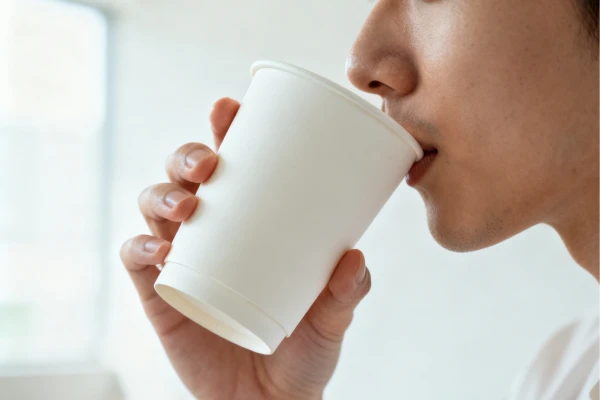
In my "20+ years of experience," helping clients choose the right cup for their specific needs is common. At Amity Packaging, our vast range of "disposable paper cups (hot & cold, double-wall, PE/PLA coated)" and "disposable paper bowls" shows that "Types of Paper Cups" are incredibly diverse. Jonh excels at "recommending the best material and structure based on client industry and usage scenarios." I can tell you that they are definitely not all the same, and understanding these differences is vital for optimal performance.
Customizing Cups for Optimal Performance
The assertion that "Types of Paper Cups" are varied and specialized is entirely accurate. The design and material choices for a paper cup are meticulously tailored to its intended use, ensuring optimal performance for either hot or cold beverages, and for different handling scenarios.
Firstly, Single-Layer vs. Double-Layer (Insulated) Cups. The most obvious distinction often lies in insulation. "Single-layer cups," as the name suggests, are made from a single sheet of paperboard. They are generally suitable for cold drinks or for hot beverages consumed quickly, as they offer limited insulation. Customers might find hot liquids uncomfortable to hold in a single-wall cup without a sleeve. In contrast, "double-layer (double-wall)" cups feature an outer insulating layer, usually with an air gap between the two walls, providing superior thermal protection. This design keeps hot drinks warmer for longer and makes the cup more comfortable to hold without needing extra sleeves. This is a crucial distinction for businesses serving hot beverages.
Secondly, Cold Drink Cups vs. Hot Drink Cups. The type of coating is another defining factor. Cold drink cups typically use a single PE coating on the inside to prevent condensation from softening the paper and causing leaks. For hot drink cups, a PE or PLA coating is applied to the inside, and sometimes also a thin layer on the outside, to provide resistance to moisture and heat, preventing the cup from becoming saturated or degrading when exposed to high temperatures. Additionally, the "Paper Weight" (GSM) of hot drink cups is often higher than cold drink cups to provide more rigidity and insulation. Jonh's "15 years in disposable packaging manufacturing" means he understands these material subtleties intimately, guiding clients on the proper "Material & structure consultation."
Finally, Straight-Wall Cups vs. Conical Cups. The structural shape also varies. "Conical cups," with their wider rim and narrower base, are exceptionally efficient for stacking, saving space in storage and transport, and often making them more comfortable to hold thanks to their ergonomic grip. This is a core "Basic Fun Fact: Why are most paper cups conical?" that we will explore further. "Straight-wall cups," on the other hand, have a more cylindrical shape. While they might be slightly less efficient for dense stacking, they offer a more traditional drinking experience and can sometimes be perceived as more stable due to their uniform diameter. Our "Tailor-Made Solutions" allow us to customize dimensions and structures to fit specific client needs, whether it is for "Disposable paper bowls" or specialized "Food takeaway paper boxes."
| Cup Type | Primary Use | Coating/Structure | Key Advantage | Common Scenarios |
|---|---|---|---|---|
| Single-Wall | Cold drinks, quick hot drinks | 1x PE/PLA internal coating | Cost-effective, simple design | Water coolers, soft drinks, espresso |
| Double-Wall | Hot drinks, soups | 1x PE/PLA internal, insulated air gap | Superior insulation, comfortable to hold | Coffee shops, hot soups, premium beverages |
| Cold Cup | Cold beverages | PE/PLA internal, often specific paper | Prevents condensation, keeps cold | Iced tea, soda, slushies |
| Hot Cup | Hot beverages | PE/PLA internal and/or external | Resists heat, maintains integrity | Coffee, tea, hot chocolate, soups |
Therefore, "Types of Paper Cups" are far from being "All The Same." Each design, from its layers to its coating and shape, is purposefully engineered to optimize the drinking experience for specific conditions, embodying a sophisticated understanding of material science and user needs.
Basic Fun Fact: Why Are Most Paper Cups Conical?
Have you ever noticed that most paper cups aren't perfectly straight-sided cylinders? Their distinct, tapered shape isn't just a design quirk but a very deliberate choice.
Most paper cups are conical for very practical reasons: this shape allows for incredibly dense stacking, which significantly saves space during storage and transportation. Additionally, the tapered design can feel more stable to hold, providing a more comfortable and secure grip for the user.

As a co-founder of Amity Packaging, I can tell you that practicality drives much of our design. Jonh, with his focus on "Efficient Production & Delivery," always points to the conical shape as a prime example of smart engineering. This "Basic Fun Fact" about why "most paper cups are conical" isn't trivial; it's a testament to how intelligent design optimizes everything from manufacturing to the end-user experience, reinforcing our commitment to "delivering solutions that enhance product performance and brand value."
The Ingenuity of the Conical Shape
The seemingly simple "conical" shape of most paper cups is a brilliant piece of industrial design, driven by a confluence of practical benefits that greatly improve efficiency, functionality, and user experience. It is much "More Than Just 'Paper'" in its thoughtful design.
Firstly, Exceptional Stackability and Space-Saving. The primary reason for the conical shape is its superior nesting capability. Because each cup gradually narrows towards its base, thousands of cups can fit snugly inside one another, forming tall, stable stacks. This dramatically reduces the volume required for packaging, storage, and shipping. For businesses, this means lower freight costs, less warehouse space needed, and fewer deliveries required. From an environmental perspective, it translates to fewer trucks on the road, reducing fuel consumption and carbon emissions, directly aligning with our "Eco-Driven Mindset" and "Optimizing production to reduce energy consumption and waste." This efficiency is a massive advantage in "International export & logistics support."
Secondly, Enhanced Comfort and Ergonomics. Beyond logistics, the conical shape often feels more ergonomic in the hand. The wider rim offers a comfortable drinking experience, while the tapering body naturally fits different hand sizes, providing a secure grip. This shape also inherently directs the liquid towards the mouth, minimizing spills. For hot drinks, the wide top allows steam to dissipate slightly, making the first sips less scalding. Jonh often brings up how "creative yet practical logo design ideas" can also leverage the conical shape for better visual impact.
Finally, Material Efficiency and Stability. While a straight-walled cylindrical cup might seem to use less material for the same volume, the conical shape is often more structurally stable when considering the forces it encounters during use. The narrower base, when sealed properly with our "Strict Quality Control," creates a strong foundation. Furthermore, the overall geometry contributes to the cup's rigidity, reducing the likelihood of it bending or buckling, even for "single-wall paper cups." This balance of material use and robust design is a key aspect of "Tailor-Made Solutions" we offer to our clients.
| Conical Shape Benefit | Impact on Production/Logistics | Impact on User Experience | Environmental Impact |
|---|---|---|---|
| High Stackability | Reduced shipping volume, lower costs | Easy dispensing, compact storage | Lower fuel consumption, carbon emissions |
| Ergonomic Grip | N/A | Comfortable to hold, secure feel | N/A |
| Stability | Reduces damage during transport | Less prone to tipping | Reduced waste from damaged cups |
| Material Efficiency | Optimized strength-to-material ratio | N/A | Conserves raw materials |
Therefore, the "conical" shape of paper cups is a clever design choice. It dramatically boosts efficiency, enhances user comfort, and contributes to the product's overall sustainability, truly making it a "Basic Fun Fact" that underscores intelligent engineering.
Conclusion
Paper cups are engineering marvels, waterproofed by PE coating (which complicates recycling), designed in various types for specific uses, and shaped conically for exceptional efficiency. They are truly more than just paper.


