

Are Paper Bowls A Robust Defense For Healthy Eating And Hygiene?
Leave a message
Are Paper Bowls a Robust Defense for Healthy Eating and Hygiene?
Worried about germs at mealtime? Concerned about what touches your food? Paper bowls offer a simple, powerful solution to truly achieve healthy eating and hygiene.
Paper bowls serve as a robust defense for healthy eating and hygiene by ensuring single-use, preventing cross-contamination, adhering to strict food-grade material standards, and eliminating the risks associated with residual damage or uncleanliness from reuse, thus providing a consistently safe and sanitary dining experience.
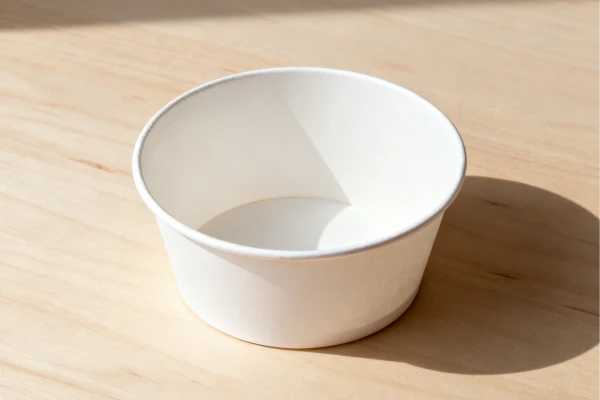
As someone deeply embedded in "Mastering the Art of Disposable Paper Product Manufacturing" for "20+ years," I've seen how essential confidence in food safety is. My colleague Jonh and I at Amity Packaging believe that understanding the hygiene benefits of paper bowls helps "Empower everyone who uses paper cups and bowls" to truly understand paper packaging. Let's delve into how these seemingly simple items become a "Robust Defense for Healthy Eating."
Does One Person, One Bowl Truly Prevent Cross-Contamination?
Are you wary of shared dishes or uncertain about cleanliness? The unique "one person, one bowl" approach offers a direct answer to food safety.
Yes, the principle of "One Person, One Bowl" effectively prevents cross-contamination by ensuring that each individual uses a fresh, untouched container. This single-use methodology eliminates shared surfaces, minimizing the transfer of germs and bacteria between users or from improperly cleaned reusable dinnerware, thereby safeguarding public health.
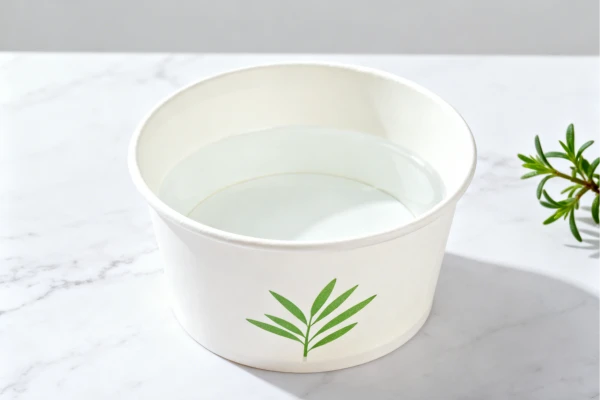
In my "20+ years of experience," I've witnessed the profound impact of this simple practice. At Amity Packaging, we understand that "One Person, One Bowl" is not just a convenience; it is a fundamental hygiene strategy. This approach directly answers a core public health concern, offering peace of mind to consumers and significantly reducing the risks of disease transmission.
The Protective Barrier of Individual Servings
The principle of "One Person, One Bowl" is a cornerstone of modern hygiene in food service, acting as a direct and effective measure to prevent cross-contamination. This simple concept delivers a powerful "Robust Defense for Healthy Eating" by creating a physical barrier against pathogen transfer.
Firstly, The Risks of Shared Surfaces. In traditional dining, especially in high-traffic environments like food courts, cafeterias, or public events, reusable dishes are cleaned and then put back into circulation. Even with proper washing, there's always a residual risk. Dishes might not be cleaned to the optimal standard every time, or they could become contaminated post-wash through handling, storage, or exposure to environmental factors. Communal serving dishes also present a risk, as multiple people use the same utensils or reach into the same container. This creates numerous opportunities for bacteria and viruses to spread from one person to another, turning a meal into a potential health hazard.
Secondly, The Single-Use Solution for Maximum Safety. Paper bowls circumvent these risks entirely. Each bowl is manufactured, packaged, and used only once by a single individual. This means that when you receive your meal in a paper bowl, it's a fresh, untouched container, completely isolated from previous users or uncertain cleaning practices. There are no shared surfaces during consumption, and once the meal is finished, the bowl is discarded. This dramatically reduces the pathways for cross-contamination, offering a level of hygienic control that is difficult to achieve with reusable alternatives. Our "Strict Quality Control" protocols ensure our bowls meet these expectations.
Finally, Meeting Post-Pandemic Demands and Consumer Confidence. The recent global health crisis significantly heightened public awareness of germ transmission and the importance of hygiene. In this "post-pandemic shift," single-use items like paper bowls moved from being merely convenient to fundamentally essential. They symbolize a commitment to safety and cleanliness, providing consumers with "immediate peace of mind." Restaurants and food vendors adopting the "One Person, One Bowl" strategy actively reassure their customers, demonstrating a tangible effort to protect public health. This practice empowers consumers to eat more safely and confidently, knowing that their food environment is optimized for their well-being.
| Cause of Contamination | Traditional Solution | Paper Bowl Solution | Hygiene Benefit |
|---|---|---|---|
| Shared Utensils | Multiple hands, potential germs | Disposable or individual serving | Eliminates direct contact, reduces germ spread |
| Improper Washing | Residual bacteria on reusables | Fresh, untouched container | Guaranteed clean surface each time |
| Environmental Exposure | Dust, airborne pathogens on stored dishes | Clean until opened by user | Minimizes exposure to external contaminants |
| Human Handling | Cross-contact during service | Single person's touch | Reduces transfer points, enhances personal hygiene |
Therefore, by embracing the "One Person, One Bowl" model, we effectively create a robust defense that actively "Prevents Cross-Contamination." It's a clear, simple, and highly effective way to ensure healthier eating habits in our everyday lives.
Do Food-Grade Standards Offer True Assurance in Materials?
When your food touches a paper bowl, are you truly confident in the container's safety? Does adhering to "Food-Grade Standards" provide genuine "Assurance in Materials," or is it merely a manufacturing formality?
Yes, adhering to "Food-Grade Standards" offers true "Assurance in Materials," meaning the paper bowls are rigorously tested and certified to be safe for direct food contact. These standards guarantee the materials will not leach harmful chemicals into food, altering its taste or posing health risks, thus providing a trustworthy and safe container for healthy eating.
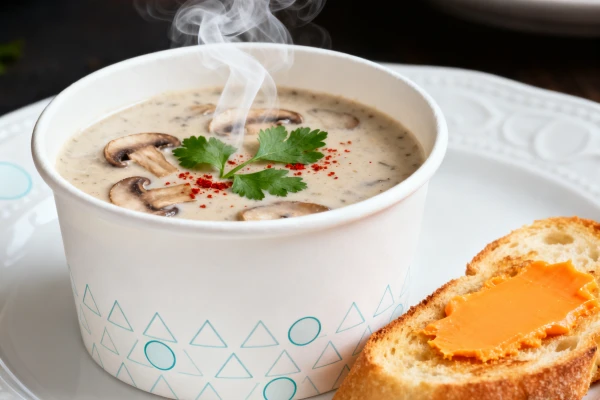
My commitment, as well as Jonh's, to "high-quality, eco-friendly, and safe paper packaging solutions" means that "Food-Grade Standards" are not just a formality; they are the bedrock of what we do at Amity Packaging. With "20+ years of experience," I understand that this provides genuine "Assurance in Materials," offering our customers complete peace of mind.
The Science Behind Safe Food Contact
The commitment to "Food-Grade Standards" is far more than a formality; it is a critical scientific and regulatory benchmark that provides genuine "Assurance in Materials" for paper bowls. This adherence ensures that the packaging directly in contact with your food is inert, non-toxic, and maintains the integrity of your meal.
Firstly, Defining Food-Grade Materials for Packaging. A "food-grade" material signifies that the material is deemed safe for human consumption or for contact with food. This means it will not transfer harmful substances into the food, whether at ambient, heated, or chilled temperatures. For paper bowls, this applies not only to the paperboard itself but also to any coatings (like PE or PLA), inks used for printing, and adhesives for sealing seams. These components must pass specific chemical analyses to confirm they are free from heavy metals, specific migrating substances, and other contaminants that could leach into food and pose health risks. This meticulous "material & structure consultation" is what we offer at Amity to all our clients.
Secondly, Regulatory Oversight and Certifications. The assurance provided by "Food-Grade Standards" comes from rigorous regulatory oversight. Bodies like the FDA (U.S. Food and Drug Administration) or the EU's Food Contact Materials Regulation establish strict guidelines for acceptable substances and permissible migration limits. Manufacturers must obtain certifications (e.g., ISO 22000, BRCGS Packaging Materials) that prove their materials and manufacturing processes comply with these international standards. These certifications involve regular audits and testing, acting as a non-negotiable safety net for consumers. Jonh, with his "15 years in disposable packaging manufacturing," continually monitors these global requirements to ensure our products meet or exceed expectations.
Finally, The Impact on Consumer Health and Product Integrity. The benefit of these standards directly translates to consumer health. When you use a food-grade paper bowl, you can be confident that the container itself won't compromise the safety or quality of your meal. There's no risk of unpleasant chemical tastes, odors, or the ingestion of toxins. This ensures that the food remains as intended, promoting genuinely healthy eating. Beyond safety, these materials are also often designed to withstand various food types and temperatures without degrading, maintaining physical integrity and preventing leaks, further enhancing the dining experience.
| Aspect of Food-Grade | What it Guarantees | Benefit for Healthy Eating | Risk without Standards |
|---|---|---|---|
| Material Composition | Free from harmful chemicals, heavy metals | No leaching into food | Chemical contamination, altered food taste |
| Non-Toxicity | Safe for direct ingestion if small particles present | No toxic effects if consumed inadvertently | Potential health hazards |
| Stability | Maintains integrity at various temperatures | Prevents leakage, preserves food quality | Bowl degradation, food spoilage |
| Regulatory Compliance | Meets national/international safety laws | Legal assurance of safety | Illegal products, consumer risk |
Thus, embracing "Food-Grade Standards" is not just a label; it delivers genuine "Assurance in Materials" for paper bowls. It's a comprehensive system of testing, regulation, and certification that rigorously defends your healthy eating by ensuring your food containers are consistently safe and pure.
Does "No Damage from Reuse" Really Enhance Hygiene?
You might think reusing paper bowls is eco-friendly or cost-effective. But does attempting to do so actually undermine hygiene, proving that "No Damage from Reuse" truly highlights their sanitary advantage?
Yes, "No Damage from Reuse" significantly enhances hygiene, as paper bowls are specifically designed for single-use. Reusing them can lead to structural damage, breakdown of protective linings, and accumulation of bacteria in unseen crevices, making them difficult to sanitize effectively and therefore compromising the essential hygiene benefits they offer.

At Amity Packaging, we operate with an "Eco-Driven Mindset," but we also firmly believe in the critical importance of hygiene. With "20+ years of experience," I can tell you that attempting to reuse packaging designed for single-use almost always leads to a compromise in safety. Jonh and I know that "No Damage from Reuse" is not just a slogan; it highlights a crucial characteristic that inherently "enhances hygiene."
Why Single-Use Protects Best
The phrase "No Damage from Reuse" underscores a fundamental hygiene advantage of paper bowls: they are engineered for a single, pristine use. Attempting to force multiple uses out of a single-use item inevitably leads to compromised structural integrity and, more critically, a significant decline in hygiene.
Firstly, The Fragility of Single-Use Material Post-Wash. Paper bowls are typically made from cellulose fibers coated with a barrier layer (PE, PLA, wax) for water and grease resistance. While these coatings perform excellently for their intended single use, they are not designed to withstand washing. The act of washing, especially with detergents and scrubbing, can easily compromise and damage this protective lining. Once the coating is breached or even slightly abraded, the absorbent paper fibers beneath become exposed to moisture. This leads to the paper becoming soggy, weak, and ultimately, unsanitary. It provides countless micro-crevices and porous surfaces where bacteria can thrive, making it impossible to effectively sanitize for subsequent food contact.
Secondly, The Impossibility of Effective Sanitization in a Home Setting. Unlike ceramic or glass, which can undergo high-temperature washing or industrial sterilization, paper bowls cannot be effectively sanitized after use. Warm water washing only softens the paper and embeds food particles deeply into its structure. Drying imperfectly leaves moisture, an ideal breeding ground for bacteria, mold, and other microorganisms. These invisible threats accumulate, making each subsequent reuse a greater health risk. This is why our "full-process inspections" are so important; they ensure the product leaves our facility pristine, a state that's impossible to maintain through home reuse.
Finally, Compromised Structural Integrity and Leaking Risks. Beyond hygiene, reusing paper bowls also compromises their primary function: containment. Repeated exposure to moisture and stress from handling weakens the bowl's structure, seams, and base. This makes it highly susceptible to tearing, softening, and leaking, turning mealtime into a messy and frustrating experience. While an "Eco-Driven Mindset" is good, using a paper bowl once and then disposing of it properly (e.g., recycling where facilities exist, or composting PLA-lined bowls) is the most hygenic and often the most environmentally responsible option for its intended purpose. It avoids the health risks and material degradation that "Damage from Reuse" invariably brings.
| Issue from Reuse | Why it Happens to Paper Bowls | Hygiene/Safety Risk | How Single-Use Prevents It |
|---|---|---|---|
| Lining Breakdown | Washing or scrubbing damages protective PE/PLA coating | Allows food/liquid to penetrate paper, fostering bacteria | Lining remains intact for intended single use, providing barrier |
| Bacterial Growth | Porous paper absorbs food residues and moisture, hard to fully dry | Breeding ground for pathogens, cannot be sterilized | Discarded after one use, no chance for accumulation |
| Structural Weakness | Paper softens, glues/seals weaken from moisture/stress | Leaks, tears, spills, potential burns | Engineered to hold contents reliably for single use |
| Unseen Contamination | Microscopic food particles trapped in fibers, impossible to clean fully | Cumulative health risk from invisible germs | Each bowl is fresh, sterile, and free from past contaminants |
In essence, the very design of paper bowls for single-use ensures their hygienic performance. The concept of "No Damage from Reuse" fundamentally highlights that attempting otherwise leads directly to compromised cleanliness and increased health risks.
Conclusion
Paper bowls offer a robust defense for healthy eating by preventing cross-contamination through single-use, guaranteeing safety via food-grade materials, and enhancing hygiene by precluding damage from reuse.


