

Disposable Soup Containers: The Convenience We Rely On And Its Practical Value?
Leave a message
Disposable Soup Containers: The Convenience We Rely On and Its Practical Value?
We all crave convenience in our busy lives, but do you ever stop to think about the unsung hero that makes our on-the-go meals possible? Disposable soup containers offer significant practical value, despite common misconceptions.
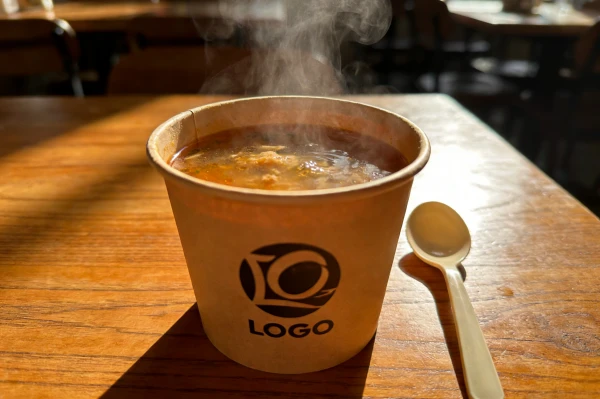
Disposable soup containers provide essential convenience for modern lifestyles, ensuring spill-free, hygienic transport of hot foods for consumers and efficient service for businesses. They simplify meal preparation, reduce cleanup, and prevent cross-contamination, offering practical benefits that support public health and daily routines.
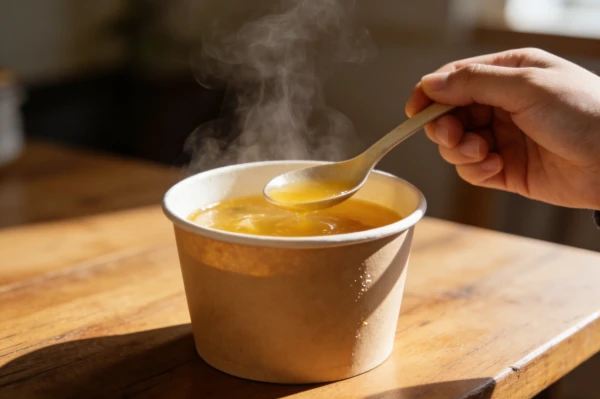
At Amity Packaging, with my "20+ years of experience," I have seen how integral disposable packaging has become to our daily routines. My "mission" is to "empower everyone who uses paper cups and bowls" to truly understand the benefits and thoughtful engineering behind these products. Jonh and I started Amity because we believed in the practical value of these items. From busy professionals grabbing lunch to restaurants offering takeout, these containers are silent workhorses that make modern life run a little smoother. Let's look closer at why they are so valuable.
Unparalleled Convenience and Public Health Assurance?
Do you sometimes skip meals because you are too busy for proper sit-down dining or cleanup? Our fast-paced lives demand solutions, but can these solutions also guarantee our health?
Disposable soup containers offer unparalleled convenience by enabling on-the-go consumption and eliminating cleanup, perfectly suiting busy lifestyles. They also provide crucial public health assurance by preventing cross-contamination from reusable dishware in high-volume food service, ensuring hygienic food delivery and consumption with every use.
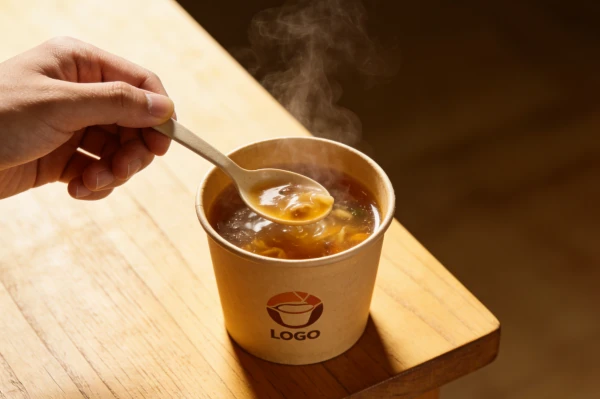
"Unparalleled Convenience and Public Health Assurance?" This is a key benefit I often highlight to my clients. Jonh and I, from our founding days, recognized that disposable packaging solves real-world problems. In my "15 years in disposable packaging manufacturing," I have seen firsthand how these containers make daily life easier while upholding strict health standards. Our "strict quality control" and "full-process inspections" at Amity are not just about product performance; they are about ensuring safety and peace of mind for both businesses and their customers.
Enabling Modern Lifestyles and Guarding Wellness
The dual benefit of "Unparalleled Convenience" and "Public Health Assurance" is fundamental to the practical value of disposable soup containers. These containers are not simply about ease; they are about maintaining a standard of living that demands both speed and safety, especially in high-volume food service.
1. Convenience as a Pillar of Modern Living:
Mobility and Flexibility: Disposable soup containers free consumers from the need to carry their own reusable containers or to eat at a fixed location. Whether commuting, working at a desk, or enjoying a meal outdoors, these containers make hot food accessible anywhere. This directly addresses the demands of our time-constrained, mobile society.
Elimination of Cleanup: For both consumers and food establishments, the "disposable" aspect means no washing, sanitizing, or storing of used dishes. This saves significant time, water, and energy, redirecting resources toward core business functions or personal activities. Jonh often emphasizes how this efficiency translates into greater operational flexibility for our clients.
Portion Control and Packaging Efficiency: These containers come in standardized sizes, making portion control easy for businesses and reducing food waste. Their lightweight and stackable design simplifies logistics, inventory management, and curbside pickup or delivery, further boosting convenience for service providers.
2. Public Health Assurance as a Non-Negotiable:
Prevention of Cross-Contamination: In food service, especially with thousands of customers daily, ensuring every reusable dish is perfectly sanitized is a colossal challenge. Disposable containers guarantee a fresh, uncontaminated vessel for each meal, drastically reducing the risk of bacterial transmission and foodborne illnesses. This aligns with Amity's focus on "safe paper packaging solutions."
Hygiene for Takeout and Delivery: As takeout and delivery services boom, disposable containers ensure that food prepared in a certified kitchen remains safe and untouched until it reaches the end-user. The sealed nature of soup containers specifically protects against external contaminants during transit.
Compliance with Health Regulations: Many health departments have stringent rules regarding food handling and dishwashing practices. Disposable options simplify compliance, offering a straightforward path to meeting public health standards without the complexities of industrial dishwashing systems.
| Feature | Convenience Aspect | Public Health Aspect | Amity's Contribution |
|---|---|---|---|
| Single-Use Nature | No cleanup, grab-and-go | Eliminates dishware cross-contamination | "Strict Quality Control," "safe paper packaging" |
| Sealed Lids | Spill-free transport | Protects food from external contaminants | "Tailor-Made Solutions" for secure fit |
| Standardized Sizes | Easy portioning, quick service | Consistent hygiene in food delivery | "Mass production" with quality assurance |
| Insulated Options | Keeps food hot longer | Prevents rapid bacterial growth in temperate food | Special materials/structures for food safety |
By delivering both "Unparalleled Convenience" and "Public Health Assurance," disposable soup containers support the modern way of life. They enable quick, safe meal options at scale, safeguarding consumer well-being while streamlining food service operations.
The Inclusive Services Driven by Low Economic Cost?
Are you a small business owner worried about high operational costs, or a consumer seeking affordable meal options? How can packaging help keep services accessible to everyone?
Disposable soup containers drive inclusive services by offering a low economic cost, making takeout and delivery viable for businesses of all sizes. Their affordability reduces overhead for food establishments, which can then pass on savings to customers. This keeps convenient, hot meal options accessible and budget-friendly for a wider demographic, expanding food service reach.
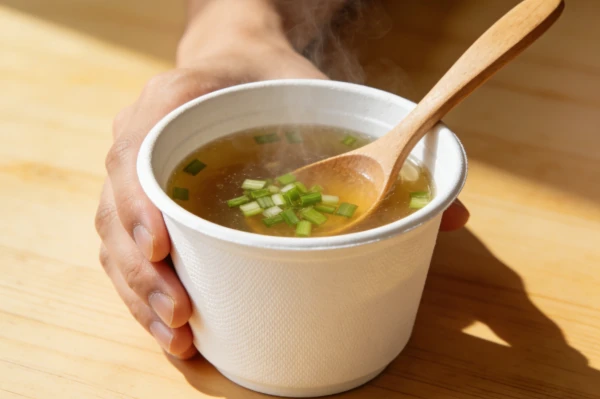
"The Inclusive Services Driven by Low Economic Cost?" This is a topic I feel strongly about. My journey, alongside Jonh, in founding Amity Packaging was partly about making quality packaging accessible. We wanted to empower "newcomers and industry veterans" alike. In my observations, especially in bustling markets, the affordability of disposable containers allows small food stalls and startups to compete with larger chains by keeping their overhead low. This directly benefits consumers, as restaurants can offer more budget-friendly options, expanding access to prepared meals for a wider range of people. It is a win-win enabled by efficient manufacturing and smart material choices.
Democratizing Food Service Through Affordability
The "Inclusive Services Driven by Low Economic Cost" is a powerful, yet often overlooked, benefit of disposable soup containers. Their affordability is not just a business metric; it directly impacts market accessibility, enabling a broader range of entrepreneurs to enter the food service industry and making prepared meals available to a more diverse customer base.
1. Reduced Operational Overhead for Businesses:
Lower Capital Investment: For new businesses or those expanding into takeout, investing in a full dishwashing setup, including industrial dishwashers, detergents, and water heaters, represents a significant upfront cost. Disposable containers eliminate this barrier, allowing businesses to allocate capital to food preparation, marketing, or staffing.
Minimized Labor Costs: The absence of dishwashing duties reduces labor hours, which is a major expense for any food establishment. Staff can focus on food quality, customer service, or other revenue-generating tasks. Our "efficient production & delivery" aims to support this cost-efficiency for our clients.
Simplified Inventory and Utilities: Reusable dishware requires ongoing inventory counts, breakage replacement, and utility expenses for water and electricity. Disposable containers, while requiring purchase, offer predictable costs without the variables of ongoing maintenance and utility fluctuations.
2. Expanded Market Reach and Customer Accessibility:
Affordable Price Points for Consumers: When a restaurant's operational costs are lower, they can often offer their menu items at more competitive prices. This makes convenient, prepared hot meals accessible to a wider demographic, including students, lower-income families, or those simply on a budget.
Enabling Pop-ups and Food Trucks: The low cost and minimal infrastructure required for disposable packaging make it ideal for pop-up restaurants, food trucks, and temporary events. These businesses can bring unique culinary experiences to diverse locations without the burden of traditional restaurant overheads, fostering culinary innovation across communities.
Crisis and Emergency Relief: In times of disaster or for large-scale charity efforts, disposable soup containers are invaluable. Their low cost and ease of distribution allow for rapid, hygienic feeding of large populations without requiring extensive infrastructure or logistical nightmares.
3. Contribution to Economic Vibrancy:
Support for Small Businesses: By lowering the entry barrier, disposable packaging fosters entrepreneurship and supports the growth of small and medium-sized enterprises (SMEs) in the food sector. This injects dynamism and variety into local economies.
Job Creation: While reducing labor in one area (dishwashing), the demand for disposable packaging supports jobs in manufacturing, logistics, and design-our own "20+ years of experience" and growth at Amity are a testament to this.
| Cost Factor | Impact on Business | Impact on Consumer/Market | Amity's Economic Contribution |
|---|---|---|---|
| Capital Investment | Reduced need for dishwashing equipment | Allows for lower menu prices, more options | "Efficient Production & Delivery" optimizes cost for clients |
| Labor & Utilities | Lower operational expense, higher efficiency | Affordable meal solutions | "Mass production" reduces unit cost |
| Inventory Management | Simplified, predictable costs | Consistent, accessible product availability | Stable supply chain for cost-effective packaging |
| Market Entry Barriers | Lower for new F&B businesses | Increased food service diversity | Supporting "newcomers and industry veterans" |
Through their "Low Economic Cost," disposable soup containers play a crucial role in delivering "Inclusive Services." They democratize access to hot, prepared meals, support a vibrant entrepreneurial food scene, and offer practical solutions for everyday affordability.
A Stable Choice for Material Safety and Room for Technological Improvement?
Do you ever worry about what your packaging is made from? Material safety is paramount, but is there also room for better, more sustainable options?
Disposable soup containers are a stable choice for material safety, particularly paper-based options that are food-grade certified and often free from harmful chemicals like PFAS. Simultaneously, the industry shows significant room for technological improvement, continually advancing coatings (like PLA) and designs to enhance eco-friendliness, structural integrity, and recyclability, demonstrating a commitment to safety and innovation.
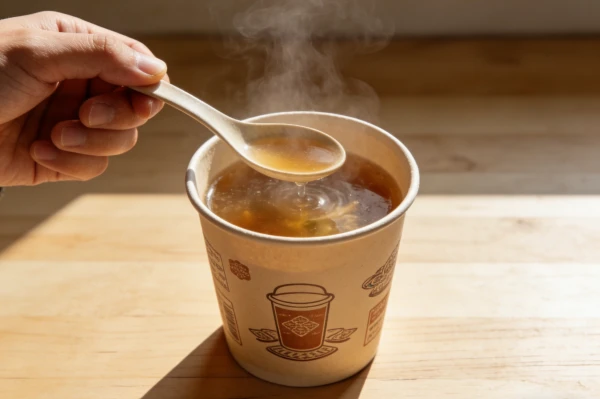
"A Stable Choice for Material Safety and Room for Technological Improvement?" This question gets to the heart of what we do at Amity. My background, with "15 years in disposable packaging manufacturing," has centered on ensuring that our products are both safe and cutting-edge. We understand that consumers today are far more aware of material safety, which is why our "strict quality control" includes testing for harmful substances. Jonh, with his "degree in Mechanical Engineering," is constantly researching "the latest innovations in eco-friendly materials," pushing the boundaries for "enhancing product performance" while strictly adhering to safety standards. We firmly believe in constantly improving our offerings.
Assured Safety Meets Future-Focused Innovation
The segment title, "A Stable Choice for Material Safety and Room for Technological Improvement," perfectly encapsulates the current state and future trajectory of disposable soup containers. While ensuring immediate safety through established standards, the industry is also characterized by continuous innovation to meet evolving consumer expectations and environmental mandates.
1. Foundational Material Safety:
Food-Grade Certification: The primary concern for any food packaging is that it must be safe for direct contact with food. Reputable manufacturers, including Amity, ensure their paper and coatings are explicitly food-grade certified, meaning they do not leach harmful chemicals or contaminate the contents. Our "full-process inspections" are critical for this.
Paper as a Baseline: Paper itself, when sourced responsibly, is a stable, non-toxic material. It is naturally biodegradable and, in its untreated form, presents minimal health risks. This makes paper-based containers an inherently safer base compared to some plastic alternatives without proper vetting.
PFAS-Free Commitments: Responding to growing health concerns, the industry is rapidly moving towards PFAS-free barrier coatings. These "forever chemicals" have been historically used for grease and water resistance. Amity and other leading manufacturers are actively developing and deploying safer alternatives, ensuring materials are not only functional but also free from known contaminants. This demonstrates a proactive approach to safety.
2. Dynamic Technological Improvement:
Advanced Barrier Coatings (PLA, Aqueous, PEEK): While PE coatings have been a staple, technological advancements offer better alternatives. PLA (Polylactic Acid) is a bio-based, compostable coating that offers excellent barrier properties. Aqueous coatings provide good water and grease resistance and can be more easily recycled or composted. PEEK (Polyether Ether Ketone), an advanced polymer, offers exceptional heat and chemical resistance, suitable for microwaveable containers. Amity's "technological innovation" often focuses on these areas to "enhance product performance."
Structural Enhancements: Innovations in paper board engineering allow for stronger, more rigid container designs that can handle heavier contents and maintain integrity during transport, reducing spills and waste. This includes multi-layer constructions or new fiber treatments. Jonh's expertise in "material & structure consultation" is key to these developments.
Improved End-of-Life Solutions: Beyond just materials, technological improvement extends to how containers can be processed after use. This includes coatings designed to be more easily separated from paper during recycling, or materials that achieve commercial compostability within shorter timeframes. This pushes towards a truly circular economy.
| Aspect | Current State (Stable) | Future Direction (Improvement) | Amity's Engagement |
|---|---|---|---|
| Food Contact Safety | Food-grade certified, non-toxic base | PFAS-free barriers, enhanced material purity | "Strict Quality Control," "eco-friendly materials" |
| Barrier Performance | Reliable grease/moisture resistance (PE) | Bio-based PLA, advanced aqueous/PEEK coatings | "PLA bio-based" coatings, R&D in new barriers |
| Structural Integrity | Standard strength for typical use | Enhanced rigidity, lighter weight, multi-layer | "Material & structure consultation," custom designs |
| Environmental Footprint | Sourcing with some responsible practices | Fully compostable/recyclable, resource-efficient | "Sustainable approaches," "reduce energy consumption" |
By being "A Stable Choice for Material Safety" while fiercely pursuing "Technological Improvement," disposable soup containers evolve to meet the highest standards. This ensures that what we rely on today is safe and what we will use tomorrow is even better for both people and the planet.
Comparative Eco-Friendliness Relative to Other Single-Use Materials?
Are you consciously trying to make greener choices, but feel overwhelmed by conflicting information about packaging? How do paper-based options truly stack up against others?
Paper-based disposable soup containers demonstrate comparative eco-friendliness relative to other single-use materials due to their renewable origins and potential for biodegradability/compostability. Unlike many plastics derived from fossil fuels, paper comes from trees, a renewable resource, and can be designed with bio-based coatings that align with a circular economy, offering a more sustainable choice when managed properly.
"Comparative Eco-Friendliness Relative to Other Single-Use Materials?" This question is at the core of our "Sustainability Commitment" at Amity. We firmly believe that "business growth must align with environmental protection." My experience has taught me that making truly green choices requires looking at the entire lifecycle. Jonh and I actively promote "eco-friendly paper products" because, when considering sourcing, production, and end-of-life, paper-based options often stand out as a better choice than conventional plastics or foam. Our efforts in "using renewable and biodegradable materials" reflect this understanding, making us promoters of a "green, healthy, and sustainable lifestyle."
The Green Edge of Paper-Based Solutions
Examining "Comparative Eco-Friendliness Relative to Other Single-Use Materials" reveals why paper-based disposable soup containers are often touted as a more sustainable choice. It is crucial to understand the distinct advantages they hold, particularly concerning resource renewability and end-of-life options, when contrasted with fossil-fuel-derived alternatives.
1. Renewable Resource Base:
Tree Farming vs. Fossil Fuels: The fundamental advantage of paper is its origin: trees. When sourced from "responsibly managed forests" and "FSC-certified suppliers," trees are a renewable resource that can be replanted and regrown, creating a continuous cycle. This stands in stark contrast to plastics, which are predominantly derived from finite fossil fuels. Jonh and I always emphasize that "sourcing renewable paper" is paramount to our sustainability.
Carbon Sequestration: Growing trees absorb carbon dioxide from the atmosphere, helping to mitigate climate change. This "carbon footprint" benefit begins even before the material is processed, contributing positively to environmental goals.
2. End-of-Life Superiority (with Nuance):
Biodegradability: Untreated paper is naturally biodegradable, breaking down into organic matter. While barrier coatings (like PE or PLA) can affect this, PLA-coated paper containers are "biodegradable" and "compostable" in industrial facilities, reverting to natural components. This is a significant advantage over conventional plastics that persist in the environment for hundreds of years.
Recyclability: While the presence of coatings (especially PE) can complicate paper recycling, advancements make many coated papers more recyclable. Furthermore, aqueous coatings are being developed to allow for easier pulp separation in standard recycling streams. This offers a viable end-of-life pathway that reduces landfill burden. In many regions, paper-based options often have a more established recycling infrastructure than specialized bioplastics.
Lower Toxicity on Disposal: When paper products do end up in landfills, they decompose more readily than plastics and do not typically release microplastics into the ecosystem. This minimizes long-term environmental contamination.
3. Reduced Manufacturing Impact (Often):
Lower Energy for Production: While manufacturing processes vary, paper production can often have a lower overall energy footprint compared to the petro-chemical intensive processes required for plastic polymers, especially when mills utilize renewable energy sources. This also contributes to "optimizing production to reduce energy consumption."
Water Usage: While paper production does use water, many modern mills have closed-loop systems that significantly reduce water waste and pollution, constantly improving their environmental performance.
| Material Type | Resource Origin | Renewable? | End-of-Life Options | Typical Environmental Impact Advantage |
|---|---|---|---|---|
| Paper-Based (Coated) | Trees (Wood Pulp) | Yes | Compostable (PLA), Recyclable | Renewable resource, lower carbon footprint from growth, avoids microplastics |
| Traditional Plastic (PE, PP) | Fossil Fuels (Oil/Gas) | No | Landfill, Limited Recycling | Resource depletion, plastic pollution, persistence in environment |
| Foam (EPS) | Fossil Fuels (Oil/Gas) | No | Landfill, Very Limited Recycling | Resource depletion, bulky waste, persistence, difficult to recycle |
Through their "Comparative Eco-Friendliness," paper-based disposable soup containers offer a more responsible choice in the single-use category. Derived from renewable resources and with improving end-of-life options, they represent a significant step towards a more "sustainable lifestyle worldwide."
Conclusion
Disposable soup containers provide convenience, public health assurance, and affordability, proving their practical value. With ongoing material safety and eco-friendly innovations, they stand as a responsible choice for modern food service.


