

From Raw Materials To Leaving The Factory: How Many Checkpoints Does A Safe Paper Bowl Need To Pass?
Leave a message
From Raw Materials to Leaving the Factory: How Many Checkpoints Does a Safe Paper Bowl Need to Pass?
You use paper bowls every day, often without a second thought. But behind that simple convenience lies a complex journey, filled with rigorous checks and precise manufacturing. Do you truly know the intricate steps and numerous checkpoints a paper bowl must endure to ensure it is perfectly safe for your food?
A safe paper bowl undergoes numerous critical checkpoints from raw material selection to final dispatch, typically encompassing over 10 distinct quality control stages. These include verifying raw material purity and food-grade compliance, conducting multiple high-temperature leak tests during the coating process, inspecting forming for structural integrity and smooth rims, and performing comprehensive random leakage and heat resistance tests before leaving the factory.
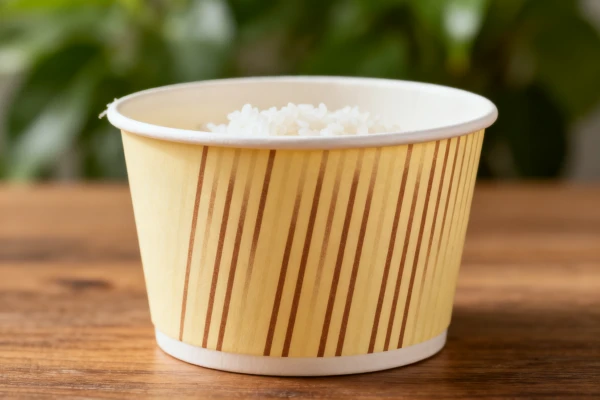
Here at Amity, Jonh and I have dedicated over 20 years to mastering the art of disposable paper product manufacturing. Our mission is to "empower everyone who uses paper cups and bowls to truly understand paper packaging." My journey in this industry, from "raw material selection to printing technology evaluation," has shown me that true quality is built into every single step. It is not just about making a bowl; it is about ensuring every bowl is safe, reliable, and consistent. Let me show you the rigorous production record-the many security checks-a paper bowl must pass to earn its place in your hands.
Is Raw Material Selection the First and Most Critical "Security Check" for a Safe Paper Bowl?
Before a single sheet of paper is cut, the foundation of product safety is laid. Do you ever wonder if the very first ingredients used for your paper bowl are truly safe, free from harmful substances, and meet the highest food-grade standards right from the start?
Yes, raw material selection is the first and most critical security check for a safe paper bowl. It involves strictly rejecting recycled pulp that may contain fluorescent agents, insisting on virgin wood pulp from FSC-certified suppliers, and ensuring every batch passes rigorous food-grade verification for purity and absence of harmful substances. This initial step guarantees a safe foundation for the entire production process.
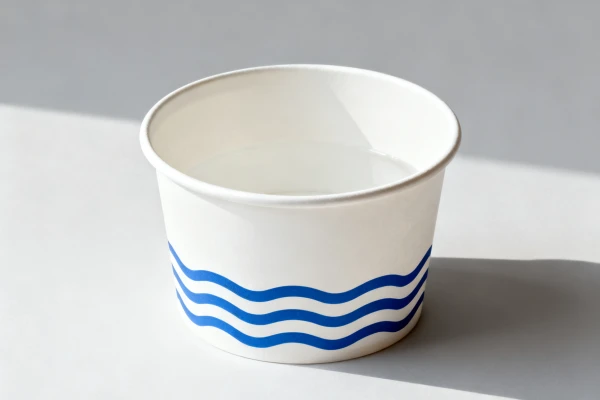
For Jonh and me, this step is non-negotiable. Our "20+ years of experience" have taught us that cutting corners here compromises everything that follows. We specifically choose "renewable paper from responsibly managed forests and FSC-certified suppliers." This is not just about sustainability; it is about preventing "toxic surprises" in the finished product. My deep understanding of "raw material selection" guides our rigorous checks for "disposable paper bowls (soups, noodles, salads)" and other products.
The Untamed Importance of Pure Beginnings
The journey of a safe paper bowl begins long before it takes shape on a machine; it starts with the meticulous selection of raw materials. This initial phase represents the fundamental "security check" that dictates the safety and quality of the final product. Any compromise at this stage can have profound and lasting implications for consumer health and brand integrity.
Our commitment at Amity, based on years of experience, is to solely use virgin wood pulp. This pulp comes directly from trees, ensuring a clean and consistent material base. We specifically reject any recycled pulp because it carries inherent risks. Recycled paper often contains unknown chemicals, printing inks, or, most concerning, fluorescent agents. These agents, used to make recycled paper appear whiter, are not food-grade and can leach into food or beverages, posing potential health risks. To me, insisting on virgin pulp is about protecting our customers from these hidden dangers, ensuring that what goes into the cup is exactly what comes from the raw materials – pure and safe.
Every single batch of wood pulp that arrives at our factory must undergo a comprehensive "pass security check." This involves a series of stringent laboratory tests. We check for the presence of heavy metals, which can be residue from contaminants in poorly sourced pulp. We test for any detectable fluorescent agents, even in virgin pulp, as a proactive measure against accidental contamination. Most importantly, we verify that the material meets all food-grade certifications from recognized international standards. This rigorous screening ensures that the very foundation of our paper bowls is unequivocally safe for direct contact with food, whether hot soup or a fresh salad.
Furthermore, we source our paper from FSC-certified suppliers. This is not only a testament to our "sustainability commitment" - ensuring the wood comes from responsibly managed forests-but also an additional layer of quality assurance. FSC certification often implies a higher standard of production and traceability, further reducing the risk of undesirable substances being present in the raw paperboard. This thoroughness in raw material selection is the bedrock of our "strict quality control," providing the essential confidence that every Amity paper bowl began its life as a pure, safe material. This diligence ensures we deliver solutions that enhance product performance and care for the planet.
Does the Coating Process, From Paraffin to Food-Grade PE, Require "3 High-Temperature Tests" to Ensure No Leakage?
A paper bowl's ability to hold liquids, especially hot ones, depends entirely on its coating. Are multiple high-temperature tests truly necessary during the coating process to guarantee that your food-grade paper bowl will never leak, protecting both the contents and your hands?
Yes, the coating process, transitioning from traditional paraffin to modern food-grade PE or PLA, absolutely requires multiple high-temperature tests, typically three or more. These crucial tests ensure the coating forms an impermeable barrier, prevents cracking or delamination under diverse heat conditions, and guarantees the paper bowl remains completely leak-proof for hot or cold contents, affirming its safety and reliability for consumers.
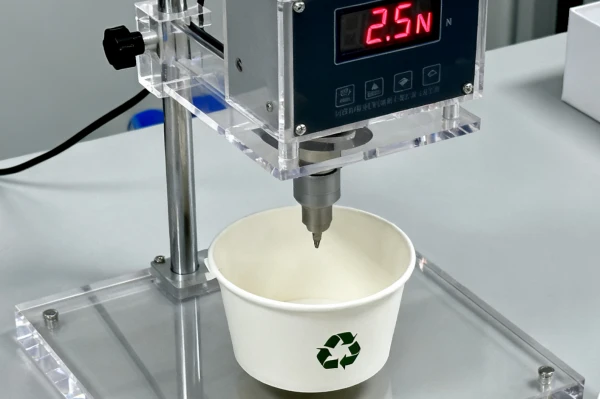
At Amity, Jonh and I intimately understand the science behind preventing leaks. Early in my career, I saw firsthand the issues that simple paraffin coatings caused-they often melted or seeped. That's why we transitioned to "using biodegradable coatings (PLA bio-based) instead of traditional plastic lining" or high-quality PE. Our "20+ years of experience" have taught us that temperature control and vigorous testing are not optional; they are vital for ensuring "enhanc[ed] product performance."
The Science of Sealing and Heat Resilience
The coating process is arguably the most critical stage for a paper bowl's functional performance, particularly its ability to hold liquids without leaking. This is where scientific precision and rigorous testing converge to transform absorbent paper into a reliable container. The transition from older materials like paraffin to modern food-grade PE (polyethylene) or PLA (polylactic acid) bio-based coatings marks a significant leap in both performance and safety.
Paraffin wax, while formerly common, had serious limitations. It could become brittle in cold temperatures, leading to cracks, and more significantly, it would often melt or soften at high temperatures, compromising the bowl's structural integrity and allowing liquid to seep through. This led directly to messy leaks and a poor customer experience. In contrast, modern food-grade PE creates a much more robust and stable barrier. It bonds effectively with the paper fibers, forming an impermeable layer that resists both hot and cold liquids. Even better, our use of PLA bio-based coatings offers the same superior leak protection while also addressing our "sustainability commitment," as PLA is derived from renewable resources and is industrially compostable.
To ensure this coating performs flawlessly under real-world conditions, we conduct at least "3 high-temperature tests."
Initial Thermoforming Test: Immediately after the coating is applied and dried, we subject samples to temperatures higher than typical serving temperatures, simulating the stress of hot filling and serving. This checks for any immediate delamination or cracking of the coating.
Extended Heat Soak Test: Bowls are filled with hot water (or even hot food, like soup) and left for an extended period (e.g., 30-60 minutes). This verifies the coating's long-term resistance to heat, checking for softening, seepage, or flavor transfer from the coating.
Cyclic Temperature Test: Some bowls are subjected to cycles of heating and cooling. This is crucial for products that might be microwaved or refrigerated and then reheated, ensuring the coating remains intact through thermal expansion and contraction.
These rigorous tests, conducted at various points in the production cycle, are vital. They catch potential flaws in the coating application, such as uneven thickness or poor adhesion, before entire batches are formed. This meticulous process is part of our "strict quality control" and "technological innovation," ensuring that every single Amity paper bowl will reliably hold your food or drink, hot or cold, without fear of leakage.
Are Deburring the Bowl Rim and Calibrating Wall Thickness Uniformity Key Details for Safety and Quality During Forming and Grinding?
When you hold a paper bowl, do you notice the subtle details? Could tiny imperfections, like a rough rim or uneven thickness, not only affect comfort but also pose real safety and quality concerns during the forming and grinding stages of production?
Yes, deburring the bowl rim and calibrating wall thickness uniformity are absolutely key details for both safety and quality during forming and grinding. A smooth, deburred rim prevents cuts and enhances user comfort, while uniform wall thickness ensures structural integrity, prevents leakage, and maintains proper insulation, collectively safeguarding the user and guaranteeing a high-quality, reliable paper bowl.
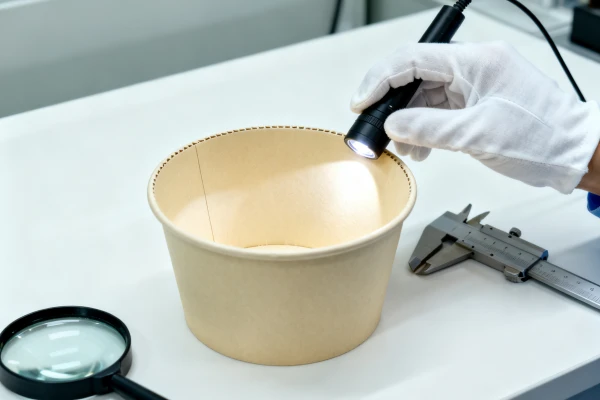
The "devil is in the details" is a saying Jonh and I live by, especially in manufacturing. My "degree in Mechanical Engineering" has given me a deep appreciation for the precision required in "forming and grinding." These are the steps where a paper sheet becomes a functional bowl. Our "strict quality control" during these stages ensures that every "tailor-made solution" we offer is flawless, from "custom dimensions" to the smooth feel of the rim.
Precision Engineering in Paper Bowl Construction
The forming and grinding stages are where the flat, coated paperboard is transformed into its final, three-dimensional bowl shape. This phase requires exceptional precision, as seemingly small details directly impact the bowl's safety, usability, and overall quality. These steps ensure that the bowl is not just assembled, but crafted.
One critical detail is deburring the bowl rim. After the paperboard is cut and formed, the edges, particularly the rim, can sometimes have slight burrs or rough spots. These might not be immediately visible but can be uncomfortable to the touch, or worse, cause minor cuts or scrapes to the user's lips or fingers. Our machines undergo regular calibration to ensure that the cutting and curling processes create a perfectly smooth, clean, and safe rim. This focus on "safety is seen in the details" provides a premium feel and prevents any potential user injury. A smooth rim also helps to ensure that lids fit snugly and effectively, further enhancing functionality.
Another paramount detail is calibrating the uniformity of the wall thickness. A paper bowl's wall thickness is not just about material quantity; it is about consistent structural integrity across the entire vessel. If the wall thickness is uneven, some areas will be weaker, making the bowl more prone to buckling, collapsing, or developing leaks, especially when holding hot contents or heavy foods. Uneven thickness also impacts insulation properties; a thin spot means heat escapes faster or cold seeps in more quickly. My engineering background helps me to understand the critical tolerances required here. Our advanced production lines are equipped with sensors that continuously monitor and calibrate the wall thickness, ensuring that every part of the bowl provides consistent strength and performance. This precision delivers the reliable "product performance" that customers expect from us.
These meticulous checks, including visual inspections for proper forming, symmetrical shape, and absence of creases or deformities, are integrated throughout the forming and grinding processes. They ensure that each paper bowl not only looks good but performs flawlessly, offering both safety and a superior user experience. This detailed attention to manufacturing is a pillar of our "strict quality control," guaranteeing the "consistent quality" our clients rely on.
What Role Does Random Inspection Before Leaving the Factory Play in Final Quality Assurance?
After all the careful steps of material selection, coating, and forming, is the production process truly complete? Before a single box leaves our facility, are there final, rigorous "security checks" to catch any last-minute issues and confirm that every paper bowl meets our high standards?
Yes, random inspection before leaving the factory plays a critical role in final quality assurance, serving as the ultimate "security check." This involves randomly opening finished boxes to perform comprehensive leakage tests, verify heat resistance, conduct visual checks for defects, and ensure proper packaging. This final, impartial sampling confirms that entire batches meet stringent quality and safety standards before reaching customers.
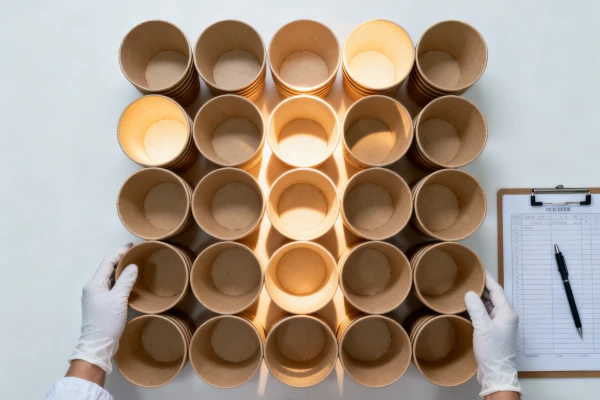
No matter how thorough the individual steps, Jonh and I believe in a final safeguard. My "deep knowledge of product, material, process, and application" leads me to insist on this rigorous final check. This is where our "strict quality control" culminates. It is our final promise to our clients and their customers that they are receiving products of "consistent quality." This last step, before "international export & logistics support," is essential for me to ensure our "efficient production & delivery" always includes excellent quality.
The Last Line of Defense Before Delivery
The random inspection before products leave the factory is the ultimate "security check" in the entire manufacturing process. It serves as Amity's final verification, an impartial audit of the finished goods, ensuring that all prior quality control measures have been effective and that the entire batch meets our stringent standards before reaching our global clients. This stage prevents any non-conforming products from entering the market, protecting both our reputation and, more importantly, the end-user.
This final inspection is conducted on randomly selected boxes from the completed production lot. A statistically significant number of bowls are pulled from these boxes for a series of critical tests. The most crucial of these is the leakage test. This test involves filling the randomly selected bowls with liquid, often heated, and observing them over a specified period to ensure there are no drips, seepage, or structural failures. This test acts as a comprehensive re-verification of the coating's integrity and the bowl's overall construction, ensuring that the bowl will perform its primary function flawlessly in a customer's hands.
Another vital check is the heat resistance test. For bowls designed for hot foods, these samples are subjected to prolonged exposure to high temperatures (e.g., filled with boiling water or heated in a microwave). This confirms that the bowl maintains its structural stability, coating integrity, and does not deform or leach any substances under thermal stress. This "strict quality control" ensures that the product performs safely under its intended usage conditions. Additionally, inspectors perform detailed visual checks. They scrutinize bowls for any defects such as printing errors, smudges, tears, creases, or any foreign particles. They also confirm that the "logo & printing customization" is accurate and vibrant, aligning with the client's specifications.
Finally, the packaging itself is inspected. This involves checking for correct labeling, proper quantity per box, and the structural integrity of the carton packaging to ensure the bowls are protected during "international export & logistics support." This rigorous, multi-faceted random inspection represents Amity's unwavering commitment to delivering "high-quality, eco-friendly, and safe paper packaging solutions." It is our last line of defense, ensuring that only perfectly safe and reliable paper bowls reach our customers.
Conclusion
A safe paper bowl undergoes a meticulously structured journey, from the selection of pure raw materials and rigorous coating application with multiple high-temperature tests, to precise forming and a final comprehensive random inspection. Each checkpoint is vital, ensuring that every bowl delivered is consistently safe, reliable, and of the highest quality for consumers worldwide.


