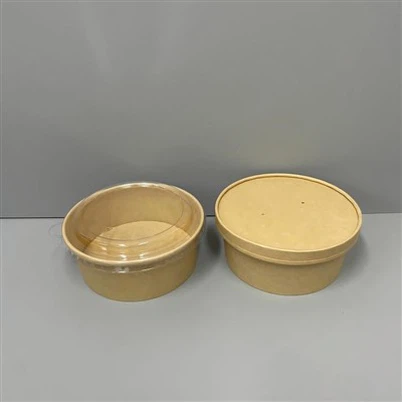
Is The Plastic Lining Inside Corrugated Cups Really An Environmental Villain?
Leave a message
Is the "Plastic Lining" Inside Corrugated Cups Really an Environmental Villain?
Are you a food and beverage owner worried about the environmental impact of your disposable cups, specifically that inner plastic lining? Does the word "plastic" automatically trigger alarms for you and your customers?
While the traditional plastic lining in corrugated cups presents recycling challenges, it's a functional necessity for liquid containment. However, emerging biodegradable alternative linings show the industry's commitment to sustainability. The overall design, including insulation and lightweight materials, still reduces environmental impacts like energy consumption and transportation emissions. Ultimately, the industry is transitioning, making responsible choices clearer.

For "20+ years," our company, Amity Packaging, has been "mastering the art of disposable paper product manufacturing." My mission is to "empower everyone who uses paper cups and bowls to truly understand paper packaging." I've seen countless innovations and debates. The "plastic lining" within paper cups is often misunderstood. It's a critical component, but our industry is constantly evolving to make it more eco-friendly. Let's delve into why this lining exists and how the narrative is shifting.
Is the Plastic Lining a Functional Necessity, Not Simply the "Root of All Evil," but a Technical Requirement?
Do you sometimes wonder why paper cups, seemingly so eco-friendly, still use a plastic lining? Does this inner film seem like a contradiction to sustainable efforts, frustrating your drive for greener operations?
Yes, the plastic lining is a functional necessity and a technical requirement, not simply an environmental villain. It forms an impermeable barrier inside the cup, preventing leaks and maintaining the integrity of the paper when exposed to liquids. This micro-thin layer is essential for holding beverages, especially hot ones, ensuring the cup does not become soggy or collapse, thus fulfilling the primary function of a beverage container.

My "15 years in disposable packaging manufacturing" have shown me the intricate science behind every paper cup. Jonh, with his "Degree in Mechanical Engineering," often explains how materials interact. At Amity, I understand that the "Functional Necessity" of this lining is a "technical requirement" that ensures the cup performs its job reliably for food and beverage businesses.
The Unsung Hero of Liquid Containment
The perception of the inner plastic lining as the "Root of All Evil" is often an oversimplification. In reality, it is a "Functional Necessity," serving as a fundamental "Technical Requirement" for any paper cup designed to hold liquids effectively. Without it, the cup simply would not work as intended for a fluid product.
Firstly, The Impermeable Barrier Against Liquid Absorption. Paper, by its very nature, is absorbent. If you pour liquid directly into an untreated paper cup, the fibers would quickly soak up the moisture, causing the cup to become soggy, lose its structural integrity, and eventually leak. The inner lining, traditionally a thin layer of polyethylene (PE) or increasingly, plant-based polylactic acid (PLA), creates an impermeable membrane. This barrier prevents liquid from penetrating the paper fibers. It ensures that your hot coffee stays in the cup, not on the customer's hands or clothes. It is the core reason a paper cup can hold liquid at all, transforming a porous material into a functional liquid container.
Secondly, Maintaining Structural Integrity Under Heat and Moisture. Hot beverages introduce significant challenges. Heat weakens paper fibers, and moisture accelerates this degradation. The lining not only prevents leaks but also helps to maintain the cup's structural stability, especially when hot liquids are involved. It protects the paper from prolonged exposure to hot moisture, which would otherwise soften the fibers and cause the cup to collapse or deform. This structural integrity is vital for safe handling and ensures a pleasant user experience. Without this protective layer, the risk of burns from collapsed cups containing hot liquids would be unacceptably high.
Finally, Facilitating Heat Sealing and Production Efficiency. From a manufacturing perspective, the plastic lining plays a crucial role in creating a robust and leak-proof cup. During production, the edges of the paper cup (sidewall and bottom) are heat-sealed together. The plastic lining, being thermoplastic, melts and fuses under heat and pressure, forming a strong, watertight bond. This heat-sealing capability is essential for high-speed, efficient mass production. It ensures every cup is consistently leak-proof. While challenges in recycling traditional PE-lined cups exist, the role of the lining in making paper cups functional and manufacturable at scale cannot be overstated. We at Amity offer "mass production & packaging" solutions, and this lining's role in efficiency is key. However, we are also actively "using biodegradable coatings (PLA bio-based) instead of traditional plastic lining" to address the end-of-life concerns.
| Functional Role of Lining | Why It's Necessary | Impact on Cup Performance | Amity's Approach to Functionality |
|---|---|---|---|
| Liquid Barrier | Prevents paper from absorbing liquid and leaking | Ensures containment, prevents sogginess | "PE/PLA coated" options for impermeability |
| Structural Stability | Protects paper from heat/moisture degradation | Maintains cup shape, prevents collapse with hot liquids | "Material & structure consultation" for integrity |
| Heat Sealability | Allows for strong, watertight seams in manufacturing | Ensures consistent, leak-proof cups | "Efficient production & delivery" with reliable seals |
| Hygiene | Creates a smooth, non-porous inner surface | Prevents bacterial growth, easy to clean during use | Strict quality control for product safety |
Therefore, while the environmental impact of traditional plastic linings is a concern, its "Functional Necessity" as a "Technical Requirement" is undeniable. It is the core technology that enables paper to safely hold liquids. However, the industry is transitioning to more sustainable alternatives like PLA.
Does Excellent Thermal Insulation Reduce Energy Waste and Carbon Emissions from the Source?
Are you mainly focused on the cup material, overlooking how the cup's performance, like thermal insulation, can also contribute to sustainability? Is there a broader environmental benefit to a well-insulated cup?
Yes, excellent thermal insulation significantly reduces energy waste and carbon emissions from the source. By keeping beverages at their desired temperature for longer, it decreases the need for reheating or re-chilling. This directly saves energy that would otherwise be consumed in kitchens, cafes, or by consumers themselves, leading to a tangible reduction in carbon footprint associated with energy production.

Our Amity team is proud of our "Eco-Driven Mindset," actively "optimizing production to reduce energy consumption and waste." Jonh continually reminds me that true sustainability goes beyond materials; it is about the entire lifecycle. "Excellent Thermal Insulation" is not just about comfort; it is about "Reducing Energy Waste and Carbon Emissions from the Source."
The Energy-Saving Power of Insulation
Beyond the material discussion, the role of "Excellent Thermal Insulation" in corrugated cups significantly contributes to "Reducing Energy Waste and Carbon Emissions from the Source." This is an often-overlooked aspect of sustainability, where performance directly impacts environmental footprint.
Firstly, Minimizing Secondary Energy Consumption. Consider a scenario where a customer buys a hot coffee in a poorly insulated cup. It quickly cools down. To enjoy a warm drink, the customer might microwave it at home or at the office. Each time a drink is reheated, it consumes electricity, leading to additional energy generation and associated carbon emissions. Similarly, a cold drink that quickly warms up might be discarded and replaced, or require refrigeration to maintain its chill, again consuming energy. Corrugated cups, with their inherent double-wall insulation, keep drinks at their optimal temperature for extended periods. This drastically reduces the need for these secondary heating or cooling interventions, directly saving energy that would otherwise be wasted.
Secondly, Efficiency in Production and Supply Chain of the Beverage Itself. For food and beverage businesses, maintaining drink temperatures effectively means fewer complaints about cold coffee or warm soda, leading to less waste of perfectly good but temperature-compromised products. If beverages need to be prepared again or discarded, it means wasted ingredients, wasted water, and wasted energy used in the initial preparation. The insulation provided by corrugated cups helps maintain product quality and prolong its sellable life once handed to the customer, thereby supporting efficiency throughout the entire beverage supply chain. This extends the value generated by the initial energy input.
Finally, Reducing the Overall Carbon Footprint of the Experience. The holistic environmental impact should include the energy consumed throughout the entire consumer use cycle. A cup that performs better thermally extends the satisfaction of the drink, reducing the likelihood of early disposal or the need for a "redo." This translates into a more energy-efficient consumption cycle per beverage. At Amity, our commitment to "optimizing production to reduce energy consumption and waste" extends to the products' performance in the hands of the end-user. By designing cups that are effective insulators, we are indirectly contributing to a reduction in global energy demand, thereby "lowering our carbon footprint" from a broader perspective.
| Aspect of Energy Saving | How Thermal Insulation Achieves It | Environmental Impact | Amity's Contribution to Energy Efficiency |
|---|---|---|---|
| Reduced Reheating | Keeps hot beverages warm longer | Less electricity/gas used for microwaving/reheating | Optimized insulation design with air gap and materials |
| Less Re-chilling | Keeps cold beverages cool longer | Less electricity used for refrigeration/ice replacement | "PE/PLA coated" for maximum thermal performance |
| Decreased Product Waste | Maintains taste/quality, less discarded beverages | Saves energy/resources used in original beverage production | Strict Quality Control for consistent performance |
| Prolonged Enjoyment | Enhances consumer satisfaction per drink origin | Higher energy efficiency per consumption | "Technological innovation" in heat retention |
Therefore, the "Excellent Thermal Insulation" in corrugated cups isn't just about comfort; it plays a subtle yet significant role in "Reducing Energy Waste and Carbon Emissions from the Source" throughout the beverage's lifecycle, representing a broader approach to sustainability.
Does the Lightweight Design of Corrugated Cups Lower Carbon Footprint During Transportation?
Are you only thinking about the packaging material itself, rather than the logistics of moving it? Can a cup's weight impact its environmental footprint before it even reaches your customers?
Yes, the lightweight design of corrugated cups significantly lowers the carbon footprint during transportation. Made primarily from paper, these cups are considerably lighter than reusable alternatives like ceramics or thick glassware, as well as some heavier plastic options. This reduced weight per unit means more cups can be transported per shipment, consuming less fuel and emitting fewer greenhouse gases during delivery from the manufacturer to the end-user.

At Amity, our manufacturing processes are designed for "efficient production & delivery," including careful consideration of logistics. Jonh, our "expert in end-to-end production," often emphasizes that material choices affect the whole supply chain. My company ensures that the "Lightweight Design" of our paper products directly contributes to "Lowering Carbon Footprint During Transportation."
The Weight of Sustainability in Logistics
The "Lightweight Design" of corrugated cups is a crucial, though sometimes overlooked, factor in "Lowering Carbon Footprint During Transportation." This aspect relates directly to the efficiency of logistics and impacts the environmental footprint long before the cup is even used.
Firstly, Maximizing Payload, Minimizing Fuel Consumption. Disposable paper cups, and corrugated cups specifically, are inherently lightweight compared to their reusable counterparts (like ceramic mugs or glass bottles) or even some rigid plastic containers. This minimal weight per unit means that a single truck, train, or ship can transport a significantly higher volume of cups in one go. A heavier payload translates directly to higher fuel consumption. By loading more lightweight items, fewer trips are needed to deliver the same quantity of products. This reduction in the number of required transportation journeys directly correlates with less fuel burned, fewer greenhouse gas emissions, and a lower overall carbon footprint for the supply chain.
Secondly, Efficient Storage and Reduced Bulk. Beyond just weight, the nested design of paper cups optimizes space efficiency during storage and transportation. Their conical shape allows them to stack tightly together, minimizing empty space. This "nesting" significantly reduces the bulk required to store and deliver a large quantity of cups. Less bulk means more product per pallet, per truck, and per warehouse shelf. This efficiency in space translates directly into fewer resources (fuel, warehouse space) required per unit of product. For businesses like Amity that handle "international export & logistics support," every cubic centimeter and every gram counts towards reducing environmental impact and operational costs.
Finally, The Balanced View of End-to-End Impact. While lightweight design primarily impacts upstream logistics, it is part of a broader consideration. Juxtaposing the weight of an empty paper cup (which is discarded after a single use) with a reusable cup (which requires energy for washing, sanitizing, and eventually disposal) reveals a complex dynamic. For certain high-volume, mobile scenarios characteristic of events and takeaway services, the logistical benefits of lightweight, easily transportable disposable options can sometimes offer a lower per-use carbon footprint when considering the entire lifecycle-especially when made from renewable and increasingly compostable materials. Our aim is to provide solutions that "optimize production to reduce energy consumption and waste" across the entire product journey.
| Transportation Factor | How Lightweight Design Benefits | Carbon Footprint Reduction | Amity's Logistics Efficiency |
|---|---|---|---|
| Fuel Consumption | More cups per trip due to lower weight | Decreased fuel use, lower direct emissions | Efficient production & delivery, optimized stacking |
| Number of Trips | Fewer overall shipments needed for large volume orders | Reduced logistical overhead, less carbon output | International export & logistics support for global reach |
| Space Utilization | Nested design maximizes space in vehicles and warehouses | Less bulk, making transportation more efficient | Product design for maximized density in shipping |
| Overall Impact | Contributes to a lower lifecycle carbon footprint | Reduces environmental burden across supply chain | Eco-Driven Mindset in every operational aspect |
Thus, the "Lightweight Design" of corrugated cups is not just a commercial advantage; it measurably contributes to "Lowering Carbon Footprint During Transportation" by making logistics more efficient and less resource-intensive.
Are Corrugated Cups a "Catalyst" for Promoting Environmental Awareness and Transition to a Circular Economy?
Do you feel pressured by environmental concerns but unsure how your packaging choices can make a genuine difference? Can a simple cup really drive broader ecological changes?
Yes, corrugated cups act as a "catalyst" for promoting environmental awareness and the transition to a circular economy. Their very existence sparks discussions about material origins, recyclability, and waste management. As the industry innovates with biodegradable linings and sourcing, these cups drive demand for better infrastructure and educate consumers, pushing towards more sustainable practices and a greener future.

At Amity Packaging, we are more than just a manufacturer; we are "promoters and enablers of the disposable paper packaging industry." My ultimate goal is to "empower everyone who uses paper cups and bowls to truly understand paper packaging." I firmly believe that even something as common as the corrugated cup can be a "Catalyst" for "Promoting Environmental Awareness and the Transition to a Circular Economy."
Igniting the Green Transformation
Corrugated cups, despite their perceived challenges, are undeniably a "Catalyst" for "Promoting Environmental Awareness and the Transition to a Circular Economy." Their widespread use has, paradoxically, forced a crucial conversation and driven significant innovation.
Firstly, Driving Innovation in Sustainable Materials. The initial reliance on traditional plastic linings in paper cups highlighted an obvious environmental bottleneck. This recognition galvanized the industry, including manufacturers like Amity, to invest heavily in research and development for superior alternatives. This relentless pursuit led to the widespread adoption of "PLA bio-based coatings" and other compostable or recyclable lining technologies. The very existence of plastic-lined paper cups spurred the demand for better, truly eco-friendly solutions, transforming them from a static product into a dynamic field of innovation. This continuous drive for improvement is a core part of our commitment to "technological innovation."
Secondly, Educating Consumers and Sparking Dialogue. Every time a customer holds a corrugated cup, it presents an opportunity for awareness. Modern consumers are increasingly scrutinizing packaging, asking questions about its origins, disposal, and environmental impact. When a cup clearly states it's made from "FSC-certified" paper or uses a "biodegradable coating," it educates the consumer directly. It fosters a dialogue about sustainable choices, encourages demand for recycling and composting infrastructure, and puts pressure on businesses and governments to support a circular economy. The cup, in this context, becomes a tangible teaching tool, promoting conscious consumption.
Finally, Accelerating Infrastructure Development for Circularity. The volume of disposable paper cups used globally necessitates robust end-of-life solutions. The widespread adoption of (even traditionally lined) paper cups has put pressure on waste management systems to find more effective ways of recycling or composting them. This demand is accelerating the development of specialized recycling facilities capable of separating paper from linings, and the expansion of industrial composting infrastructure for PLA-lined products. In this way, the corrugated cup is not just a product but a key player in the systemic shift towards a circular economy, where materials are kept in use for as long as possible. Amity actively "Partnering with global clients to promote eco-friendly paper products" to accelerate this change.
| Role as Catalyst | How Corrugated Cups Drive Change | Impact on Circular Economy & Awareness | Amity's Influence |
|---|---|---|---|
| Innovation Driver | Highlighted need for better linings, spurred R&D | Leads to PLA bio-based coatings and other advancements | Technological innovation, use of advanced coatings |
| Consumer Education | Promotes awareness of material choices and disposal | Increases demand for sustainable brands and infrastructure | Clear labeling, material & structure consultation |
| Infrastructure Demands | Created need for specialized recycling/composting facilities | Accelerates development towards full circularity | Optimizing production to reduce energy consumption and waste |
| Industry Standard Setter | Raises the bar for environmental performance expectations | Encourages other packaging sectors to follow suit | Promoters and enablers of the disposable paper packaging industry |
Therefore, instead of being an outright villain, the corrugated cup, with its inner lining, has profoundly served as a "Catalyst" for "Promoting Environmental Awareness and the Transition to a Circular Economy" by driving innovation, educating consumers, and pushing for better waste management solutions.
Conclusion
The "plastic lining" within corrugated cups, while a necessary functional element, is undergoing a sustainable transformation. These cups, with their excellent insulation and lightweight design, inherently reduce energy waste and transportation carbon footprints. More importantly, they act as a catalyst, driving innovation and promoting environmental awareness towards a truly circular economy.