

What's The Secret Behind The Corrugated Pattern On Corrugated Cups?
Leave a message
What's the Secret Behind the "Corrugated Pattern" on Corrugated Cups?
Do you ever wonder why some cups have those distinctive ridges? Those ripples aren't just for looks. They hide clever engineering that brings big benefits to your drink experience.
The secret behind the corrugated pattern on cups lies in its multi-functional design. It ingeniously creates insulating air layers for thermal performance, provides structural support with minimal material, and reinforces the cup to prevent expansion. This pattern significantly enhances durability and eco-efficiency.

At Amity Packaging, with my "20+ years of experience," I have seen how small design details can make a huge difference in product performance and customer satisfaction. Jonh and I consistently advise our clients, sharing our deep understanding of the paper packaging industry. We want to "empower everyone who uses paper cups and bowls to truly understand paper packaging." Let's unravel the engineering marvel that is the corrugated pattern and why it is so effective.
Is the Corrugated Pattern an Efficient Insulator, Providing Exceptional Thermal Performance from Air Layers?
Hot coffee too hot to hold? Cold drinks losing their chill too fast? Your hands shouldn't suffer for your drink.
Yes, the corrugated pattern acts as an "Efficient Insulator," providing "Exceptional Thermal Performance from Air Layers." The unique ribbed design creates small, trapped air pockets between the inner cup and the outer corrugated layer. These static air layers significantly slow down heat transfer, keeping hot drinks warmer and cold drinks colder for extended periods, and protecting your hands from extreme temperatures.

Jonh, with his "Degree in Mechanical Engineering" and "15 years in disposable packaging manufacturing," always explains how the physics of this design creates real value. At Amity, we know that "Exceptional Thermal Performance" is a top priority, making the corrugated pattern a key feature in our "PE/PLA coated" paper cups.
The Power of Trapped Air
The corrugated pattern's role as an "Efficient Insulator" providing "Exceptional Thermal Performance from Air Layers" is a prime example of smart design leverage. This specific structural element is what truly sets corrugated cups apart from single-wall alternatives, fundamentally improving the user experience for both hot and cold beverages.
Firstly, Air as a Superior Insulator. Air is a very poor conductor of heat when it is still, or "trapped." The corrugated design creates a series of small, isolated air pockets between the innermost cup layer (which holds the liquid) and the outer, ribbed layer. This principle is similar to how double-glazed windows work: an air gap between two panes of glass dramatically reduces heat transfer. In our cups, this trapped air forms an effective thermal barrier. It prevents heat from escaping hot liquids to the ambient environment too quickly and, conversely, slows the transfer of ambient heat into cold liquids. This means hot drinks stay warm for significantly longer periods, preventing them from becoming lukewarm, while cold drinks retain their chill, avoiding rapid dilution from melting ice.
Secondly, Enhanced User Comfort and Safety. A direct benefit of this excellent insulation is the comfort it offers the user. When holding a hot beverage, the outer corrugated surface remains comfortably warm to the touch, not scalding hot. This eliminates the need for an additional sleeve, which can be an extra cost and a source of waste. Users can securely grip their hot drinks without discomfort or risk of burning their hands, making the cup much safer and more pleasant to carry, especially in busy, mobile environments like events. This added comfort enhances the overall enjoyment of the beverage and reflects positively on the establishment providing the cup. We ensure "strict quality control" so that every cup delivers this comfort consistently.
Finally, Contribution to Eco-Efficiency by Reducing Energy Waste. The ability to maintain beverage temperature for longer subtly contributes to environmental sustainability. If drinks cool down or warm up too quickly, customers might reheat them (consuming energy) or discard them prematurely and purchase a new one (leading to product waste). By extending the ideal drinking temperature, corrugated cups reduce the need for such energy-intensive actions or repeat purchases. This indirectly lessens the overall energy footprint associated with beverage consumption. It aligns with our "Eco-Driven Mindset" and commitment to "optimizing production to reduce energy consumption and waste," even extending to the user's interaction with the product.
| Insulation Mechanism | How the Corrugated Pattern Achieves It | Direct User Benefit | Broader Impact | Amity's Product Feature |
|---|---|---|---|---|
| Trapped Air Layer | Ribs create sealed air pockets | Slows heat transfer efficiently | Energy saving, less waste | PE/PLA coated inner cup for tight seal, precise corrugation |
| Outer Surface Temperature | Insulated barrier keeps outer cup cool/warm | Comfortable, safe handling | Eliminates need for sleeves | "Strict Quality Control" for consistent insulation |
| Temperature Retention | Maintains optimum drink temperature for longer | Enhanced beverage enjoyment | Reduces reheating/re-chilling, less product waste | "Technological innovation" in design |
| Increased Durability | Structural rigidity of corrugated layers | Resists condensation, less prone to collapse | Longer cup life, less frequent replacement | "Mass production & packaging" for robust cups |
Through this multi-faceted mechanical design, the corrugated pattern proves to be an "Efficient Insulator," delivering "Exceptional Thermal Performance from Air Layers" that enhances user experience and subtly contributes to wider energy savings.
Is the Corrugated Pattern a Structural Mechanics Marvel, Offering Maximum Support with Minimal Material?
Do your plain cups dent or collapse from a light squeeze? Flimsy cups compromise your drink and your reputation.
Yes, the corrugated pattern is a "Structural Mechanics Marvel." Its ribbed design radically increases the cup's rigidity and strength without adding significant material. This structure distributes stress efficiently, allowing it to withstand pressure, prevent deformation, and offer "Maximum Support with Minimal Material," making the cup more robust and reliable in dynamic environments.
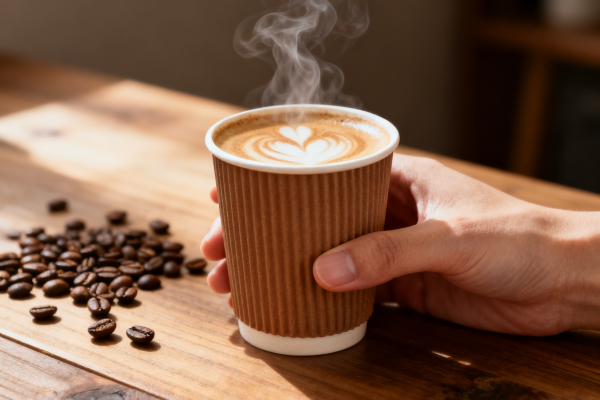
I often discuss this with Jonh, as his "Degree in Mechanical Engineering" provides deep insights into structural integrity. For Amity, "Tailor-Made Solutions" mean optimizing every design aspect. The corrugated pattern truly is a "Structural Mechanics Marvel" because it gives "Maximum Support with Minimal Material," perfectly aligning with our goal of "high-quality, eco-friendly, and safe paper packaging."
The Physics of Strength
The corrugated pattern's designation as a "Structural Mechanics Marvel" is entirely justified, as it provides "Maximum Support with Minimal Material." This is a sophisticated application of engineering principles that dramatically enhances the cup's physical resilience, a critical factor for use in demanding, mobile scenarios.
Firstly, The Principle of Corrugation for Rigidity. Imagine a flat sheet of paper. It bends easily. Now, imagine that same paper folded into a series of parallel ridges and grooves. This simple geometric transformation, known as corrugation, dramatically increases the sheet's resistance to bending and crushing forces. Each ridge acts like a small beam or pillar, and the combination of these beams creates a much stronger, stiffer structure than a flat sheet of equivalent material thickness. For a cup, this means that accidental squeezes, bumps against other objects, or forces from stacking will be absorbed and distributed across the ribbed structure, making the cup far less likely to deform or buckle. This inherent rigidity is paramount to preventing spills and maintaining the cup's shape throughout its use. We apply "strict quality control" to ensure this structural integrity.
Secondly, Efficient Material Utilization. The beauty of the corrugated design lies in its efficiency. Instead of simply making the cup wall thicker to increase strength (which would use more material and increase weight), corrugation uses the existing material more effectively. By altering the geometry, a lightweight paperboard gains impressive strength and stiffness. This material efficiency contributes to sustainability by reducing the overall amount of virgin material required to produce a durable cup. It's about working smarter, not harder, with the raw resources. This directly supports our "Eco-Driven Mindset" and our efforts to provide "sustainable approaches" in manufacturing.
Finally, Mitigation of Accidental Damage and Enhanced User Confidence. In a crowded event or during a commute, accidental knocks and bumps are inevitable. A flimsy cup quickly leads to spills and frustration. The enhanced structural integrity provided by the corrugated pattern means the cup is much more resistant to these everyday stresses. This robustness gives users confidence, allowing them to carry their beverages without constant worry about collapse or spillage. This translates into a more positive experience and fewer messy accidents, which in turn reflects well on the food and beverage provider. Jonh often emphasizes that "creative yet practical logo design ideas" must be matched with a practical, durable structure, and these cups deliver on that promise.
| Structural Feature | How Corrugation Provides Support | Benefit for Durability | Material Efficiency | Amity's Quality Guarantee |
|---|---|---|---|---|
| Ribbed Geometry | Creates small, vertical beams that resist bending | Prevents buckling, maintains shape | Uses less material than thicker flat walls | Material & structure consultation for optimal design |
| Stress Distribution | Spreads external forces across a wider area | Mitigates denting and crushing | Reduces material waste from damage | Strict Quality Control throughout production |
| Enhanced Stiffness | Adds rigidity to the cup wall | Resists accidental squeezing and impact | Lightweight yet strong | "High-quality" paperboard materials |
| Reduced Deformation | Maintains circular cross-section better than smooth walls | Ensures lid fit and prevents leaks | Optimizes material thickness | Tailor-Made Solutions for consistent form-factor |
The corrugated pattern truly functions as a "Structural Mechanics Marvel," offering "Maximum Support with Minimal Material," proving that thoughtful design can solve complex problems elegantly and efficiently.
Do Circular Reinforcing Ribs Effectively Prevent Cup Expansion and Rupture?
Are you concerned about your cups deforming or even rupturing when filled with hot liquids, leading to spills and burns? Does your cup maintain its shape under pressure?
Yes, the "Circular Reinforcing Ribs" within the corrugated pattern effectively "Prevent Cup Expansion and Rupture." These circumferential ridges act as structural braces, distributing internal pressure and resisting the outward forces exerted by hot beverages. This design maintains the cup's integrity and shape, significantly reducing the risk of deformation, spills, or catastrophic failure.

Through "20+ years of experience," my team at Amity has honed the art of creating robust paper packaging. Jonh, our "expert in end-to-end production," understands the critical role of every design element. We know that "Circular Reinforcing Ribs" are crucial to "Effectively Prevent Cup Expansion and Rupture," ensuring reliability for our clients.
Counteracting Pressure with Design
The role of "Circular Reinforcing Ribs" in "Effectively Preventing Cup Expansion and Rupture" is a testament to the sophisticated engineering embedded in the corrugated pattern. This feature is vital for the safe and reliable use of cups, particularly with hot liquids.
Firstly, Resistance to Hydrostatic and Thermal Expansion. When a cup is filled with hot liquid, two main forces act to expand its structure: hydrostatic pressure (the weight of the liquid itself) and thermal expansion (the paper fibers can soften slightly and expand when exposed to heat and moisture). The circular ribs that form the corrugated pattern act as horizontal bands of reinforcement around the cup's circumference. Like hoops on a barrel, these ribs resist the outward pressure, maintaining the cup's pre-defined circular shape. Without them, the cup could bulge, deform, or even compromise the seal with the lid, leading to leaks or a complete rupture, particularly at weakest points. Our "material & structure consultation" ensures the optimal rib design for various liquid types and temperatures.
Secondly, Maintaining Lid Retention and Preventing Spills. A cup that expands even slightly due to internal pressure can cause a perfectly fitted lid to become loose or pop off. This is a common cause of spills, especially during transport. The reinforcing ribs ensure that the cup's rim diameter remains stable and consistent, allowing the lid to maintain its secure fit. This is particularly important for takeaway drinks, where the cup might experience jostling. By preventing expansion, the ribs indirectly enhance the leak-proof performance of the entire lidded system, ensuring the beverage stays contained and reaches its destination intact. This contributes to our "strict quality control" standards.
Finally, Enhanced Perceived Quality and Brand Image. A cup that visibly deforms or feels flimsy under the weight of its contents immediately conveys a sense of poor quality. Conversely, a cup that maintains its robust shape, even with hot liquid, subtly reassures the user of its quality and durability. This contributes to a positive customer experience and reflects well on your brand. The "Circular Reinforcing Ribs" are a silent guarantee of stability, contributing to the premium feel and preventing potential safety hazards that could damage your reputation. This ensures that our "high-quality, eco-friendly, and safe paper packaging solutions" meet both performance and aesthetic expectations.
| Structural Benefit | How Circular Ribs Contribute | Outcome for Cup Performance | Amity's Design & Manufacturing |
|---|---|---|---|
| Resist Expansion | Circumferential bands counteract outward pressure | Maintains cup shape and integrity | Optimally spaced and sized ribs |
| Prevent Rupture | Distributes stress evenly, strengthens wall | Reduces localized stress points | "Advanced production lines" for consistent rib formation |
| Ensure Lid Fit | Stabilizes rim diameter | Prevents loose lids and spills | Precision manufacturing for uniform dimensions |
| Maintain Rigidity | Adds inherent stiffness against internal forces | Cup feels sturdy and reliable | "Tailor-Made Solutions" for specific product needs |
The strategic inclusion of "Circular Reinforcing Ribs" is a critical feature, allowing the corrugated pattern to "Effectively Prevent Cup Expansion and Rupture," thereby guaranteeing product reliability and greatly enhancing user safety and satisfaction.
Is the Corrugated Pattern an Eco-Efficiency Champion, Reducing Material Use and Transportation Carbon Footprint from the Source?
Are you wondering if your packaging choices genuinely contribute to a smaller environmental footprint? Can one design feature reduce resource use from manufacturing to delivery?
Yes, the corrugated pattern is an "Eco-Efficiency Champion," significantly reducing "Material Use and Transportation Carbon Footprint from the Source." Its design achieves maximum strength and insulation with thinner paperboard layers, meaning less raw material is consumed. This lighter construction also allows more cups per shipment, lowering fuel consumption and emissions during logistics.
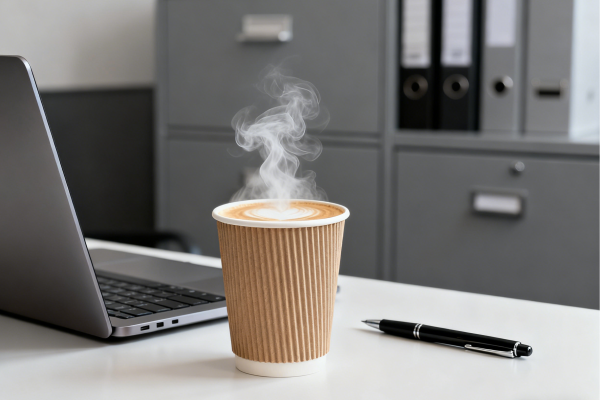
At Amity, our "Eco-Driven Mindset" is central to our innovation. We constantly strive to "optimize production to reduce energy consumption and waste." Jonh, with his deep understanding of "raw material selection," always emphasizes that efficiency starts at the design stage. The corrugated pattern truly makes our cups an "Eco-Efficiency Champion," reducing environmental impact "from the Source."
Sustainability Woven into the Design
The corrugated pattern truly shines as an "Eco-Efficiency Champion," directly "Reducing Material Use and Transportation Carbon Footprint from the Source." This aspect highlights how intelligent design can create environmental benefits throughout the entire product lifecycle, from manufacturing raw materials to delivering the finished product.
Firstly, Optimized Material Utilization for Reduced Consumption. As discussed, the corrugated structure dramatically increases the strength and rigidity of a paper cup without requiring thicker, heavier paperboard. This means that a corrugated cup can achieve superior performance (thermal insulation, structural integrity) using less raw material compared to a single-wall cup of comparable strength. Less material means fewer trees harvested (when sourced responsibly), less energy consumed in paper pulp production, and less waste generated at the manufacturing stage. This inherent material efficiency aligns perfectly with our goal of "Sourcing renewable paper from responsibly managed forests and FSC-certified suppliers" and minimizing our ecological footprint from the very beginning.
Secondly, Significant Reduction in Transportation Carbon Footprint. Because corrugated cups are designed to be both lightweight and highly stackable, they contribute substantially to reducing carbon emissions during logistics. Each cup uses less material, making it lighter. Furthermore, the conical shape and rigid structure of corrugated cups allow them to be nested incredibly tightly, maximizing the number of cups that can be packed into a shipping container or truck. A higher density of product per shipment means fewer trips are needed to transport the same volume of cups. Fewer trips directly translate to less fuel consumption and, consequently, a lower release of greenhouse gases into the atmosphere. This efficiency extends from our "efficient production & delivery" to "international export & logistics support," making our supply chain greener.
Finally, A Holistic Approach to Waste Reduction and Resource Management. Beyond the primary material and transport benefits, the enhanced durability and thermal performance of corrugated cups further contribute to eco-efficiency by reducing waste and ensuring resource value. A more durable cup is less likely to be prematurely discarded due to damage, and better insulation reduces the likelihood of liquids being thrown away due to undesirable temperatures. This comprehensive approach, beginning with efficient design and material selection, continuing through streamlined logistics, and ending with an extended useful life, underscores the corrugated pattern's role as a true eco-efficiency champion. My dedication to the disposable packaging sector means I've always pushed for solutions that benefit both clients and the planet.
| Eco-Efficiency Factor | How the Corrugated Pattern Contributes | Environmental Impact | Amity's Green Contribution |
|---|---|---|---|
| Material Reduction | Achieves strength with thinner paperboard | Less raw material consumed | Optimizing production, Eco-Driven Mindset |
| Weight Optimization | Lighter cups, more units per shipment | Reduced fuel consumption in transport | Efficient Production & Delivery |
| Space Efficiency | Highly stackable due to rigid, conical shape | Fewer trucks, less warehousing space | Mass production & packaging for optimal density |
| Durability & Performance | Longer usable life, less product waste | Reduced premature disposal | High-quality and safe paper packaging solutions |
Clearly, the corrugated pattern is an "Eco-Efficiency Champion," directly "Reducing Material Use and Transportation Carbon Footprint from the Source" by integrating sustainable practices and intelligent design throughout the entire product life cycle.
Conclusion
The corrugated pattern on cups is far more than decorative; it is a masterclass in functional design. It provides superior thermal insulation, acts as a structural marvel, prevents expansion, and champions eco-efficiency by reducing material use and carbon footprint. A truly remarkable innovation.


