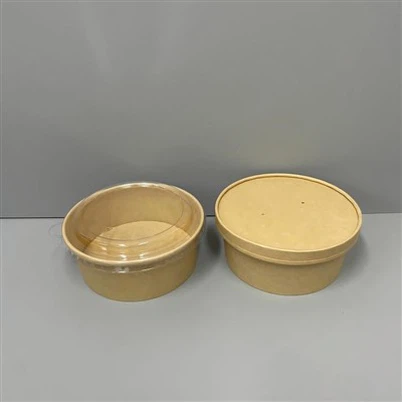
Kraft Paper, Plastic, Or Sugarcane Pulp: Which Bowl Is Truly The Best Eco-Friendly Choice For Your Tableware?
Leave a message
Kraft Paper, Plastic, or Sugarcane Pulp: Which Bowl Is Truly the Best Eco-Friendly Choice for Your Tableware?
Are you confused by the ever-growing claims of "eco-friendly" disposable bowls? The choices seem endless, but hidden environmental impacts lurk beneath the surface. Uncover the real truth behind kraft paper, plastic, and sugarcane pulp to make genuinely informed decisions.
Choosing the "best" eco-friendly bowl depends on specific needs and disposal infrastructure. Kraft paper bowls with PLA lining offer compostable options for many uses. Sugarcane pulp bowls are biodegradable and compostable, excelling in rigidness but sometimes moisture resistance. Traditional plastic, while recyclable, faces significant widespread end-of-life challenges.

My "20+ years of experience" at Amity Packaging has equipped me with a deep understanding of these materials. We are driven by a mission to "Empower everyone who uses paper cups and bowls to truly understand paper packaging." My journey has taught me that outward appearances and marketing claims can be deceiving. I will now guide you through the intricate "Lifecycle Panorama," "Debunking 'Pseudo-Eco'," a "Performance Showdown," and a "Scenario-Based Selection Guide," helping you master the art of choosing the right bowl that aligns with both your operational needs and environmental values.
Lifecycle Panorama: Does It Reveal the Ultimate Environmental Impact from Raw Materials to Disposal?
Are you concerned about the true environmental cost of your disposable bowls? The journey from raw material to disposal is often hidden. Uncover the full environmental impact to make genuinely responsible choices.
The ultimate environmental impact of a bowl is revealed by its entire lifecycle: resource extraction, manufacturing energy, transportation, and crucial end-of-life options (recycling, composting, landfill). Sugarcane pulp boasts rapidly renewable raw materials but may have transportation impacts. Kraft paper leverages responsibly managed forests. Plastic's impact is significant, from fossil fuels to persistent waste, especially if not recycled.

"Lifecycle Panorama: Does It Reveal the Ultimate Environmental Impact from Raw Materials to Disposal?" This is where true sustainability assessment begins. Jonh and I, with our "20+ years of industry expertise-from raw material selection to printing technology evaluation," understand that a product's "eco-friendliness" is not just about its final disposal. It is a comprehensive journey, starting long before it reaches your hands. Our "eco-driven mindset" means we carefully consider each stage. As an "industry knowledge-sharing platform," it's vital for us to break down these complexities so our clients can make truly informed decisions.
Tracing the Footprint from Cradle to Grave
Understanding the environmental impact of disposable bowls requires analyzing their complete lifecycle. This "cradle-to-grave" approach considers every stage, from the harvesting of raw materials to the final disposal. This comprehensive view helps us to "deliver solutions that enhance product performance and brand value while caring for the planet."
1. Raw Material Sourcing: The Foundation of Impact
Kraft Paper Bowls: These are primarily made from wood pulp. Our "sustainability commitment" means we prioritize "renewable paper from responsibly managed forests and FSC-certified suppliers." This ensures that wood is harvested at a rate that allows for regeneration, often mitigating deforestation and supporting biodiversity. The advantage lies in its renewability and potential for responsible forest management.
Sugarcane Pulp Bowls (Bagasse): These bowls are made from bagasse, a byproduct of sugar production. After sugarcane stalks are crushed to extract juice, the remaining fibrous material is bagasse. This makes it an agricultural waste product that is rapidly renewable and diverts waste from landfills. Its raw material footprint is generally considered low, as it reuses what would otherwise be discarded.
Plastic Bowls (e.g., PP, PET): These are derived from fossil fuels (petroleum or natural gas), which are non-renewable resources. Their extraction involves significant environmental disruption, including habitat destruction and greenhouse gas emissions. The reliance on fossil fuels is a major environmental concern for traditional plastics, forming a core part of their negative environmental "lifecycle panorama."
2. Manufacturing and Production: Energy, Water, and Emissions
All Materials: The conversion of raw materials into finished bowls requires energy, water, and generates emissions.
Kraft Paper: Pulping and papermaking are energy-intensive processes, often requiring significant water. However, modern paper mills are increasingly efficient, often using biomass energy and closed-loop water systems.
Sugarcane Pulp: Similar to paper, manufacturing bagasse pulp into bowls requires energy. The overall energy and water footprint can be comparable to or even slightly less than virgin paper, given its starting point as an agricultural waste.
Plastic: Plastic manufacturing involves polymerization, which is also an energy-intensive process, relying heavily on fossil fuels for both feedstock and energy. Concerns include emissions from refineries and chemical plants.
Amity's Approach: We are constantly "optimizing production to reduce energy consumption and waste," regardless of the material. This directly "lowers our carbon footprint."
3. Transportation: Getting from Factory to Consumer
Global Supply Chains: Regardless of material, all bowls incur an environmental cost associated with transportation from the manufacturing site (often China) to global markets. This involves fuel consumption and associated emissions from ships, trucks, and potentially planes.
Weight and Volume: The weight and bulk of the raw materials and finished products influence transport efficiency. Sugarcane pulp bowls can be bulky, impacting shipping volume.
4. End-of-Life Disposal: The Ultimate Challenge
This final stage largely determines the overall "eco-friendliness."
Kraft Paper Bowls (Coated): If coated with PE, they are difficult to recycle effectively and often end up in landfills. However, "using biodegradable coatings (PLA bio-based)" makes them industrially compostable, where they can break down into organic matter.
Sugarcane Pulp Bowls: These are generally industrially compostable and biodegradable, breaking down into natural elements. This is a significant advantage if composting infrastructure is available. If landfilled, they will still degrade much faster than plastics, although they may contribute to methane emissions in anaerobic environments.
Plastic Bowls: Are theoretically recyclable (e.g., PP, PET). However, global recycling rates are low due to complex sorting, contamination, and economic viability issues. A vast majority ends up in landfills, where they persist for hundreds to thousands of years, contributing to microplastic pollution. This persistence is the most significant negative impact in plastic's lifecycle.
| Lifecycle Stage | Kraft Paper Bowl (PLA-coated) | Sugarcane Pulp Bowl | Plastic Bowl (PP/PET) |
|---|---|---|---|
| Raw Material | Renewable wood pulp (FSC) | Renewable agricultural waste (bagasse) | Non-renewable fossil fuels |
| Manufacturing | Energy/water-intensive, improving | Energy/water-intensive | Energy/water-intensive (fossil fuels) |
| Transportation | Global logistics, bulk | Global logistics, can be bulky | Global logistics, efficient density |
| End-of-Life | Industrially compostable | Industrially compostable/biodegradable | Theoretically recyclable, but often landfilled |
| GHG Emissions | Moderate (from process, transport) | Moderate (from process, transport) | High (from extraction, process, persistence) |
By examining the "Lifecycle Panorama," you gain a comprehensive understanding of the "ultimate environmental impact." This knowledge allows you to move beyond surface-level claims and make choices that truly align with sustainable practices.
Debunking "Pseudo-Eco": Can We Unmask the Real Conditions for Degradation and Recycling Challenges?
Are you trusting vague "eco-friendly" labels, only to find out your disposables are not really degrading or being recycled? The truth about "pseudo-eco" often lies hidden in fine print. Unmask the real conditions.
"Pseudo-Eco" claims can be unmasked by understanding the specific degradation and recycling challenges each material faces. Kraft paper bowls, often lined with PLA, require industrial composting to degrade effectively. Sugarcane pulp bowls also need specific composting environments. Plastic bowls, though labeled recyclable, confront low collection rates, sorting complexities, and limited processing capacity, making widespread recycling difficult.

"Debunking 'Pseudo-Eco': Can We Unmask the Real Conditions for Degradation and Recycling Challenges?" This is crucial to our mission to "Empower everyone who uses paper cups and bowls to truly understand paper packaging." My extensive experience in the industry, paired with Jonh's keen eye for raw materials, shows us that many products are marketed as environmentally friendly without explaining the critical conditions required for their eco-benefits to materialize. At Amity, we believe in transparency. We aim to help you distinguish genuine sustainability from clever marketing, so you can make choices that truly lead to a "green, healthy, and sustainable lifestyle worldwide."
The Realities of Breakdown and Reuse
The terms "biodegradable," "compostable," and "recyclable" are often used loosely, leading to consumer confusion and unintended environmental consequences. To truly "unmask 'pseudo-eco'," we must delve into the specific conditions each material requires to fulfill its environmental promise. Our "sustainability commitment" guides us in advising clients to choose materials that match their waste management infrastructure.
I. Degradation Realities: "Compostable" vs. "Biodegradable"
These terms are frequently conflated, but they have distinct meanings and requirements:
Compostable:
Definition: A material that can break down into natural elements (humus, CO2, water) in a specific composting environment, usually within a defined timeframe (e.g., 90-180 days).
Requirements:
Industrial Composting: Most paper bowls with "PLA bio-based" coatings and sugarcane pulp bowls require industrial composting facilities. These facilities maintain precise conditions of heat, moisture, and microbial activity not typically found in a backyard compost pile.
Certification: Look for certifications like BPI (Biodegradable Products Institute) or EN 13432, which confirm a product's compostability in industrial settings.
Challenges: The biggest challenge is the lack of widespread industrial composting infrastructure. If a compostable bowl ends up in a landfill, it may still degrade, but much slower (due to lack of oxygen) and can produce methane, a potent greenhouse gas.
Biodegradable:
Definition: A material capable of being decomposed by bacteria or other living organisms. This is a very broad term.
Requirements: "Biodegradable" does not specify a timeframe or environment. Anything will eventually biodegrade given enough time.
Challenges: Many "biodegradable" plastics do not break down in natural environments (like oceans or soil) within a reasonable timeframe. They often fragment into microplastics. It can be a misleading term if not accompanied by a composting standard.
II. Recycling Challenges: The Plastic Predicament
"Recyclable" for plastic bowls (PP, PET) implies a clean, separated waste stream, which is often not the reality.
Collection and Sorting:
Low Rates: Despite being technically recyclable, only a fraction of plastic bowls are actually collected for recycling globally. Many end up in general waste.
Contamination: Food residue in bowls often contaminates recyclable plastics, rendering them unsuitable for recycling. This is a major issue for all food packaging.
Sorting Complexity: Different types of plastics (PP, PET, PS) must be carefully separated, which can be challenging for consumers and recycling facilities. Post-consumer plastic often contains a mix of resins.
Processing Limitations: Even if collected and sorted, not all recycling facilities can process all types of plastics, or they may lack the demand for certain recycled plastics. This leads to plastics being downcycled (into lower-value products) or rejected from facilities entirely.
Microplastics: The recycling process itself, or degradation of plastics in the environment, can lead to the formation of microplastics, which are persistent pollutants.
III. Material-Specific Complications:
Coated Kraft Paper: Traditional PE-coated paper bowls cannot be recycled in standard paper recycling streams because the plastic film is difficult to separate. This made them largely destined for landfill. Our focus on "PLA bio-based coatings" aims to overcome this by allowing industrial composting.
Sugarcane Pulp: While generally compostable, some sugarcane pulp products may have added PFAS (per- and polyfluoroalkyl substances) for grease resistance. These "forever chemicals" do not degrade and are a significant environmental and health concern. Amity is committed to sourcing PFAS-free materials.
| Eco-Claim | Actual Meaning / Requirements | Key Challenges & Limitations | How to Unmask "Pseudo-Eco" |
|---|---|---|---|
| Compostable | Breaks down into humus, CO2, water (specific conditions) | Requires Industrial Composting facilities (not widely available) | Look for BPI, EN 13432 certification |
| Biodegradable | Decomposed by organisms (broad, no timeframe/conditions) | Often degrades slowly, can fragment into microplastics | Check if also certified compostable, or ignore as greenwashing |
| Recyclable | Can be processed into new materials (if collected, sorted, cleaned) | Low collection/sorting rates, contamination, limited infrastructure | Check local recycling facility's capabilities, ensure clean disposal |
| Pulp Bowls (e.g., Bagasse) | Made from renewable waste, often compostable | May still contain PFAS chemicals if not certified PFAS-free | Verify PFAS-free claims, BPI/EN 13432 certification |
| Paper Bowls | Made from renewable wood, often PLA-coated | PE-coated is not recyclable, PLA needs industrial composting | Check coating type, look for compostable certifications |
By "Debunking 'Pseudo-Eco'," you can "Unmask the Real Conditions for Degradation and Recycling Challenges." This critical insight empowers you to select truly sustainable options that will fulfill their environmental promise, rather than contributing to hidden waste streams.
Performance Showdown: What Is the Real-World Experience with Structural Strength, Heat Resistance, and Leak Prevention?
Have you ever had a paper bowl sag under food, fail with hot soup, or spring a leak mid-meal? The "eco-friendly" choice means nothing if it cannot hold up to real-world demands.
The real-world experience shows varying performance: Kraft paper bowls, especially with good coatings and design, offer excellent structural strength, moderate heat resistance, and reliable leak prevention. Plastic bowls excel in all three but with environmental drawbacks. Sugarcane pulp bowls provide rigidity and heat resistance but can sometimes struggle with prolonged moisture or highly oily contents. Each material demands a balance for optimal real-world use.
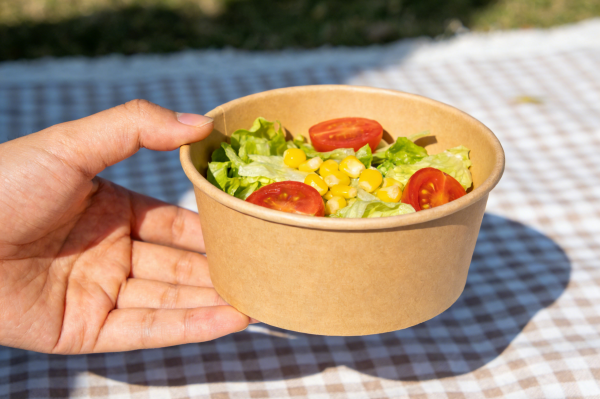
"Performance Showdown: What Is the Real-World Experience with Structural Strength, Heat Resistance, and Leak Prevention?" When clients come to Amity Packaging, they're not just looking for a material; they're looking for reliability. My extensive experience, from "raw material selection to product applications," emphasizes that an eco-friendly product must first and foremost perform. Jonh's expertise in "custom dimensions, materials, printing, and structure" focuses on achieving this balance. We aim to "deliver high-quality... solutions tailored to customers' needs," meaning they stand up to the demands of daily use, not just for "newcomers" but for "industry veterans" who demand consistency.
Head-to-Head on Critical Functionality
Beyond environmental claims, the practical performance of a disposable bowl is paramount. A bowl's ability to maintain its integrity - its structural strength, heat resistance, and leak prevention - directly impacts customer satisfaction and operational efficiency, especially for businesses. This is where the chosen material and design truly matter.
1. Structural Strength: Holding Up Under Pressure
Kraft Paper Bowls: Generally offer good structural strength, especially when engineered with appropriate grammage and design features like rolled rims. Higher grammage contributes to stiffness, making them suitable for heavier foods like large salads or substantial noodle dishes. They resist bending when held, a key ergonomic feature.
Sugarcane Pulp Bowls: Often lauded for their rigidity and strength, sugarcane pulp bowls tend to be quite sturdy, feeling similar to a thick paper plate. They can handle a good amount of weight without significant flexing. This makes them a strong contender for dine-in or robust takeout applications.
Plastic Bowls: Typically, plastic bowls (PP, PET, PS) offer excellent structural strength for their weight, resisting bending and crushing very well. Their inherent material properties allow for thinner walls while maintaining high integrity.
2. Heat Resistance: The Hot Food Challenge
Kraft Paper Bowls (Coated): Performance varies significantly with the coating.
PE-coated: Generally performs very well with hot foods, preventing softening or leaching at typical food temperatures. Our "PE/PLA coated" bowls are designed for this.
PLA-coated: Can be good for warm foods, but traditional PLA tends to soften at higher temperatures (above 110-120°F / 45-50°C). Newer high-heat PLA formulations overcome some of this, but it is a consideration.
Double-wall designs: Enhance insulation, making cups and bowls comfortable to hold with hot contents. This is a design feature we offer in our "disposable paper cups."
Sugarcane Pulp Bowls: Generally exhibit good heat resistance, handling hot foods effectively without softening or deforming. This makes them a popular choice for soups and hot entrees. Some can even be microwaved.
Plastic Bowls: Performance depends on the plastic type.
PP (Polypropylene): Excellent heat resistance, widely used for microwave-safe containers and hot foods.
PET (Polyethylene Terephthalate): Good for cold and moderate temperatures, but can warp or melt at high heats.
PS (Polystyrene): Poor heat resistance, melts easily with hot foods.
3. Leak Prevention: The Ultimate Test
Kraft Paper Bowls (Coated): When properly coated (PE or PLA) and expertly sealed at the rims and seams, these bowls offer excellent leak prevention. The coating forms an "invisible shield" against liquids and grease. Our "strict quality control" during manufacturing ensures these critical seals, which is vital for "disposable paper bowls (soups, noodles, salads)."
Sugarcane Pulp Bowls: Can offer good leak resistance due to their dense, fibrous structure. However, with very oily or saucy foods, especially over long durations, some can experience a degree of moisture or oil wicking if not adequately treated or coated. The type and amount of internal coating (if any) play a crucial role. Some may use bio-coatings.
Plastic Bowls: Provide superior leak prevention due to their non-porous nature and ability to form strong, hermetic seals. This is a key reason for their widespread use in takeaway, where absolute containment is critical.
| Performance Metric | Kraft Paper Bowl (Coated) | Sugarcane Pulp Bowl | Plastic Bowl (PP/PET) |
|---|---|---|---|
| Structural Strength | Good, depends on grammage & design | Very good, rigid feel | Excellent, even with thin walls |
| Heat Resistance | Good (PE), Moderate (PLA), improves with double-wall | Good, often microwaveable | Excellent (PP), Moderate (PET) |
| Leak Prevention | Excellent (with proper coating & seals) | Good, can vary with prolonged moisture/oil | Superior (non-porous, strong seals) |
| User Experience (Feel) | Moderate, can feel substantial | Sturdy, natural feel | Smooth, lightweight, flexible |
This "Performance Showdown" reveals the real-world strengths and weaknesses of each material. By understanding these functional differences, you can better match the bowl to its intended use, reducing potential for failure and enhancing customer experience.
Scenario-Based Selection Guide: Which Bowl Excels in Takeout, Dine-in, or Cold Chain Applications?
Are you still guessing which bowl is best for your specific business needs, whether it is speedy takeout, elegant dine-in, or temperature-sensitive cold chain? Stop hoping and start knowing.
The scenario-based selection guide clarifies which bowl excels: Kraft paper bowls with strong coatings are ideal for diverse takeout. Sugarcane pulp bowls, being rigid and heat-resistant, shine in dine-in and hot takeaway. Plastic bowls, with their superior leak protection, are often chosen for cold chain and specific heavy-duty takeout where environmental concerns are secondary, proving the "best" bowl depends entirely on the application.

"Scenario-Based Selection Guide: Which Bowl Excels in Takeout, Dine-in, or Cold Chain Applications?" This is where all the technical knowledge we have discussed truly comes into play. My "deep knowledge of product, material, process, and application" at Amity Packaging allows me to guide you to the exact "tailor-made solutions" you need. There is no single "best" bowl; there is only the best bowl for your specific purpose. Our mission to "Empower everyone who uses paper cups and bowls" includes providing practical, actionable advice that directly benefits "global clients with insights into the products, materials, and processes in the paper packaging industry."
Matching Materials to Operational Demands
Choosing the right bowl is not just about price or a general "eco-friendly" tag. It is a strategic decision that directly impacts food presentation, customer satisfaction, operational efficiency, and your brand's image. This "scenario-based selection guide" helps you align the bowl's properties with the unique demands of different food service environments.
1. Takeout & Delivery Applications: Speed, Security, and Presentation
Key Needs: Leak-proof, stackable, heat retention (for hot food), cold retention (for cold food), robust enough to survive transport, presentable.
Kraft Paper Bowls (Coated):
Pros: Excellent for a wide range of hot and cold foods, especially with good PE or high-heat PLA coatings. Offers good insulation, preventing hands from getting too hot or cold. Perceived as more eco-friendly than plastic. Good for branding with "logo & printing customization."
Cons: Some PLA-coated versions might not hold up to extremely hot, oily foods for very long durations during extended deliveries.
Best For: Soups, noodles, rice bowls, salads, grain bowls, burritos. Versatile for many cuisines.
Sugarcane Pulp Bowls:
Pros: Very sturdy, good heat resistance (can microwave), generally good for presenting food well. Biodegradable/compostable where facilities exist.
Cons: Can be more susceptible to softening with prolonged exposure to very wet or oily foods compared to high-quality coated paper or plastic. Can be bulkier than plastic, impacting stacking and transport space.
Best For: Hot entrees, stews, roasted vegetables, fried items (where some slight oil absorption is acceptable), often used for higher-end takeout.
Plastic Bowls (PP):
Pros: Highly leak-proof, excellent heat resistance (PP is microwave-safe), very sturdy, often stackable. Transparent options offer good visibility of contents.
Cons: Environmental concerns regarding fossil fuel origin and end-of-life accumulation. Negative perception from some eco-conscious customers.
Best For: Saucy dishes requiring absolute containment, hot and cold mixes, microwave-reheatable meals, pre-packaged deli items.
2. Dine-in Applications (where disposables are used): Aesthetics, Rigidity, Experience
Key Needs: Sturdy feel, visually appealing, comfortable to hold, can handle a meal's duration.
Kraft Paper Bowls (Coated):
Pros: Natural, rustic aesthetic, often preferred by cafes and casual eateries. Handles most dine-in meals well.
Cons: Can be perceived as less "premium" than ceramic. Might feel a bit lighter than desired for a full, sit-down meal.
Best For: Fast casual dining, cafes, food trucks for items like smoothie bowls, soups, or salads.
Sugarcane Pulp Bowls:
Pros: Excellent rigid feel, natural appearance, often considered premium for disposables. Good for hot foods without concern for softening.
Cons: Can be more expensive than paper or plastic.
Best For: Upscale casual dining, events, and any setting where a sturdy, natural, and environmentally responsible impression is paramount.
Plastic Bowls:
Pros: Durable, practical.
Cons: Often lacks the desired aesthetic for a dine-in experience, can feel cheap compared to other options. Environmental perception is a drawback.
Best For: Very casual settings, kids' menus, large events where durability (and potentially reusability of a thicker plastic) is prioritized over eco-aesthetics.
3. Cold Chain / Prepared Meals Applications: Shelf Life, Sealing, Temperature Fluctuations
Key Needs: Secure sealing, maintain integrity in refrigeration/freezing, clear visibility (often), extended shelf life.
Kraft Paper Bowls (Coated):
Pros: PLA-coated options perform well in cold temperatures. Can be branded effectively.
Cons: Lack of transparency can be a drawback for pre-packaged visibility.
Best For: Grab-and-go salads, fruit cups, overnight oats.
Sugarcane Pulp Bowls:
Pros: Maintains rigidity well in cold. Can be sealed with appropriate lids.
Cons: Like paper, often not transparent.
Best For: Refrigerated prepared meals, some frozen ready-meals.
Plastic Bowls (PET, PP):
Pros: Excellent transparency (PET), superb barrier properties for extended shelf life, robust in cold/frozen environments, very strong sealing capabilities. PP works well for freezer-to-microwave meals.
Cons: Significant environmental issues.
Best For: Pre-packaged fresh foods, salads, desserts, freezer-safe meals, applications requiring tamper-evident seals and long shelf life.
| Application Scenario | Kraft Paper Bowl (Coated) | Sugarcane Pulp Bowl | Plastic Bowl (PP/PET) |
|---|---|---|---|
| Takeout & Delivery | Very good, versatile for hot/cold, branding potential | Very good, sturdy, hot food, slight oil risk for long transport | Excellent leak-proof for all foods, but eco-concerns |
| Dine-in (Disposable) | Good for casual aesthetic, comfortable hold | Very good, premium feel, rigidity, natural look | Practical, but less aesthetic, eco-perception issues |
| Cold Chain / Prep Meals | Good for chilled items, opaque, effective with PLA | Good for chilled items, can maintain rigidity well | Excellent for sealing, transparency, shelf life, freezing |
| Overall Recommendation | Sustainable versatility for many uses, especially with PLA composting | Sturdy, natural, great for hot food, growing eco-acceptance | High performance, clear, but environmental footprint is a concern |
Through this "Scenario-Based Selection Guide," you now know "Which Bowl Excels in Takeout, Dine-in, or Cold Chain Applications?" This focused understanding ensures you choose the most effective and responsible disposable tableware for every situation.
Conclusion
Choosing the right bowl requires weighing lifecycle impact, unmasking "pseudo-eco" claims, and comparing real-world performance. Matching bowl type to your specific scenario ensures both functionality and responsible choices.