

Not Just For Looks: What Are The Design Secrets Behind Truly Oil-Resistant, Leakproof, And Heat-Resistant Kraft Paper Bowls?
Leave a message
Not Just for Looks: What Are the Design Secrets Behind Truly Oil-Resistant, Leakproof, and Heat-Resistant Kraft Paper Bowls?
Are you tired of paper bowls that leak, get soggy, or cannot handle hot food? The secret to a truly reliable paper bowl is hidden beneath the surface.
Truly oil-resistant, leakproof, and heat-resistant kraft paper bowls achieve their performance through precise engineering: a specialized molecular-level coating creates an "invisible shield." Expertly designed rims and seams prevent leakage, while thermally stable coatings and adhesives brave high temperatures. This systemic synergy customizes their protective power for diverse food scenarios.
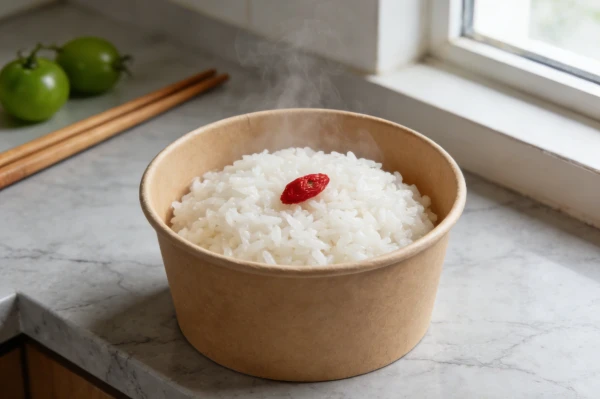
From my "20+ years of experience" at Amity Packaging, I have seen many innovations in paper packaging. Our mission is to "Empower everyone who uses paper cups and bowls to truly understand paper packaging." My journey has taught me that the perceived simplicity of a paper bowl hides complex design secrets. It is not just about looks or thickness. It is about "technological innovation," "strict quality control," and a deep understanding of materials. I will unveil these secrets, showing you how a "good" bowl is meticulously engineered to stand up to oil, prevent leaks, and handle heat, benefiting both newcomers and industry veterans alike.
The Coating's "Invisible Shield": How Does It Achieve Molecular-Level Oil and Water Resistance?
Have you ever wondered why some paper bowls hold liquids perfectly while others get soggy almost instantly? The answer lies in an invisible, microscopic barrier.
The coating's "invisible shield" achieves molecular-level oil and water resistance by creating a non-porous barrier on the paper's surface. This special layer, often made of PE or PLA, prevents liquid molecules from penetrating the paper fibers. It works by having a different surface tension that repels water and oil, keeping the bowl's structural integrity intact.
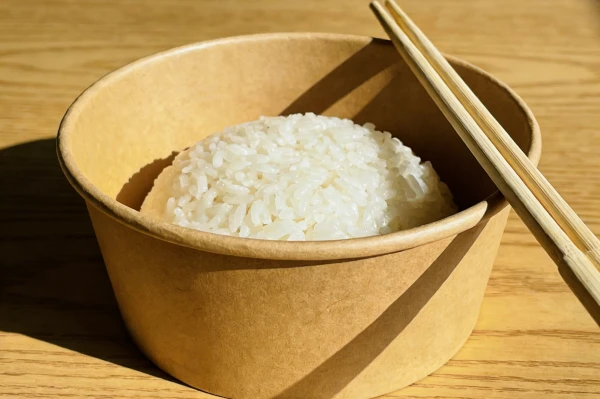
"The Coating's 'Invisible Shield': How Does It Achieve Molecular-Level Oil and Water Resistance?" This is where our expertise in "raw material selection" really shines. Jonh always says that "the best material" is one that performs its job flawlessly. For a kraft paper bowl, that means stopping liquids and oils. My experience in "material & structure consultation" has shown that the coating is the chief architect of a bowl's performance. It is an engineering marvel, transforming absorbent paper into a reliable container, reflecting our commitment to "high-quality, eco-friendly, and safe paper packaging solutions."
The Science Behind the Surface
The "invisible shield" of a paper bowl is not just a simple layer; it is a meticulously engineered interface designed to outsmart the natural absorbency of paper. Paper, being fibrous, naturally wicks moisture. The coating's job is to completely negate this property, creating a durable, non-permeable surface. This is a testament to the "technological innovation" we constantly explore at Amity Packaging.
How Molecular Resistance Works:
Barrier Formation: The coating material forms a continuous, ultra-thin film over the individual paper fibers and the tiny pores within the paperboard. This film acts as a physical barrier, blocking the passage of liquid molecules. Think of it like shrink wrap on a porous sponge.
Surface Tension Manipulation: The coating material itself has different surface chemistry compared to paper.
Hydrophobicity (Water Repulsion): Materials like Polyethylene (PE) or Polylactic Acid (PLA) are inherently hydrophobic. This means their molecular structure makes them "afraid" of water. When water molecules come into contact with such a surface, they tend to bead up rather than spread out and soak in. This effect is visible when you see water droplets on a waxed car.
Oleophobicity (Oil Repulsion): Similarly, these coatings also possess oleophobic properties, resisting oil penetration. Oil molecules, like water, are repelled by the coating's surface tension, preventing grease from soaking into the paper. This is especially crucial for "food takeaway paper boxes" and "disposable paper bowls (soups, noodles)" containing oily dishes.
Adhesion to Paper: For the shield to last, the coating must bond extremely well to the paper substrate. Our manufacturing processes ensure a strong, uniform adhesion, preventing delamination or cracking that could create weak points for liquid ingress. This process is monitored with our "strict quality control" measures.
Types of Coatings and Their Resistances:
| Coating Type | Primary Resistance | Eco-Friendliness (Amity's Focus) | Best for |
|---|---|---|---|
| PE (Polyethylene) | Excellent water & oil barrier | Our PE-coated items are designed to ensure product integrity and safety. | Hot & cold food, high grease content |
| PLA (Polylactic Acid) | Good water & oil barrier (plant-based) | Industrially compostable; "Using biodegradable coatings (PLA bio-based)" | Cold food, warm food, moderate grease |
| Aqueous Coatings | Variable, often good for water, improving for oil | Designed for recyclability/compostability; continually evolving | Specific eco-driven applications |
The choice of coating is a major decision in product design, tailored to specific "product applications." For instance, a bowl for hot, greasy noodles demands a more robust, stable coating than one for a cold, dry salad. My work with "logo & printing customization" also ensures that even the aesthetic elements do not compromise this critical invisible shield.
By focusing on "The Coating's 'Invisible Shield'," we understand "How It Achieves Molecular-Level Oil and Water Resistance." This crucial design secret ensures that each kraft paper bowl not only looks good but also performs reliably, keeping your food contained and your hands clean.
Details Make the Difference: How Does Leak-Resistant Design Work in Rims and Seams?
Do you trust your paper bowl to hold a full, saucy meal without a single drip? That reliability does not happen by chance; it is built into the tiny, often overlooked, features.
Leak-resistant design in rims and seams works by creating strong, continuous seals through precise manufacturing techniques. Rims are typically rolled or folded tightly to eliminate gaps and provide structural integrity. Seams are sealed using heat and pressure with specialized adhesives or coating layers to fuse the paper and coating completely, preventing any capillary action or liquid escape, meaning even the smallest details make the difference.
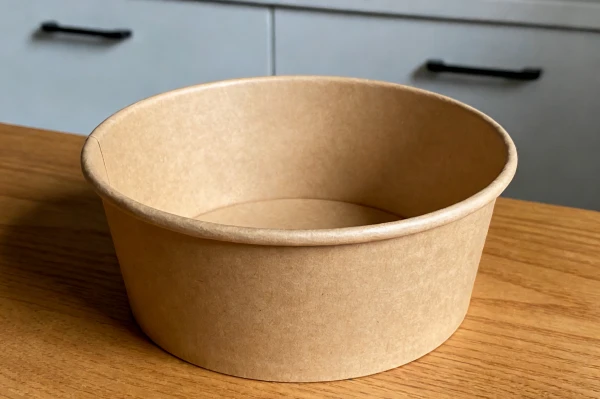
"Details Make the Difference: How Does Leak-Resistant Design Work in Rims and Seams?" This is where my "Degree in Mechanical Engineering" and Jonh's deep understanding of factory processes come into play. It is not just about the material; it is about how that material is put together. Our "advanced production lines" are fine-tuned to achieve these precise seals. We know that "strict quality control" demands attention to every tiny fold and every millimeter of adhesion. A bowl is only as strong as its weakest point, and for our "disposable paper bowls," we make sure there are no weak points.
The Engineering of Impermeability
While the coating provides the primary barrier on the flat surfaces of the bowl, its effectiveness would be compromised if the structural joints-the rims and seams-are not equally impermeable. These areas are where leaks most commonly occur, turning a perfectly good bowl into a leaky mess. Our "full-process inspections" are particularly rigorous in these key areas to ensure not only safety but also consistent quality.
The Art of the Rim (Top Edge):
The rim of a paper bowl is typically its most exposed and handled edge. Its design is crucial for both user experience and leak prevention.
Rolled Rim Construction: In most high-quality paper bowls, the top edge is tightly rolled over. This process involves folding the paperboard back upon itself, sometimes multiple times.
Eliminates Raw Edges: This covers the exposed, absorbent paper fibers that could otherwise wick liquid, creating a smooth, sealed surface.
Adds Rigidity: The rolled rim provides significant structural strength, making the bowl more resistant to bending and easier to hold, especially for hot contents.
Prevents Spills: A well-formed rim also helps contain liquids within the bowl, reducing sloshing and spillage. This is crucial for our "disposable paper cups (hot & cold, double-wall)" as well.
Coating Continuity: The coating from the inside of the bowl extends into the rolled rim, creating a continuous waterproof barrier even at the very top edge. This ensures that no liquid can seep into the paper layers from the top.
The Precision of the Seams (Side and Bottom):
The side wall and bottom piece of a paper bowl are joined together via seams. These are arguably the most critical areas for leak prevention.
Side Seam (Overlap Seam): The main body of the bowl is formed from a single sheet of paperboard, rolled into a cylindrical or conical shape. The two overlapping edges are then fused together.
Heat Sealing: For PE or PLA coated bowls, the inner coating layers are typically heat-sealed. This involves applying controlled heat and pressure to melt and fuse the plastic coatings, creating a homogeneous, liquid-tight bond. This is a very common method in our "mass production."
Ultrasonic Sealing: Some advanced methods use ultrasonic vibrations to create strong bonds without external heat, especially for certain material combinations.
Adhesives: For certain specialty bowls or materials, food-grade adhesives are used in conjunction with pressure to create a strong, leak-proof seam. Jonh always ensures that any adhesives used are "food-grade."
Bottom Seam (Flange/Roll Seam): The circular bottom piece is attached to the main side wall.
Flanging and Rolling: The bottom edge of the side wall is flanged outwards, and the edge of the bottom piece is inserted. These layers are then securely rolled or crimped together under heat and pressure, often with an additional layer of coating or adhesive to ensure a complete seal. This creates a robust, leak-proof base.
| Design Detail | Function for Leak Resistance | How Achieved in Production | Benefit for User |
|---|---|---|---|
| Rolled Rim | Seals top edge, adds rigidity | Folding & sealing paper/coating | No wicking, easy to hold, prevents spills |
| Heat-Sealed Side Seam | Fuses coating for seamless barrier | Controlled heat & pressure | No vertical leaks, strong side walls |
| Crimped Bottom Seam | Secures base, prevents seepage | Flanging, rolling, heat/pressure | Robust base, no horizontal leaks |
| Coating Continuity | Extends barrier to all joins | Precise application & sealing | Complete liquid impermeability |
By mastering how "Details Make the Difference," especially in the "Leak-Resistant Design in Rims and Seams," we ensure our kraft paper bowls offer uncompromising reliability. This meticulous engineering is what allows our products to safely contain even the sauciest meals without a single drip.
Surpassing Temperature Limits: What Is the Battle for Thermal Stability in Coatings and Adhesives?
Have you ever had a paper bowl buckle under the heat of hot soup, or fail with a frozen dessert? The fight against extreme temperatures is a fierce one for paper packaging.
Surpassing temperature limits for kraft paper bowls involves a careful battle for thermal stability in coatings and adhesives. Specialized coatings like high-temperature PE or fortified PLA are chosen for their resilience against heat without degrading or affecting food. Food-grade adhesives are engineered to maintain strong bonds across hot and cold extremes, preventing structural failure and ensuring the bowl holds its shape and integrity.
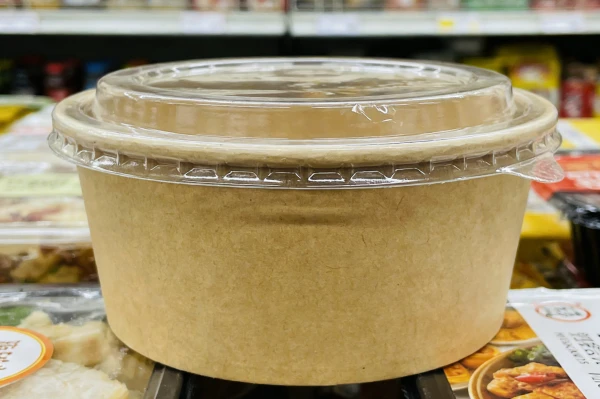
"Surpassing Temperature Limits: What Is the Battle for Thermal Stability in Coatings and Adhesives?" This is a major design challenge we tackle at Amity Packaging. My "15 years in disposable packaging manufacturing" has shown me that temperature fluctuations are relentless. Jonh's expertise in "end-to-end production" includes selecting materials that will not only withstand extreme heat and cold but also remain food-safe. Our "technological innovation" is constantly pushing these boundaries, ensuring our "disposable paper cups (hot & cold, double-wall, PE/PLA coated)" live up to their name and provide solutions that "enhance product performance and brand value."
Materials Under Thermal Stress
The paper itself provides some inherent insulation, but it is the coatings and adhesives that bear the brunt of thermal stress in a paper bowl. Without materials stable across a wide temperature range, a bowl designed for hot soup could leach chemicals or fall apart, and one for frozen yogurt might become brittle and crack. This battle for thermal stability is a key differentiator in quality. My focus on "material & structure consultation" often revolves around optimizing for these specific temperature challenges.
Coatings and Heat Resistance:
PE (Polyethylene) Coatings: Standard PE is highly effective for both hot and cold liquids. However, for extremely hot applications (like boiling water or very hot, oily stew), specialized high-density polyethylene (HDPE) or specific blends are used. These versions maintain their integrity and barrier properties at higher temperatures without softening, melting, or degrading into the food. Our "PE coated" products are carefully selected for the right temperature range.
PLA (Polylactic Acid) Coatings: PLA is plant-based and compostable, making it environmentally friendly. However, traditional PLA has a lower heat tolerance compared to PE. It can soften or deform at high temperatures (typically above 110-120°F or 45-50°C), making it less suitable for very hot liquids unless specially formulated or blended. We offer "PLA bio-based" options, and advise clients on their optimal use cases. Advances are being made in high-heat PLA and other bioplastics to overcome this limitation.
Aqueous Coatings: New aqueous dispersion coatings are engineered to be highly heat-resistant, often capable of withstanding oven temperatures for re-heating. These are a strong area of "technological innovation" for greater thermal stability and eco-friendliness.
Adhesives and Extreme Temperatures:
Adhesives are used to seal overlaps and attach the bottom of the bowl. Their thermal stability is just as critical as the coating's.
Hot Adhesion: The adhesive must maintain its bond strength at high food temperatures. If it weakens, seams can open, leading to leaks. Specialized food-grade hot-melt adhesives or thermal-activated coatings are designed for this purpose.
Cold Adhesion: For bowls intended for frozen foods, the adhesive must remain flexible and strong at freezing temperatures. If an adhesive becomes brittle when cold, the seams can crack during handling or thawing. This ensures that our "disposable paper bowls (soups, noodles, salads)" can go from freezer to microwave without compromising integrity.
The Role of Double-Wall Design:
For extremely hot beverages or foods, a "double-wall" design is often employed. This does not involve different coatings but rather adds an outer layer of paper, creating an air gap between the inner and outer walls. This air gap acts as an insulator, protecting the user's hands from heat and subtly helping the contents retain temperature. This is a common feature in our "disposable paper cups (hot & cold, double-wall)."
| Thermal Challenge | Coating/Adhesive Solution | Specific Benefit | Amity Application Example |
|---|---|---|---|
| Hot Food (e.g., soup) | High-temp PE, specialized PLA, aqueous coatings | Prevents softening, chemical leaching | "PE/PLA coated" hot food bowls and cups |
| Frozen Food (e.g., ice cream) | Flexible adhesives, robust coatings | Prevents brittleness, cracking | Bowls for frozen desserts |
| Hand Comfort for Hot Food | Double-wall construction, thicker paper | Enhanced insulation, protects hands | "Double-wall" paper cups |
| Overall Stability | Thermally stable materials, strong bonds | Maintains bowl shape and integrity | All our "disposable paper bowls" |
By winning the "Battle for Thermal Stability in Coatings and Adhesives," we are "Surpassing Temperature Limits" for kraft paper bowls. This sophisticated material science ensures that our products perform reliably, whether you are serving piping hot chili or perfectly frozen gelato.
System Synergy: How Does Customizing the "Protective Armor" Cater to Different Food Scenarios?
Do you believe a single paper bowl design can perfectly handle a steaming hot ramen, a cold crisp salad, and a greasy fried dinner? The truth is, optimal performance requires specific armor.
System synergy customizes the "protective armor" for different food scenarios by intelligently combining grammage, coating type, and structural design features. For hot, oily foods, it means a robust, high-temperature-tolerant coating on a stiff paper with secure seams. For cold, watery items, it might involve a compostable coating on a lighter grammage. This integrated approach ensures each bowl is perfectly equipped, preventing waste and maximizing performance for its intended use.
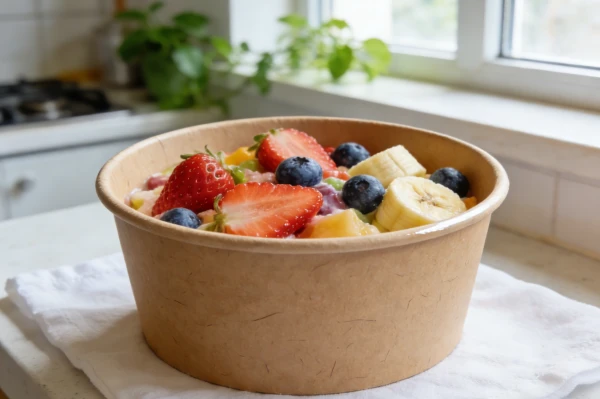
"System Synergy: How Does Customizing the 'Protective Armor' Cater to Different Food Scenarios?" This is the core of our "tailor-made solutions." My "over 20 years of industry expertise" has shown me that a one-size-fits-all approach inevitably leads to compromise. Jonh, with his "deep understanding of product applications in multiple markets," emphasizes that true value comes from optimizing for specific needs. It is how we, at Amity Packaging, go beyond just making paper bowls. We build customized "protective armor" for food, ensuring "solutions that enhance product performance and brand value."
Engineering for Diverse Culinary Demands
The concept of "System Synergy" at Amity Packaging means that we do not view grammage, coating, and structural design as independent elements. Instead, they are components of a single, integrated system, meticulously tuned to meet the specific demands of various food scenarios. This holistic engineering approach allows us to deliver products that are not just functional but optimized for their intended purpose, reducing waste and enhancing user satisfaction. Our "efficient production & delivery" relies on this systematic approach.
Customizing the "Protective Armor":
Scenario: Hot, Oily Soups or Noodles (e.g., Ramen, Chili)
Grammage: Higher (e.g., 280-350 GSM) for stiffness and insulation, preventing the bowl from becoming too hot to handle or buckling under the weight of liquid. Often a "double-wall" design is used.
Coating: Robust, high-temperature-resistant PE coating for superior oil and water barrier at elevated temperatures. Alternatively, specialized high-heat aqueous coatings or fortified PLA can be selected.
Design: Tightly rolled, reinforced rims for stability and lip contact comfort. Strong, heat-sealed side and bottom seams to prevent leaks under thermal stress.
Amity Focus: We provide "disposable paper bowls (soups, noodles)" that are engineered to maintain integrity even with boiling hot contents, ensuring a safe and durable experience.
Scenario: Cold, Wet Salads or Fruit (e.g., Large Garden Salad, Fruit Bowl)
Grammage: Medium (e.g., 250-300 GSM) for sufficient rigidity to hold the food, but not so high as to add unnecessary cost or bulk.
Coating: Standard PE or, increasingly, PLA coating for excellent water resistance. PLA is often favored here due to its eco-friendly profile and its stability at cold temperatures. This fulfills our "sustainability commitment."
Design: Wide, stable base and a slightly shallower, wider shape to allow for easy mixing and access to salad ingredients. Strong, but not necessarily heat-sealed, seams suffice for cold applications.
Amity Focus: Our "disposable paper bowls (salads)" are designed to keep contents fresh and contained while offering eco-friendly options.
Scenario: Greasy Fried Foods (e.g., Fried Chicken, French Fries)
Grammage: Medium to high (e.g., 260-320 GSM) to provide firm structure and prevent oil from weakening the paper.
Coating: Emphasizes advanced oleophobic (oil-repelling) properties. Often a specialized PE or an aqueous coating optimized for grease resistance.
Design: Often features venting or specialized coatings for moisture management to prevent sogginess from steam, or a more open design for easy access. Flat-bottomed "food takeaway paper boxes" are also common in this category.
Amity Focus: Our "food takeaway paper boxes (bento boxes, lunch boxes)" and certain bowls incorporate advanced grease barriers to ensure food stays contained and crisp.
The "Right" Protective Armor:
The goal of "System Synergy" is to select the perfect combination of grammage, coating, and construction to provide the "right" protective armor for each specific food item. This prevents:
Over-engineering: Using unnecessarily expensive or heavy materials for simple tasks, which goes against our "eco-driven mindset."
Under-engineering: Using inadequate materials, leading to product failure, leaks, and customer dissatisfaction.
This precise application of technology ensures our products are always "tailor-made," aligning with your exact requirements for functionality and sustainability.
| Food Scenario | Grammage (GSM) | Coating Type | Key Design Feature | Resulting Synergy |
|---|---|---|---|---|
| Hot, Oily Soup | High (280-350+) | High-temp PE / Aqueous | Double-wall, strong seams | Excellent insulation, no leaks, safe to handle |
| Cold, Wet Salad | Medium (250-300) | PLA / Standard PE | Wide, stable design | Secure containment, eco-friendly option |
| Greasy Fried Food | Medium-High (260-320) | Specialized PE / Aqueous | Strong oil barrier, vents | Resists grease, prevents sogginess |
| Dry Snacks | Low-Medium (200-250) | Minimal (e.g., wax) | Basic, stable shape | Cost-effective, sufficient strength |
By embracing "System Synergy," we understand "How Customizing the 'Protective Armor' Caters to Different Food Scenarios." This intelligent design ensures every kraft paper bowl we produce is perfectly suited for its specific task, delivering optimal performance and peace of mind.
Conclusion
Truly oil-resistant, leakproof, and heat-resistant kraft paper bowls are a result of complex design. It is the systemic synergy of advanced coatings, precise rims and seams, and thermally stable materials, meticulously customized for every food scenario.


