

What Exactly Is A Corrugated Paper Cup? Unlocking The Secret Of Its 3-Layer Structure?
Leave a message
What Exactly Is a Corrugated Paper Cup? Unlocking the Secret of Its 3-Layer Structure?
Tired of flimsy cups that burn your fingers or cool your drink too fast? Traditional disposable cups often fail to deliver a comfortable experience.
A corrugated paper cup features a unique three-layer structure, typically an inner paper cup, a middle corrugated (wavy) paper layer creating an insulating air gap, and an outer smooth paper sleeve. This design secret makes the cup pleasantly insulated, keeping drinks hot and hands cool without the need for a separate sleeve.

In my two decades at Amity Packaging, Jonh and I have seen many innovations transform simple paper cups. We believe "Our mission: Empower everyone who uses paper cups and bowls to truly understand paper packaging." So, let us dive into the ingenious design of the corrugated paper cup and see why it is a game-changer.
Dispelling the Myth: Does a Corrugated Cup Really Prevent Scalding?
Do you still expect disposable cups to burn your hands? Many people associate hot drinks with uncomfortable cups.
Yes, a corrugated cup effectively prevents scalding by creating an insulating air layer between the hot inner cup and the outer surface. This 'air pocket' significantly reduces heat transfer to your hand, changing the perception from "scalding hot" to "pleasantly insulated" for a comfortable hold.

At Amity Packaging, we focus on "Tailor-Made Solutions" to meet specific needs, including thermal comfort. Jonh, with his "15 years in disposable packaging manufacturing," understands how small design details make a big difference. This includes ensuring a comfortable grip. Let us look at "Does a Corrugated Cup Really Prevent Scalding?"
The Science of "Pleasantly Insulated"
The ability of a corrugated paper cup to "prevent scalding" and provide a "pleasantly insulated" experience is not just a myth; it is a direct result of clever engineering principles, specifically involving heat transfer. When we at Amity Packaging talk about enhancing product performance, this thermal barrier is a prime example.
Firstly, The Principle of Air as an Insulator. The core of the corrugated cup's effectiveness lies in its middle layer. This wavy, or "corrugated," paper creates tiny air pockets between the inner cup and the outer sleeve. Air is a poor conductor of heat. This means it slows down the transfer of heat from the hot liquid inside the inner cup to your hand holding the outer sleeve. It is the same principle that makes double-pane windows effective or keeps you warm in a puffy jacket. Without this air gap, heat would quickly transfer through a single layer, making the cup too hot to hold.
Secondly, Reducing Conduction and Convection. The corrugated layer acts as a physical barrier. It minimizes direct contact between the hot inner cup and the outer sleeve (conduction). The enclosed air pockets also restrict the movement of heated air (convection) within the layers, further preventing heat from escaping outwards rapidly. This dual action gives the corrugated cup a significant advantage over a single-wall cup or even a standard double-wall cup without the wavy middle layer. Our "20+ years of experience" has shown that this design detail significantly enhances user comfort.
Finally, The User Experience Transformation. For consumers, this translates into a tangible benefit: holding a very hot drink without discomfort. Before corrugated cups, people often needed separate sleeves or suffered through hot cups. This solution eliminates the need for an additional sleeve, saving material and hassle for the user. It completely shifts the perception from "scalding hot" to a secure, comfortable hold. This improvement in user experience directly reflects our mission: "Empower everyone who uses paper cups and bowls to truly understand paper packaging" and enjoy it.
| Element | Heat Transfer Mechanism | Corrugated Impact | Result for User |
|---|---|---|---|
| Air Pockets | Conduction, Convection (slowed) | Insulating barrier | Keeps hands cool |
| Wavy Layer | Reduces direct contact | Minimizes heat conduction | Comfortable grip |
| Inner Cup | Holds hot liquid | Stays hot longer | Extended drinking pleasure |
| Outer Sleeve | Held by hand | Remains pleasantly warm | Scalding prevented |
Therefore, a corrugated cup does "prevent scalding." Its ingenious design, by leveraging the insulating properties of air within its wavy structure, ensures that the experience shifts "from 'Scalding Hot' to 'Pleasantly Insulated'."
Structural Revelation: How does the three-layer design serve distinct functions?
Do you ever wonder how some paper cups manage to perform so much better? It is not just magic; it is clever design.
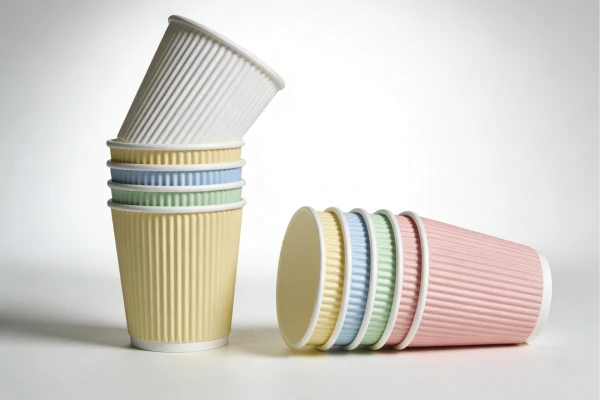
The three-layer design of a corrugated cup serves distinct functions, maximizing performance. The inner layer holds the liquid and has a leak-proof coating, the middle corrugated layer provides insulation and structural stability, and the outer layer offers a smooth surface for branding and comfortable handling, showing intelligent material use.
Jonh, with his "Degree in Mechanical Engineering" and deep understanding of "material and structure consultation," always stresses the importance of design for function. At Amity Packaging, we believe in "Mastering the Art of Disposable Paper Product Manufacturing." Let us explore "How does the three-layer design serve distinct functions?"
The Symphony of Layers
The "Structural Revelation" of the corrugated paper cup lies in its intelligent "three-layer design," where each component is optimized to serve "distinct functions." This engineering approach allows the cup to achieve superior performance compared to simpler designs.
Firstly, The Inner Paper Cup (Liquid Containment). This is the core functional component. It is typically made from a sturdy paperboard with a food-grade lining, often a polyethylene (PE) or more sustainably, a PLA or water-based coating. Its primary function is to securely "hold the liquid" without leaking and to protect the beverage from absorbing paper taste. This inner layer must be non-toxic and compliant with food safety standards. My work ensures "strict quality control" for this layer, as it directly contacts the drink.
Secondly, The Middle Corrugated Layer (Insulation and Stability). This is the most distinctive feature of the corrugated cup. The wavy paper layer is strategically placed between the inner cup and the outer sleeve. Its "distinct functions" are two-fold:
Insulation: As discussed, it creates insulating air pockets that dramatically reduce heat transfer, keeping the drink hot and hands cool.
Structural Stability: This corrugated layer also adds significant rigidity and strength to the entire cup. It acts like a series of tiny support beams, making the cup much firmer and less prone to bending or collapsing under pressure than a standard double-wall cup without this feature. This rigidity contributes to a "comfortable grip," as well.
Finally, The Outer Paper Sleeve (Branding and Handling). This outermost layer completes the cup's structure. Its main "distinct functions" are:
Branding: It provides a smooth, untextured surface that is ideal for high-quality printing, allowing for vibrant logos, intricate designs, and effective brand messaging. Our "logo & printing customization" service relies on this smooth canvas.
Comfortable Handling: This layer is what the consumer directly touches. Its smooth finish is comfortable against the skin, and because the heat is insulated by the middle layer, it remains at a pleasant temperature.
| Layer | Primary Function | Secondary Function | Key Material Trait |
|---|---|---|---|
| Inner Cup | Contain liquid, prevent leaks | Food-safe barrier | PE/PLA coated paperboard |
| Corrugated Middle | Insulation, structural strength | Air gap creation | Wavy paperboard |
| Outer Sleeve | Branding, comfortable grip | Aesthetic appeal | Smooth printable paperboard |
Therefore, the corrugated paper cup's "three-layer design" is a masterclass in functional engineering. Each layer intelligently "serves distinct functions," culminating in a product that delivers superior insulation, strength, and brand presentation.
Past and Present: From Industrial Packaging to Everyday Consumer Use, How did corrugated paper cups evolve?
Do you ever think about the origins of everyday items? Many things started in unexpected places.
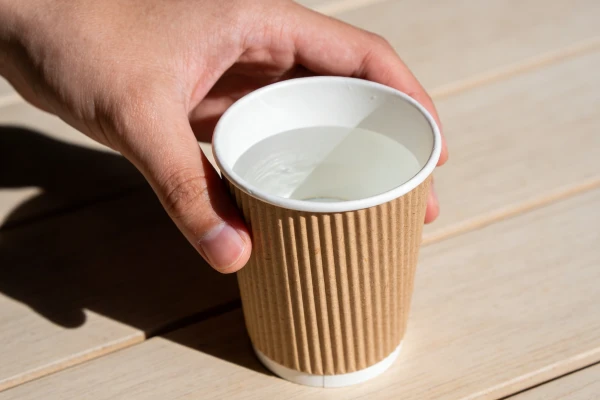
Corrugated paper cups evolved from industrial packaging, originally used for protecting fragile goods during shipping. The material's inherent insulation and shock absorption were adapted for beverage containers, transitioning from a utilitarian background to widespread "everyday consumer use" as a durable, insulated cup solution for hot drinks globally.
"Our 20+ years of experience" means I have seen this industry grow and change. Jonh, with his practical background, often points out how new ideas come from old solutions. We find fascinating stories when we look at "Past and Present: How did corrugated paper cups evolve?"
A Journey of Innovation and Adaptation
The journey of the corrugated paper cup "from Industrial Packaging to Everyday Consumer Use" is a compelling story of material science and design adaptation. It highlights how a proven technology can be repurposed to solve new consumer needs.
Firstly, The Roots in Industrial Packaging. Corrugated fiberboard, the precursor to our cup's middle layer, has been widely used in industrial packaging since the late 19th century. Its primary purpose was to "protect fragile goods during shipping." The wavy flutes, sandwiched between flat liners, provided exceptional cushioning and structural rigidity, making it ideal for boxes and protective inserts. This material allowed for lighter, yet stronger, packaging compared to traditional wooden crates. Its ability to create an air gap for insulation against temperature changes was an added benefit, though not its primary focus initially.
Secondly, Adapting for Beverage Containment. The leap from shipping boxes to beverage cups happened as consumer demands for convenience and comfort grew, especially with the rise of on-the-go hot drinks in the mid-20th century. Designers recognized the inherent "insulation" and "strength" properties of corrugated material. The challenge was to scale this technology down and adapt it to a cylindrical, food-safe format. This involved:
Engineering smaller, finer flutes suitable for cup walls.
Developing safe, effective adhesives to bond the layers for human use.
Integrating leak-proof inner coatings.
This adaptation was a "structural revelation" for the disposable cup market.
Finally, Meeting Modern Consumer Needs. Once perfected, the corrugated paper cup swiftly found its place in "everyday consumer use." It addressed key pain points of single-wall cups (too hot to hold, flimsy) and double-wall cups (which still might need a sleeve or be less rigid than corrugated). This evolution aligns directly with "Our Mission" to understand and improve paper packaging. Jonh and I consistently look for ways to innovate, just as these early engineers did. The corrugated cup transformed the hot beverage experience, becoming a standard for coffee shops, cafes, and any place where a comfortably insulated, sturdy, and elegant disposable cup is needed.
| Era/Sector | Material Use | Key Driver | Impact on Product |
|---|---|---|---|
| 19th Century+ | Industrial packaging (boxes) | Protection, shock absorption | Goods arrived safely |
| Mid-20th Century | Adapted for beverage containers | Consumer comfort, convenience | Insulated, sturdy cups created |
| Present Day | Widespread consumer use | Enhanced experience, branding | Premium, comfortable hot drink solution |
Therefore, the corrugated paper cup's evolution is a testament to ingenuity. Its journey "from Industrial Packaging to Everyday Consumer Use" shows how its proven "3-layer structure" fundamentally changed the way we enjoy hot beverages today.
See the Difference at a Glance: A Core Comparison Chart with Mainstream Cup Types?
Are you confused by all the different disposable cup options out there? Choosing the right cup can make a big difference for your product.
Understanding the difference is key: a core comparison chart reveals how corrugated cups stand out from mainstream cup types like single-wall and standard double-wall cups in terms of insulation, grip comfort, and perceived quality. This helps you select the best cup for specific needs efficiently.

At Amity Packaging, we offer "Material & structure consultation" so our clients can make informed decisions. Jonh and I believe "Empower everyone who uses paper cups and bowls to truly understand paper packaging." So let us "See the Difference at a Glance: A Core Comparison Chart with Mainstream Cup Types?"
Which Cup Suits Your Needs?
To truly "See the Difference at a Glance," comparing the corrugated paper cup with other "mainstream cup types" reveals its unique advantages. This helps brands and consumers make the optimal choice based on their specific priorities for performance, cost, and user experience.
Firstly, Single-Wall Paper Cups. These are the most basic and economical option. They consist of a single layer of paperboard, usually with an inner PE or alternative coating.
Pros: Cheapest, lightest, easiest to recycle (if coated with water-based barriers).
Cons: Poor insulation (too hot to hold for hot drinks, prone to condensation for cold), lacks rigidity, often requires a separate sleeve for hot beverages.
Best Use: Cold drinks, or very short-duration hot drinks where minimal insulation is acceptable and cost is paramount.
Secondly, Standard Double-Wall Paper Cups. These cups feature two layers of paperboard, laminated together or with a small air gap created by the lamination process. They typically have an inner coating.
Pros: Better insulation than single-wall, eliminates the need for a separate sleeve, more sturdy.
Cons: Can still feel warm to the touch (though not scalding), usually higher cost than single-wall, often uses more material.
Best Use: Hot beverages where good insulation and a comfortable grip are desired without the unique texture of corrugated.
Finally, Corrugated Paper Cups. These cups incorporate the unique wavy middle layer, creating a distinct air gap.
Pros: Superior insulation (exceptionally cool to the touch even with very hot liquids), highest rigidity and feel of quality, no need for a separate sleeve, distinctive tactile experience. Jonh often recommends these for premium hot beverages.
Cons: Generally the highest cost among the three, can be slightly heavier.
Best Use: Premium hot beverages (coffee, tea), situations requiring extended heat retention, and brands aiming for the highest perceived quality and user comfort.
At Amity Packaging, "Our Advantages" include providing "Tailor-Made Solutions." We guide clients in choosing the right material and structure that enhances their "brand value" and delights their customers.
| Feature | Single-Wall Cup | Standard Double-Wall Cup | Corrugated Paper Cup |
|---|---|---|---|
| Insulation | Poor (needs sleeve for hot) | Good (no sleeve needed) | Excellent (very comfortable) |
| Grip Comfort | Hot/Cold to touch | Warm to touch | Pleasantly warm/cool to touch |
| Rigidity/Feel | Flexible, flimsy | Sturdy | Very sturdy, premium feel |
| Cost | Lowest | Medium | Highest |
| Material Use | Least | More | Most |
| Recycling/Disposal | Varies by coating | Varies by coating | Varies by coating/layers |
| Aesthetic | Basic, functional | Smooth, customizable | Unique texture, premium look |
Thus, this "Core Comparison Chart" allows you to "See the Difference at a Glance" between corrugated and "mainstream cup types." It clearly outlines why corrugated paper cups are often "the ultimate choice for experience" for specific needs where comfort, insulation, and quality are paramount.
Conclusion
A corrugated paper cup's "3-layer structure" effectively "prevents scalding," with each layer serving "distinct functions." Evolving from "industrial packaging," it offers superior insulation and comfort, clearly showcased in a "comparison chart" against other mainstream cups.


