

“Single-Wall Cup With Sleeve” Or “Corrugated Cup”: Which Wins For Cost And Heat Insulation?
Leave a message
"Single-Wall Cup with Sleeve" or "Corrugated Cup": Which Wins for Cost and Heat Insulation?
Have you ever juggled a piping hot coffee, or found your perfectly crafted drink cooling too fast? The wrong cup choice leaves customers with burned hands or lukewarm beverages, directly impacting their experience-and your brand. Choosing between a single-wall cup with a sleeve and a corrugated (ripple-wall) cup means understanding their true differences in insulation and cost.
Generally, a corrugated (ripple-wall) cup offers superior heat insulation because its textured outer layer creates multiple air pockets, effectively trapping heat and protecting hands without an extra sleeve. While a single-wall cup with a sleeve can be more cost-effective upfront, the ripple-wall provides a more consistent, premium, and often more efficient insulating experience.

My 20+ years at Amity Packaging have shown me that a simple cup is rarely simple. Jonh, our expert, always emphasizes that balancing cost with customer experience is key. I have seen businesses struggle with decisions about cup types. This guide helps you understand the genuine performance differences so you can make an informed choice that truly benefits your clients.
Which Type of Cup Provides the Best Insulation for Hot Beverages?
Do you find your customers complaining about hot cups or drinks that quickly turn cold? The cup's insulation is key to a comfortable and satisfying drink experience, but are you sure you are choosing the design that truly performs best?
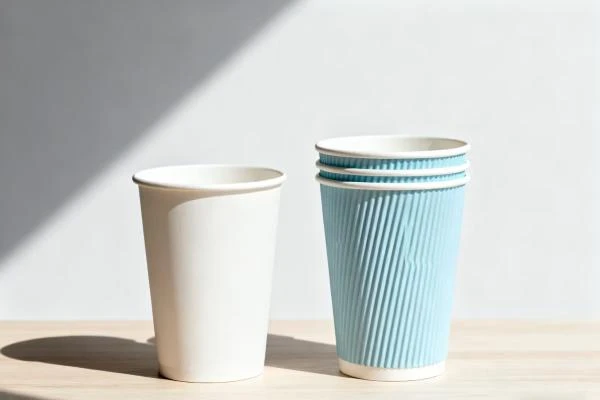
For hot beverages, corrugated (ripple-wall) cups generally provide the best insulation. Their unique design creates multiple air pockets between the inner and outer layers. This layered structure traps air, significantly reducing heat transfer and keeping drinks hotter for longer while protecting hands from extreme temperatures without needing an additional sleeve.
Jonh, with his mechanical engineering expertise, always explains that insulation is less about the paper itself and more about the trapped air. My experience confirms this: innovative designs make a huge difference in performance. At Amity, we focus on solutions that enhance product performance, which is why understanding which cup type insulates best is crucial for client satisfaction.
Unpacking Insulation Performance Across Cup Types
When we talk about insulation in disposable paper cups, we are primarily concerned with how effectively a cup can slow down heat transfer. This keeps hot drinks hot and cold drinks cold, while also protecting the user's hand. Different cup constructions approach this challenge in varying ways.
Corrugated (Ripple-Wall) Cups: These cups feature an inner paper cup laminated with an outer corrugated paper sleeve, creating a textured, wavy surface. The key to their superior insulation lies in the multiple air gaps formed by the ripples. Air is a poor conductor of heat, meaning these trapped air pockets significantly impede the transfer of thermal energy from the hot liquid inside outward. This multi-layered air barrier makes the exterior of a ripple-wall cup very comfortable to hold, even with boiling liquids. The ripple effect also adds to the cup's rigidity and provides a non-slip grip. My observations from working with countless clients show that ripple-wall cups consistently perform the best in real-world insulation tests.
Double-Wall Cups: These cups consist of two smooth paperboard layers separated by an intentional air gap. While not as intricate as the ripple design, this single, larger trapped air layer still offers excellent insulation compared to a single-wall cup. It works on the same principle: air trapped between the walls reduces heat conduction. Double-wall cups are a very popular choice for hot beverages, offering a solid balance of insulation and a smooth, premium feel. They usually do not require sleeves.
Single-Wall Cups (with Sleeve): A basic single-wall cup made from one layer of paperboard offers minimal inherent insulation. It quickly becomes too hot to hold with hot beverages. To address this, a separate cardboard sleeve is usually added. This sleeve creates a small air gap between its surface and the cup wall, providing some insulating effect. However, the sleeve is often less efficient than integrated multi-wall designs. It can also slip, and it requires an extra step for the customer or barista, plus an additional cost item.
| Cup Type | Insulation Strategy | Heat Transfer Reduction (Relative) | Hand Comfort (for Hot Drinks) | Additional Item Needed |
|---|---|---|---|---|
| Corrugated (Ripple-Wall) | Multiple trapped air pockets | Highest | Excellent (cool to touch) | None |
| Double-Wall | Single trapped air pocket | High | Very good (comfortable) | None |
| Single-Wall (with Sleeve) | Small air gap from sleeve | Moderate | Moderate (depends on sleeve) | Yes (sleeve) |
| Single-Wall (without Sleeve) | Paperboard only | Low | Poor (too hot to hold) | N/A |
Based on our extensive experience manufacturing and supplying these cups, the corrugated (ripple-wall) cup clearly stands out as providing superior insulation, offering the best protection for hands and prolonged beverage temperature, which translates directly into customer satisfaction.
What is the Difference Between Single-Wall and Double-Wall Cups?
Choosing the right coffee cup often comes down to fundamental design. Do you understand the core differences between single-wall and double-wall cups, and how these distinctions impact cost, comfort, and the drinking experience you offer?
The main difference between single-wall and double-wall cups lies in their construction: single-wall cups have one layer of paperboard, offering basic containment. Double-wall cups feature two layers separated by an insulating air gap. This extra layer in double-wall cups provides superior heat insulation, making them comfortable to hold for hot beverages without a separate sleeve.

Jonh always emphasizes that design informs function. For Amity Packaging, this means understanding how each structural choice impacts the end-user. My 20+ years in this industry have taught me that these seemingly small differences have big implications for businesses and their customers. I want to clarify these distinctions to help you make informed decisions.
Deconstructing Single-Wall and Double-Wall Designs
The distinction between single-wall and double-wall paper cups is critical. It impacts their suitability for various beverages, their cost, and, most importantly, the customer's experience.
Single-Wall Cups:
Construction: These are the most basic and economical paper cups. They are made from a single layer of paperboard, usually coated on the inside with PE or PLA to prevent leaks. The paperboard density and coating can vary, but the fundamental structure is one uniform wall.
Insulation: Single-wall cups offer minimal thermal insulation. Heat and cold transfer easily through the single layer of paper. As a result, they quickly become uncomfortably hot to hold when filled with hot beverages. They also show condensation on the outside with cold drinks.
Cost: Due to their simpler construction and less material, single-wall cups are typically the most cost-effective option per unit.
Use Cases: They are ideally suited for cold beverages (e.g., iced coffee, soft drinks) or for hot drinks where a separate cup sleeve will be provided. They are a popular choice for budget-conscious businesses or those with high-volume cold beverage service.
Double-Wall Cups:
Construction: These cups are engineered with two distinct layers of paperboard. An inner cup holds the liquid, and an outer cup is wrapped around it, leaving a deliberate air gap between the two layers. This air gap is the key to their enhanced performance.
Insulation: The trapped air between the two walls acts as an excellent insulator. Air is a poor conductor of heat, so it significantly slows down the transfer of heat from the hot liquid inside the cup to the user's hand. This makes double-wall cups comfortable to hold for hot beverages without the need for an additional sleeve. They also provide better temperature retention for both hot and cold drinks.
Cost: Double-wall cups are more expensive than single-wall cups due to the additional material and more complex manufacturing process involved in creating the two layers and the air gap.
Use Cases: They are primarily designed for hot beverages (e.g., coffee, tea, hot cocoa) where insulation and hand comfort are priorities. They offer a more premium feel and eliminate the need for sleeves, which can streamline operations and reduce supply chain complexities.
| Feature | Single-Wall Cup | Double-Wall Cup |
|---|---|---|
| Construction | One layer of coated paperboard | Two layers of paperboard with an insulating air gap |
| Insulation | Poor (needs sleeve for hot drinks) | Excellent (comfortable for hot drinks) |
| Cost | Lower (most economical) | Higher (more material, complex manufacturing) |
| Hand Feel | Hot to touch (with hot liquids); prone to condensation with cold | Comfortable, sturdy |
| Common Use | Cold beverages, hot beverages with separate sleeve | Hot beverages, premium feel, temperature retention |
My strong recommendations typically lean towards double-wall cups for hot beverages, especially for brands that prioritize customer comfort and a premium experience. They simplify things by removing the need for sleeves.
How Does Adding More Walls or Layers to a Cup Affect Its Insulation Properties?
It seems logical that more layers mean better insulation, but is it truly that simple? Do you understand the underlying science of how adding layers dramatically improves a cup's ability to keep drinks hot or cold, and why this matters for your offering?
Adding more walls or layers to a cup significantly improves its insulation properties by creating additional air gaps between the layers. These trapped air pockets act as effective thermal barriers, reducing heat transfer through conduction and convection. The more air trapped, the better the insulation, keeping liquids at their desired temperature for longer and protecting hands.

Jonh often breaks down the physics for me: it is all about slowing down energy transfer. At Amity, we innovate our designs to maximize these principles. My 20+ years in manufacturing have shown me the direct impact of these design choices on product performance. I want to explain exactly how these layers work to your advantage.
The Science of Layered Insulation
The principle behind improved insulation with more layers is rooted in controlling heat transfer mechanisms: conduction, convection, and radiation. Paperboard itself provides some minimal insulation, but the true gains come from the spaces between the layers.
Conduction Reduction: Heat conducts directly through materials. A single layer of paperboard allows relatively fast conduction from the hot liquid to the outside environment. When you add a second wall, you are introducing a new barrier. The heat must first conduct through the inner wall, then across an air gap, and finally through the outer wall. Air is a much poorer conductor of heat than paperboard. This means the air gap acts as a significant impediment to conductive heat flow.
Convection Suppression (Trapped Air): Convection is the transfer of heat through the movement of fluids (like air or liquid). In a single-wall cup, any air around the cup is free to move, carrying heat away from the hot surface. With multiple walls, the air is trapped in stationary pockets. This stationary air cannot move freely to carry heat away, effectively suppressing convective heat transfer. The more air pockets you create (as in a ripple-wall design), the more convective heat transfer you prevent. My observation is that these trapped air layers are the most effective means of insulation.
Radiation Reduction (Minor): While less dominant than conduction and convection in paper cups, some heat is transferred through thermal radiation. Multiple layers can offer a minor benefit by creating more surfaces for reflection or absorption, subtly slowing radiative heat loss.
Progression of Insulation with Layers:
Single-Wall: Offers basic containment. Minimal air insulation. Rapid heat loss.
Double-Wall: Introduces one significant air gap. This dramatically slows heat transfer compared to single-wall. Customers feel a noticeable difference in hand comfort and beverage temperature retention.
Triple-Wall / Ripple-Wall (Corrugated): This advanced design creates multiple, smaller air pockets due to its corrugated outer layer. These numerous trapped air zones provide the highest level of insulation among common paper cup types. The increased surface area of the ripples also contributes to a slightly longer radiant pathway for heat, though the trapped air is the main factor. This design offers the best hand protection and temperature retention.
| Cup Configuration | Number of Layers | Key Insulation Element (Primary) | Hand Protection (Relative) | Temperature Retention (Relative) |
|---|---|---|---|---|
| Single-Wall | 1 | Paperboard (minor) | Low | Low |
| Single-Wall + Sleeve | 1 (+ outer sleeve) | Air gap (sleeve creates) | Medium | Medium |
| Double-Wall | 2 | Trapped air (1 large gap) | High | High |
| Corrugated (Ripple-Wall) | 2+ (inner + corrugated outer) | Multiple trapped air pockets | Highest | Highest |
The overarching principle is that trapped air is your best friend for insulation. Each added layer, when designed to create or enhance significant air gaps, effectively builds a more robust barrier against heat loss, making the end product more efficient and comfortable.
What is the Best Material at Preventing Heat Loss from a Cup of Hot Liquid?
Many focus on the coffee cup material, but what truly matters for preventing heat loss in a hot beverage? Does the paper type make all the difference, or are other factors more crucial in keeping that drink warm and your customers happy?
The best "material" for preventing heat loss from a hot liquid in a disposable cup is not simply the paper itself, but the design that leverages air as an insulator. Multi-layered paper cup constructions, such as double-wall and especially corrugated (ripple-wall) designs, are most effective because they create and trap air pockets, which significantly reduce heat transfer.

This question is a favorite of Jonh's to explain. He always says that while the paperboard quality matters, the real magic is in the structure. My 20 years of delivering tailor-made solutions for Amity have shown me that a robust design, not just the base material, defines true performance. Let me explain why design principles trump raw material in preventing heat loss.
Material, Design, and the Fight Against Heat Loss
When we talk about preventing heat loss in a disposable coffee cup, it is important to understand that the "best material" is a synergy of several components rather than a single element.
Paperboard as a Base: Paperboard itself has some natural insulating properties because it contains tiny air pockets within its fibrous structure. Denser paperboard might feel sturdier, but it doesn't necessarily mean vastly superior insulation on its own. The primary role of the paperboard is to provide structure, strength, and a printable surface. Our FSC-certified paper sources ensure high quality, but even the best paperboard alone will not insulate a hot drink well enough.
The Power of Trapped Air (Design is Key): This is the undisputed champion of insulation in disposable cups. As discussed, air is a poor conductor of heat. When air is trapped between layers of paper (as in double-wall or ripple-wall designs), it significantly reduces heat transfer by both conduction and convection. The more effectively air is trapped and layered, the better the overall insulation.
Single-layer cups allow heat to pass through quickly because there is no significant air barrier.
Double-wall cups introduce a critical air gap, drastically improving insulation.
Corrugated (ripple-wall) cups excel by creating multiple air pockets, maximizing the insulating effect of trapped air. This is why such designs are often considered the "best."
Inner Coatings and Integrity: While the inner coating (PE, PLA, or barrier) is primarily for waterproofing, it indirectly supports insulation. By preventing the paper from absorbing liquid and becoming soggy, the coating ensures the paperboard maintains its structural integrity and inherent, albeit minimal, insulating qualities. It also prevents steam from directly breaching the paper fibers and cooling down. Our strict quality control confirms these coatings' integrity.
Lid Compatibility: A well-designed, securely fitting lid is also a crucial "material" component in preventing heat loss. A significant amount of heat escapes from the open top of a cup through evaporation and convection. A snugly fitting lid creates a barrier, trapping steam and heat, and significantly prolonging the beverage's warmth.
| Component / Design Element | Contribution to Heat Loss Prevention | Primary Mechanism of Action |
|---|---|---|
| Trapped Air (Design) | Most significant. Greatly reduces heat transfer. | Convection suppression, Conduction hindering |
| Paperboard | Provides structure, minimal inherent insulation. | Conduction (albeit low) |
| Inner Coating | Maintains paper integrity, prevents liquid saturation. | Barrier to liquid/steam, maintains structure |
| Secure Lid | Prevents heat escape from the top. | Convection and Evaporation reduction |
Ultimately, for a disposable coffee cup, the "best material" at preventing heat loss is the clever arrangement of standard paperboard materials into multi-layered designs that incorporate air as the primary insulating agent. This structural innovation, combined with a proper coating and lid, ensures your hot liquids stay hot.
Conclusion
Choosing between a single-wall cup with a sleeve and a corrugated cup involves balancing cost with critical insulation needs. Corrugated designs inherently offer superior heat retention and comfort due to trapped air. Ultimately, selecting the ideal cup requires understanding how material, multi-layered design, and strategic air gaps combine to deliver the best possible experience for your customers.


