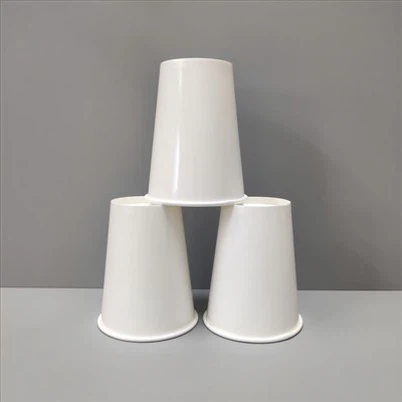
Understanding The Realities Of Sustainable Paper Food Packaging
Leave a message
Understanding the Realities of Sustainable Paper Food Packaging
Sustainability is not a terminology in the food and beverage industry anymore, rather a business consideration. People are now more concerned with the manner in which their coffee, noodles or ice cream are served, and packaging is now an outward display of the values held by a brand. The paper cups market around the world is currently worth more than USD 10 billion and is expected to keep increasing consistently. This has been propelled by urban lifestyles, eating on the move and increased awareness of the environment, but also increasing expectations. A cup that is supposed to be environmentally friendly but lands in the dump without disposal facilities is fast to harm a brand.

The Challenge of Materials and Coatings
Materials are one of the greatest obstacles to sustainable food packaging. Coatings are provided because plain paper is not safe to hold liquids. Polyethylene (PE) remains the industry standard as it offers high leak resistance, low cost and durability. But its negative aspect is that PE-lined cups cannot be recycled on a large level without special facilities as separating paper fibers and plastic cannot be easily done without special facilities. A possible answer is the use of compostable materials like polylactic acid (PLA) coatings, which are promising but require the presence of industrial composting facilities. Such facilities are often limited in a variety of countries, which means that even compostable cups frequently find their way to landfills. This disconnect between waste infrastructure and product design is among the largest pain points in the industry.
The Role of Certifications and Standards
Brands turn to certifications to increase their credibility. Standards such as EN 13432 in Europe or ASTM D6400 in the United States have demonstrated that a material can biodegrade under industrial conditions, and the BPI certification has become an established compostability label in North America. However, certifications are not always understood. They confirm laboratory performance, rather than necessarily real world disposal performance. As an example, a compostable cup will not decompose in a backyard compost or landfill, but rather only in an industrial composting plant. In the case of brands, certification must be accompanied by open communication with consumers and conforming to local infrastructure.
Balancing Performance and Sustainability
Although it is very important that sustainability is maintained, performance cannot be sacrificed. The leaking ice cream cup or collapsing coffee cup not only frustrates customers but also causes food to be wasted and more environmental impact. That is why even good suppliers invest in intensive testing - leak resistance by immersion test, durability by hot conditions or cold conditions test, rim strength and stacking stability test to be safe during transport, brand logo remaining intact due to adhesion test. These tests directly influence customer experience and trust and, as such, are as significant as the sustainability claims associated with the product.
The Reality of Recycling and Disposal
Coated paper cup recycling and compost systems are anything but ideal even in developed markets. Most recycling sites in municipalities cannot manage PE-coated paper successfully and there are only a few composting locations that can handle PLA. It implies that unless there is a clear set of instructions and infrastructure to support this, most of these so-called eco-friendly cups would be discarded in the same garbage bin as traditional packaging. In the case of brands, it is to integrate material innovation and transparent communication. The intention-impact gap can be closed by having clear disposal guidelines, take-back schemes, and collaborating with recyclers.

Building a Practical Roadmap
In the case of a business, the correct decision comes in as far as the performance of the product and waste management realities in a particular market are known. Bio-based coatings can be a viable investment in areas where there is an advanced composting system. In the absence of such infrastructure, recyclable fiber based designs or enhanced PE lined solution options can offer more plausible advantages. Simultaneously, collaboration with suppliers capable of delivering testing data, validated compliance, and scalable production is necessary to align packaging options with sustainability and business objectives.
Conclusion
The idea of sustainable packaging does not have to do with the latest material or sticking a green label to a product. It concerns matching certifications, materials and disposal systems with what works in the real world. Successful brands are the ones that can reconcile environmental accountability with reliability in their performance, communicate openly, and select suppliers who can do both. We have 20 years of experience combined with strict quality management and international certification to assist companies in the food and beverage sector to shift to a new packaging, one that is not only safe and reliable, but also in line with long-term sustainability objectives at Wuhan Amity Packaging. The process of improving packaging is a continuous process and doing the right decisions today means laying the groundwork to reap greater brand confidence in the future.