

Which Biodegradable Paper Cups Are Truly Eco-Friendly?
Leave a message
Which Biodegradable Paper Cups Are Truly Eco-Friendly?
You want to use sustainable cups, but "biodegradable" is a confusing term. Are you paying more for a cup that still ends up in a landfill, hurting your brand?
Focus on Aqueous (water-based) coated cups for easy recycling or PLA cups if industrial composting is available. Always verify certifications like BPI or FSC to avoid greenwashing and ensure true sustainability.
I remember a client who proudly showed me thousands of "eco-friendly" cups he had just purchased. The problem was, they were lined with PLA, and there wasn't a single industrial composting facility in his entire region. He paid a premium for a cup that was destined for the landfill. This is a common and expensive trap. The term "biodegradable" can be misleading. To make a truly sustainable choice, you need to understand exactly what you're buying. Let me break down the essential things to look for.
PLA vs. Aqueous Coating: which material is actually better?
You see two main options, PLA and Aqueous. They both sound green, but what's the real difference? Choosing the wrong one can completely undermine your company's sustainability goals.
PLA is a bioplastic from plants that requires special facilities to compost. Aqueous coating is a water-based layer that allows the cup to be recycled with normal paper, making it far more practical.

As an engineer, I get excited about new materials, and both of these are major improvements over traditional plastic. But they solve the waste problem in two very different ways. PLA, which is made from corn starch or sugarcane, is a fantastic material. It's strong, holds up to heat, and is made from renewable resources. However, it has one major weakness: its end-of-life. To biodegrade properly, it must be sent to an industrial composting facility where high heat breaks it down. If it ends up in a landfill, it can release methane, a potent greenhouse gas.
Aqueous coating, on the other hand, is a newer technology. Think of it as a water-based paint that creates a barrier on the paper. Its biggest advantage is that it is designed to be easily "repulpable." This means it can be thrown into the same recycling bin as cardboard and newspaper and be turned back into paper products. This is a huge benefit because the infrastructure for paper recycling already exists almost everywhere.
| Feature | PLA Coating | Aqueous Coating |
|---|---|---|
| Source Material | Renewable (e.g., corn starch) | Water-based polymers |
| End-of-Life | Industrial Composting | Standard Paper Recycling |
| Performance | Excellent barrier for hot & cold | Good barrier, improving with tech |
| Eco-Friendly Claim | Biodegradable & Compostable | Plastic-Free & Recyclable |
Are biodegradable cups too expensive for your business?
You see the higher price tag on biodegradable cups compared to traditional ones. It feels like a significant stretch for your budget, and you are not sure it's worth it.
While the initial unit cost is higher, they often save you money long-term. Lower waste disposal fees and increased brand value from eco-conscious customers can make them a smarter financial choice.
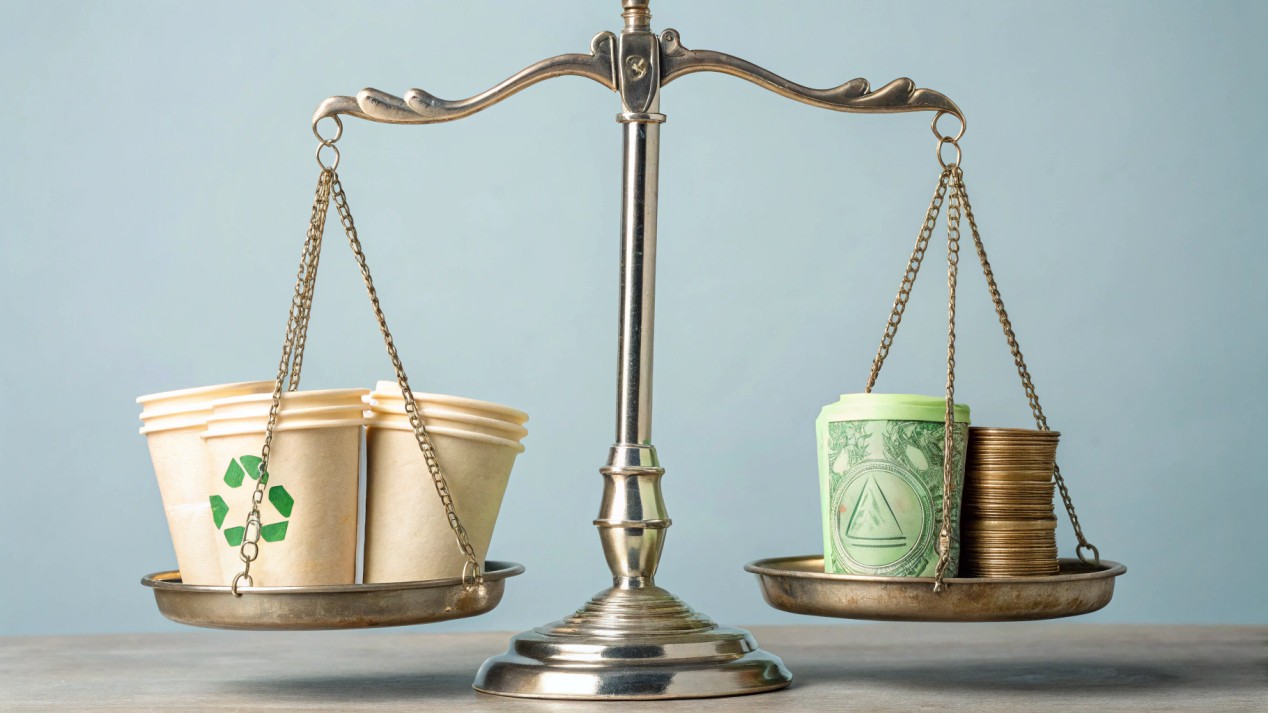
It is true that a PLA or Aqueous-coated cup costs more per unit than a standard PE-plastic cup. The raw materials and manufacturing processes are more advanced. But looking only at the unit price is a mistake. You have to look at the total cost of ownership. I had a client in Europe who was suddenly hit with huge new government fees, called EPR fees, for all his plastic-lined packaging waste. The clients who had already switched to easily recyclable Aqueous cups paid almost nothing. Being proactive saved them thousands.
These days, cost is about more than just the purchase price. Many governments are making producers financially responsible for the waste they create. In this new reality, a cheap, non-recyclable cup can become very expensive once you factor in disposal fees. Furthermore, customers are actively choosing to support businesses that demonstrate real environmental responsibility. A slightly higher cup cost can be a powerful marketing investment that builds customer loyalty and enhances your brand's reputation. It signals that you are a modern, forward-thinking company.
How can you be sure a cup is legitimately green?
Any company can print words like "eco-friendly" or "green" on a cup. You're worried that you are being misled by clever marketing, a practice known as "greenwashing."
Look for third-party certifications. Logos from trusted organizations like BPI, TÜV AUSTRIA, and FSC are your proof that the cup's claims have been independently verified and are legitimate.

This is probably the most important piece of advice I can give you: do not trust marketing words, trust official certifications. These are symbols from independent organizations that have rigorously tested the product to ensure it meets specific standards. A supplier who has earned these certifications has invested time and money to prove their product is legitimate.
Here are the key logos to look for:
### Key Certifications to Know
BPI / TÜV AUSTRIA (OK compost): These are the top standards for compostability. BPI is the leader in North America, and TÜV is global. They verify that a cup will actually break down in an industrial composting facility.
FSC (Forest Stewardship Council): This certification has nothing to do with the coating, but with the paper itself. It guarantees that the wood used to make the paper comes from a responsibly managed forest, not from illegal logging.
Food Safety (FDA, LFGB): This isn't an eco-certification, but it's essential. It ensures that all materials-the paper, ink, and coating-are non-toxic and safe for you to drink from.
I always tell my clients to ask a potential supplier to email them the actual certificate documents. If they hesitate or cannot provide them, it is a very big red flag.
Why is choosing the right supplier so important?
You found a certified cup you like, but the supplier is slow and unresponsive. Now you're worried about running out of stock during your busiest season, which would be a disaster.
A good supplier is a partner in your success. They provide consistent quality, prove their certifications, manage logistics reliably, and have a good reputation. Their reliability is as important as the cup's features.

You can find the best cup in the world, but if the supplier is unreliable, your business will suffer. A great partner does more than just sell you a product; they provide peace of mind. Over my 15 years in this business, I've learned that a supplier's operational excellence is just as critical as their product's technical specifications.
When you are evaluating a supplier, you need to look beyond the cup itself. First, always order samples. Use them for a week. Pour boiling water in them and let them sit. Do they leak? Is the printing quality sharp? Second, verify their certifications. Ask for the documents I mentioned earlier. A trustworthy supplier will be proud to share them. Third, assess their supply chain capabilities. Ask about their lead times for production and their shipping logistics. Can they handle your order volume, especially if you need more cups during a busy period? Finally, check their reputation. Look for online reviews and testimonials. A supplier with a history of good communication and great service is essential for a smooth, long-term partnership.
Conclusion
Focus on materials like Aqueous coatings, verify certifications like FSC, consider long-term costs, and partner with a reliable supplier. This ensures your choice is truly sustainable and smart.


