

How Paper Bowls Are Reshaping Our Dining Culture And Social Interactions?
Leave a message
How Paper Bowls Are Reshaping Our Dining Culture and Social Interactions?
Ever noticed how common paper bowls have become? They're everywhere, transforming how we eat and interact. But are we aware of their profound impact on our dining culture and social interactions?
Paper bowls have fundamentally reshaped dining culture by facilitating grab-and-go lifestyles, influencing social interactions from solo meals to communal events, acting as brand messaging vehicles, and gaining mainstream acceptance due to post-pandemic health concerns, reflecting broader societal shifts in convenience and hygiene.
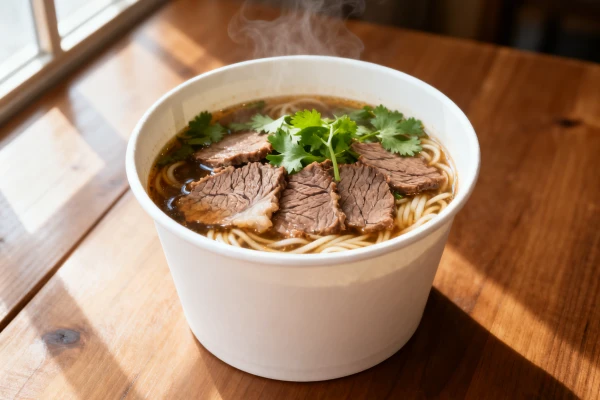
From bustling city streets to quiet office desks, paper bowls are more than just containers; they are silent observers and active participants in our daily rituals. As someone who has spent two decades at Amity Packaging, "Mastering the Art of Disposable Paper Product Manufacturing," seeing how these seemingly simple items integrate into our lives has been fascinating. My mission is to "Empower everyone who uses paper cups and bowls to truly understand paper packaging." I've seen this industry change firsthand, and I believe understanding these changes can help you see your next meal differently, recognizing the profound impact of these everyday objects.
The Rise of "Grab-and-Go" Eating: How do paper bowls fuel our fast-paced lifestyles?
Life moves fast, and so do we. Does the demand for quick meals mean paper bowls are shaping how we eat on the run, enabling our fast-paced lifestyles in ways we rarely consider?
Paper bowls fuel fast-paced, "grab-and-go" lifestyles by offering unparalleled convenience, portability, and ease of disposal. They enable quick, mess-free consumption anywhere, from commuters to office workers, seamlessly integrating with modern demands for efficiency and mobility in dining choices, thus fundamentally reshaping daily eating habits.
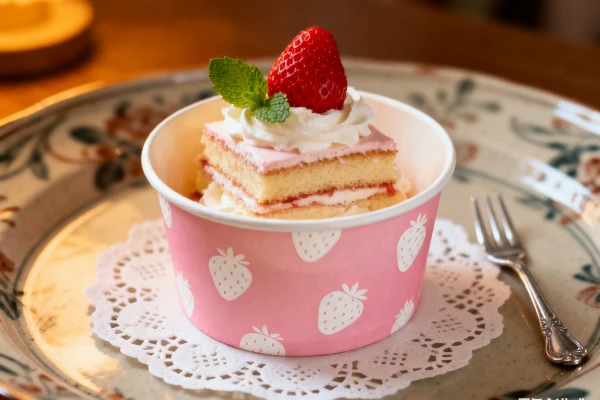
I remember when Jonh and I first started Amity, the market was clearly shifting. People wanted quick, easy options that fit their busy schedules. We saw food trucks, quick-service restaurants, and even cafeterias embracing paper bowls. This trend directly fueled their growth, and ours, providing convenient food service solutions. I've always seen paper bowls as more than just packaging; they are crucial facilitators for modern life. It's truly amazing how they allow us to keep moving while satisfying our hunger.
The Evolution of Eating on the Move
The pervasive presence of paper bowls is a direct reflection of "The Rise of 'Grab-and-Go' Eating," perfectly designed to "fuel our fast-paced lifestyles." This seemingly simple innovation has profoundly altered how and where we consume our meals, adapting to the demands of modern living.
Firstly, Unmatched Convenience for the Urbanite. In bustling cities and sprawling suburbs, time is a precious commodity. Many people no longer have the luxury of extended sit-down meals for lunch or dinner. Paper bowls offer a solution: they can hold a variety of foods, from hot soups and noodles to cold salads and grain bowls, making them ideal for a quick pick-up. This convenience extends beyond just procurement; it means less preparation and no dishwashing afterward. For many, a meal from a paper bowl fits perfectly into a tight schedule, allowing them to maximize productivity or leisure time. At Amity, we focus on producing "disposable paper bowls (soups, noodles, salads)" that meet these high demands for ease of use.
Secondly, The Freedom of Portability. Beyond just speed, paper bowls champion portability. Their lightweight design and stackability make them easy for vendors to store and for consumers to carry. A sturdy paper bowl transforms any location into a makeshift dining spot-a park bench, a public transit seat, or even walking down the street. This aligns with a more flexible, less structured approach to daily life. It provides the freedom to eat anywhere. Jonh, with his "Degree in Mechanical Engineering" and "15 years in disposable packaging manufacturing," always designs our bowls for optimal balance between durability and portability, ensuring they can withstand the rigors of being on the move.
Finally, Streamlined Cleanup and Efficiency. The ultimate hallmark of the "grab-and-go" culture is minimal fuss. Paper bowls are designed for single-use, eliminating the need for washing dishes. This disposal convenience is a key factor driving their popularity, particularly in busy environments like offices, events, and food festivals. It reduces labor costs for businesses and saves time for consumers, directly contributing to the efficiency of our daily routines. This focus on "Efficient Production & Delivery" at Amity isn't just about our processes; it's about enabling a more efficient lifestyle for our end-users. This overall streamlining of the dining experience makes paper bowls an indispensable part of our modern, fast-paced existence.
| Feature | Benefit for "Grab-and-Go" | Impact on Lifestyle | Amity's Contribution |
|---|---|---|---|
| Convenience | Quick purchase, no dishes | Saves time, increases productivity | "Disposable paper bowls" for various foods |
| Portability | Lightweight, easy to carry | Freedom to eat anywhere, flexible | Durable yet light designs |
| Disposability | Mess-free, no cleanup | Reduced chores, streamlined routine | "Eco-Driven Mindset" with renewable materials |
| Versatility | Holds hot/cold, various foods | Adapts to diverse dietary needs | "Tailor-Made Solutions" for custom dimensions |
Therefore, paper bowls are not just passive containers; they are active agents that "fuel our fast-paced lifestyles" by offering unmatched convenience, portability, and streamlined efficiency in a world that demands constant movement.
The Evolution of Social Dining: Do they promote solo dining or undermine communal meal rituals?
We often associate dining with shared experiences, but as paper bowls become ubiquitous, are they subtly shifting our social interactions, promoting solo dining or, perhaps, even undermining traditional communal meal rituals?
Paper bowls significantly contribute to the "Evolution of Social Dining" by facilitating both solo and communal eating, depending on the context. While their individual-serving nature can promote solo dining, they also enable large group gatherings, casual picnics, and flexible event catering, adapting to modern social needs rather than strictly undermining communal meal rituals, offering versatility in social interactions.
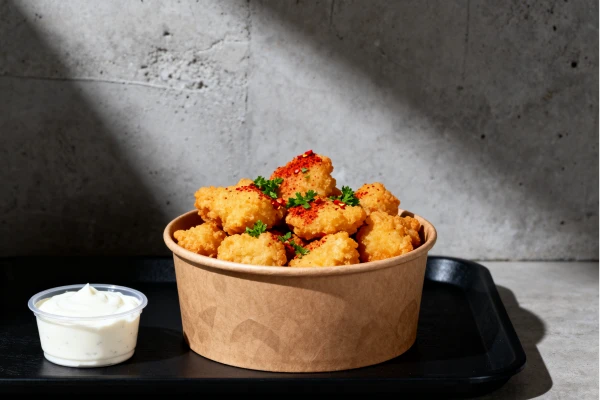
From my "20+ years of experience" in this industry, I've seen paper bowls used in every imaginable social setting. Jonh, our mechanical engineering expert, often points out how product design can influence human behavior. I've observed that paper bowls don't necessarily promote solo dining nor exclusively undermine communal rituals. They simply offer a flexible solution, allowing people to adapt their meals to their social circumstances. It truly shows the "Evolution of Social Dining."
Redefining Shared Experiences
The impact of paper bowls on "The Evolution of Social Dining" is nuanced, demonstrating how a simple product can adapt to and influence our social interactions around food. They don't simply promote solo dining or undermine communal meals; rather, they enable a broader spectrum of eating experiences, fitting into increasingly flexible social patterns.
Firstly, Facilitating Solo Dining and Personalized Experiences. The individual serving nature of a paper bowl inherently supports solo dining. It allows for a single portion, tailored to individual preferences, which is ideal for someone eating alone at their desk, on the go, or when preferences vary within a household. This personalization and ease contribute to a rise in intentional solo meals. For people with demanding schedules or specific dietary needs, the paper bowl allows them to eat what they want, when they want, without imposing on (or being imposed upon by) communal food choices. This reflects a broader societal trend towards individualism and flexibility, where convenience allows for a personalized dining experience.
Secondly, Enabling New Forms of Communal Dining. While paper bowls lend themselves to individual portions, they also paradoxically enable new forms of communal dining. Think of outdoor picnics, large casual gatherings, food festivals, or office potlucks. In these settings, paper bowls eliminate the logistical headache of crockery, serving dishes, and extensive cleanup. They make it feasible to bring diverse foods from various vendors or homemade dishes without the burden of washing up. People can gather, share conversation, and enjoy food together from their own convenient, disposable bowls. This often fosters a more relaxed, uninhibited social environment, where the focus shifts from formal dining etiquette to pure interaction and enjoyment. Our "disposable paper bowls" are perfect for these types of large-scale social events, making shared meals easier.
Finally, Adapting to Modern Lifestyles. The truth is that modern life features a blend of both solo and communal activities. Paper bowls are incredibly adaptable to this dynamic. They offer a solution that allows people to partake in both aspects without friction. For instance, a family might gather for a meal from various takeaway restaurants, each enjoying their chosen dish from a paper bowl around a shared table. This is less about undermining tradition and more about adapting it to changing circumstances and preferences. From my global experience, I've seen how paper bowls serve as a practical bridge for "The Evolution of Social Dining," allowing people to connect over food with greater flexibility and less formality.
| Social Setting | Traditional Impact | Paper Bowl Impact on Dynamics | Outcome for Dining Culture |
|---|---|---|---|
| Office Lunch | Formal cafeteria or packed lunch | Solo desk dining, quick breaks | Increased individual autonomy, efficiency |
| Outdoor Picnic | Heavy baskets, dishwashing | Easy transport, diverse food options | More frequent, casual group outings |
| Food Festival | Limited dining options | Diverse vendor sampling, easy movement | Enhanced experiential dining |
| Takeaway Dinner | Standard home tableware | Personalized choices, family takeout | Flexible family dinners |
So, rather than strictly promoting solo dining or undermining communal rituals, paper bowls contribute to "The Evolution of Social Dining" by offering versatile solutions that support a wider range of eating experiences, adapting to the diverse social fabric of modern life.
Design as Message: How do logos and patterns on paper bowls serve as extensions of brand identity and personal expression?
When you pick up a paper bowl, it often carries more than just food. Do those logos and patterns serve a deeper purpose, acting as extensions of brand identity and even personal expression?
Yes, "Design as Message" is crucial; logos and patterns on paper bowls "serve as extensions of brand identity and personal expression." They transform a simple container into a marketing tool, conveying brand values, enhancing customer experience, and allowing consumers to align with specific aesthetics or ethical stances represented by the design, acting as a silent communicator.
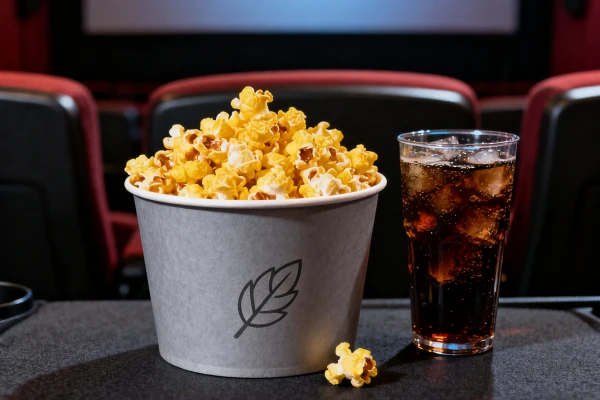
I've always believed that presentation is key, and Jonh and I apply this thinking to paper bowls. From my "20+ years of industry expertise-from raw material selection to printing technology evaluation," I know that "Design as Message" is incredibly powerful. We offer "logo & printing customization" at Amity because we've seen how effectively "logos and patterns on paper bowls serve as extensions of brand identity and personal expression," creating a unique dialogue between the product and the consumer.
The Silent Communicator
The visual elements on paper bowls- "logos and patterns"-are much more than mere decoration; they are powerful tools for "Design as Message," functioning as dynamic "extensions of brand identity and personal expression." They transform a simple vessel into a communicative medium, quietly influencing perception and fostering connection.
Firstly, Reinforcing Brand Identity and Storytelling. For businesses, a paper bowl is a mobile billboard. A well-designed logo, color scheme, or unique pattern instantly reinforces brand identity, making the product recognizable and memorable. It communicates quality, values (e.g., sustainability through earthy tones or eco-friendly symbols), and even the type of cuisine. A high-end restaurant might opt for a minimalist, sophisticated design, while a playful cafe might choose vibrant, quirky illustrations. This visual branding extends the restaurant's ambiance and message beyond its physical location, creating a consistent brand experience that travels with the customer. Jonh, with his experience, "offers creative yet practical logo design ideas" because he understands the profound impact of this visual storytelling on a brand's market presence.
Secondly, Enhancing Customer Experience and Perception. The aesthetic appeal of a paper bowl can significantly enhance the customer's overall dining experience. A thoughtfully designed bowl feels more premium, making the food inside seem more appealing and valuable. It can evoke feelings of comfort, excitement, or satisfaction, turning a routine takeout meal into a more engaging experience. Conversely, a plain, unbranded bowl can feel generic and less cared for. In some cases, unique patterns or limited-edition designs can even become collectors' items or social media fodder, subconsciously encouraging customers to photograph and share their meals, thereby engaging in organic promotion for the brand.
Finally, Allowing for Personal Expression and Alignment. While primarily a tool for brands, the designs on paper bowls also allow for a subtle form of personal expression for consumers. By choosing certain food establishments, customers implicitly align themselves with the brand's aesthetic or ethical stance. Opting for a bowl with a "green" leaf pattern might signal a preference for sustainable choices, while a bowl with a bold, modern logo could appeal to someone with a contemporary taste. Moreover, some events or personal gatherings use custom-designed paper bowls to mark specific occasions or convey a personal message, turning the disposable item itself into a keepsake or conversation starter. My goal at Amity, in providing "Tailor-Made Solutions – Custom dimensions, materials, printing, and structure," is to give every client the canvas they need to express their unique message.
| Design Element | Purpose for Brand Identity | Impact on Customer Experience | Example |
|---|---|---|---|
| Logo | Instant recognition, unique differentiator | Builds trust, familiar brand presence | McDonald's Golden Arches, Starbucks mermaid |
| Color Scheme | Emotional connection, brand mood | Sets expectation, evokes emotion | Warm colors for a cozy cafe, bright for a healthy food truck |
| Patterns/Graphics | Visual storytelling, thematic connection | Enhances aesthetic appeal, memorable | Abstract art for gourmet, cartoon characters for kids' meal |
| Materials/Finish | Perceived quality, sustainability message | Tactile experience, social signaling | Matte finish for natural, glossy for modern |
Ultimately, "Design as Message" is a powerful force. "Logos and patterns on paper bowls serve as extensions of brand identity and personal expression" by transforming a functional item into a subtle yet impactful medium for communication and connection in our daily lives.
The Post-Pandemic Shift: How have public health concerns transformed paper bowls from alternative to mainstream?
Before the pandemic, paper bowls were convenient, but perhaps not universally preferred. Did growing "public health concerns" during that era finally "transform paper bowls from alternative to mainstream," making them an essential part of our new normal?
Yes, "The Post-Pandemic Shift" driven by heightened "public health concerns" fundamentally "transformed paper bowls from alternative to mainstream." Fears of contagion and a greater emphasis on hygiene propelled single-use packaging to the forefront, making paper bowls a preferred choice for food safety, minimizing contact points and reassuring consumers of contamination-free dining experiences.
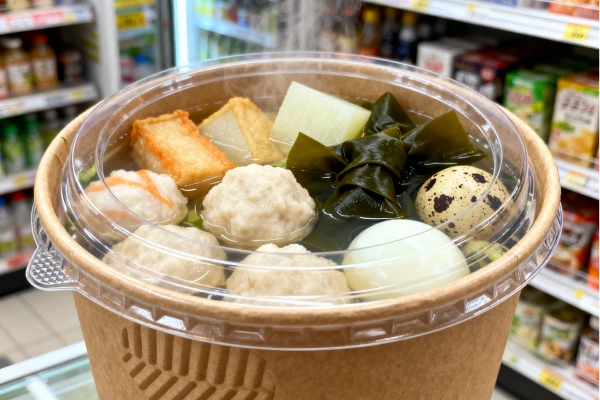
I saw this change unfold firsthand during my time with Amity. Before the pandemic, single-use items were often viewed through a purely convenience or environmental lens. But once "public health concerns" took center stage, the perception changed dramatically. Jonh and I quickly recognized the need to double down on our manufacturing capabilities, ensuring "Efficient Production & Delivery" because paper bowls were no longer just an alternative; they became a mainstream necessity. This was a true "Post-Pandemic Shift" for the industry.
Hygiene as the New Imperative
"The Post-Pandemic Shift" represents a watershed moment where "public health concerns" dramatically "transformed paper bowls from alternative to mainstream." The global health crisis brought an unprecedented focus on hygiene and contactless service, elevating single-use packaging from a matter of convenience to one of essential public safety.
Firstly, Minimizing Contact and Cross-Contamination. The primary driver of this shift was the urgent need to minimize contact points and prevent cross-contamination. Reusable dishware, while environmentally preferable in some contexts, suddenly became a source of anxiety amidst fears of viral transmission. Single-use paper bowls offered a clear solution: they are used once, by one individual, and then disposed of, drastically reducing the risk of viral spread through shared surfaces. This simple factor propelled them into widespread adoption across all food service sectors, from cafes to hospitals. Our "Strict Quality Control" always prioritized hygiene, but the pandemic amplified its perceived value for consumers.
Secondly, Reassuring Consumers and Building Trust. Beyond the practical benefits, the use of paper bowls provided a visible reassurance to consumers. Seeing their food served in a fresh, untouched package alleviated fears that dishes might not be adequately sanitized, thereby building trust in food establishments. This psychological comfort became a significant competitive advantage for businesses that swiftly adopted single-use solutions. Many consumers actively sought out establishments that prioritized these hygiene measures, making paper bowls a signal of a responsible and safe dining environment. My work at Amity reinforced that packaging isn't just about containment; it's also about health assurance and peace of mind.
Finally, The Lingering Emphasis on Hygiene as a New Normal. Even as the immediate threat of the pandemic recedes, the heightened awareness of hygiene is likely to remain part of our "new normal." Consumers have become accustomed to the perceived safety of single-use items, and many food service operators have integrated them permanently into their operations due to their efficiency and reduced labor costs associated with dishwashing. This sustained demand underlines how public health concerns have indelibly "transformed paper bowls from alternative to mainstream," cementing their role as an indispensable component of modern food service, shaping not just our dining habits, but our expectations of safety. This insight directly informs our "Sustainability Commitment" to keep providing safe and "eco-friendly" options.
| Public Health Concern | Impact on Dining Culture | Role of Paper Bowls | Long-term Effect on Mainstream Status |
|---|---|---|---|
| Contagion Fear | Avoidance of shared surfaces | Minimized cross-contamination risks | Increased demand for single-use |
| Hygiene Awareness | Expectation of clean service | Visible assurance of cleanliness | Preferred choice for safety |
| Contactless Service | Reduced human interaction | Facilitated grab-and-go efficiency | Streamlined service models |
| Safety Perception | Consumer reassurance | Trust-building through packaging | Established as a standard for safety |
In summary, "The Post-Pandemic Shift" undeniably "transformed paper bowls from alternative to mainstream." Fueled by "public health concerns," they became a vital tool for minimizing contamination, reassuring consumers, and establishing new hygiene standards, fundamentally reshaping our dining culture for the foreseeable future.
Conclusion
Paper bowls have profoundly reshaped our dining culture: fueling grab-and-go lifestyles, diversifying social interactions, becoming brand communicators, and achieving mainstream status driven by post-pandemic hygiene demands.


