How Should You Pick Small Paper Cups For Bulk Orders?
Leave a message
How Should You Pick Small Paper Cups for Bulk Orders?
Ordering small paper cups in bulk is confusing. Choosing the wrong size or quality can waste thousands of dollars and make your brand look cheap. Let's prevent that.
To pick small cups in bulk, first match the size (3-8 oz) to the exact use. Then, balance printing costs with branding goals and understand how material, coating, and volume affect price.
I've helped hundreds of clients with this exact decision. So many of them start by asking for the cheapest price-per-cup. I always stop them and say, "Let's talk about the value of the cup first." A small paper cup is often the first physical thing a customer touches from your brand. Whether it's for an espresso shot or a product sample, its quality directly reflects on you. Making the right choice isn't about finding the lowest cost; it's about making the smartest investment. Let's break down how you can do that.
How Do You Choose the Right Cup Size?
You need "small" cups, but that's too vague. Ordering 50,000 units of the wrong size is a costly storage nightmare that can disrupt your entire service workflow.
Match the size directly to the purpose. Use 3-4 oz for espresso shots and samples, 6-7 oz for water coolers or kids' drinks, and 8 oz for a standard small coffee.

The most critical first step is matching the cup's volume to its primary job. A small difference in ounces can make a huge difference in function and cost. Before you commit to a bulk order, you need to be very clear about how the cup will be used every single day. In my experience, small cups fall into three main categories, and I always advise my clients to get samples to test with their actual equipment and products. A 4 oz espresso cup that's too tall for your machine is completely useless.
| Size | Common Uses | My Advice for Buyers |
|---|---|---|
| 3-4 oz (90-120 ml) | Espresso shots, bathroom mouthwash, medication, high-value product samples. | This is the specialist. Ensure it fits your espresso machine. For samples, it offers a perfect taste without giving away too much product. |
| 6-7 oz (180-210 ml) | Office water coolers, small flat whites, children's party drinks, generous event samples. | This is the versatile all-rounder. It's a safe, multi-purpose choice for offices, waiting rooms, and events where you need one cup for many jobs. |
| 8 oz (240 ml) | Standard "small" size in most cafes for drip coffee, lattes, and teas. | This is the workhorse for food service. If you sell coffee, this is likely your starting point for a complete, albeit small, serving. |
How Can You Use Printing to Build Your Brand?
A blank cup gets the job done, but it's a wasted marketing opportunity. Your competitors are putting their logo in customers' hands, and you could be doing the same.
Use the cup as a mini-billboard. Flexo printing is cost-effective for simple logos on large runs. Keep the design clean and bold for the best impact on a small surface.

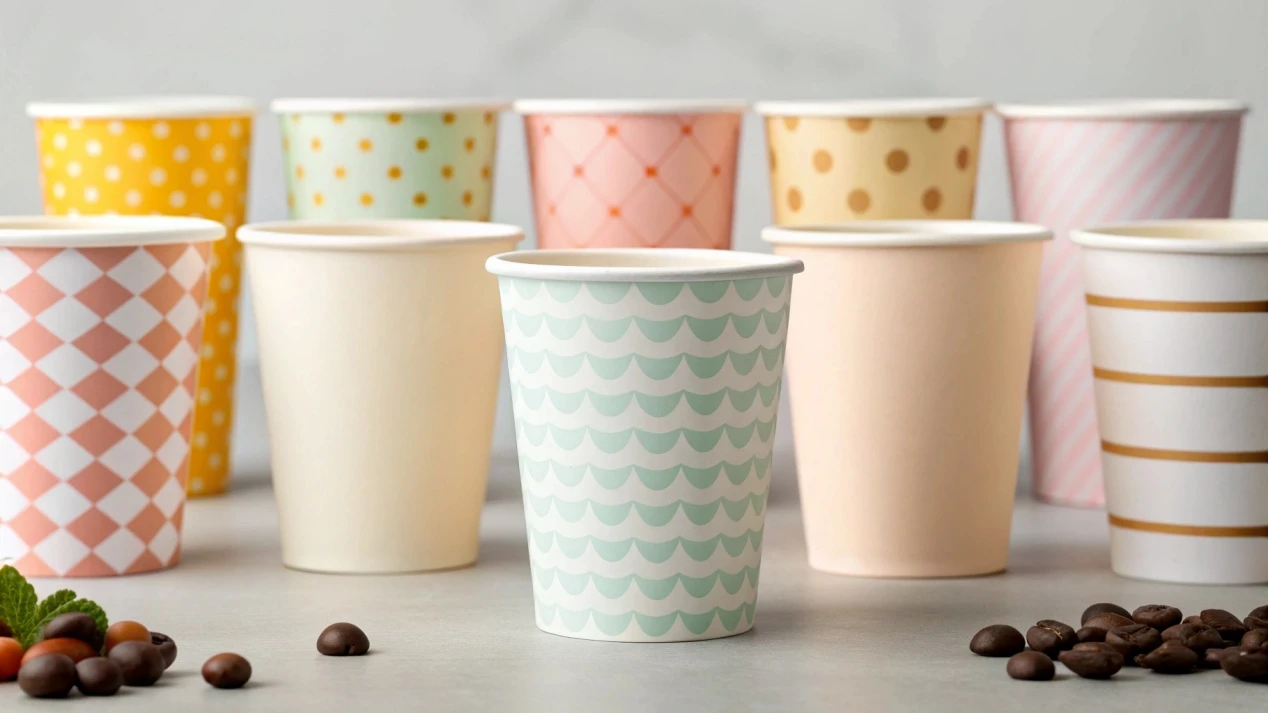
A plain white cup is anonymous. For a tiny fraction of the cost, a printed cup becomes a tangible piece of your brand that travels with your customer. When ordering in bulk, custom printing is one of the smartest marketing investments you can make. The key is to choose the right method and design for a small surface. I always tell my clients that on a small cup, less is more. A cluttered design becomes unreadable. A clean, strong logo is far more effective.
Choosing Your Printing Method
Flexographic (Flexo) Printing: I explain this as being like a very sophisticated rubber stamp. It's ideal for simple designs with 1 to 3 solid colors. For very large bulk orders, it's extremely cost-effective.
Offset Printing: This is like printing a photograph. It gives you full, vibrant color and complex details. The setup cost is higher, but if your brand has a detailed logo or you want a premium look, the result is fantastic.
Before you approve a 50,000-cup run, always get a digital proof to check the layout. If possible, ask for a physical printed sample. As a manufacturer, I can tell you that colors on a screen can look very different from ink on paper.
How Do You Balance Cost and Quality in Bulk Orders?
You're tempted by the lowest price-per-cup, but this often leads to a flimsy, leaky product. A cheap cup makes your premium coffee or product feel cheap, negating its value.
True cost is a balance of paper thickness (GSM), coating (PE vs. eco-friendly PLA), and order volume. The larger the order, the lower the per-cup price, but never sacrifice necessary quality.
When you're buying in bulk, the unit price is king. But I always caution my clients: the cheapest option is almost never the best value. The real cost of your cup is in the details, and cutting corners in the wrong places will cost you more in the long run through customer complaints or a damaged brand image. Here are the main factors that determine the price.
| Factor | Impact on Cost | My Recommendation |
|---|---|---|
| Paper Thickness (GSM) | Higher GSM (Grams per Square Meter) means a thicker, sturdier cup. It costs more but feels more premium and insulates better. | For hot drinks like espresso, a higher GSM is essential. For quick-use water cups, you can use a lower, more cost-effective GSM. |
| Coating Type | Standard PE (polyethylene) is the most common and lowest-cost option. Eco-friendly PLA (compostable) costs slightly more but sends a strong green message. | If sustainability is a core part of your brand, the small premium for PLA is a worthwhile investment. Otherwise, PE is the standard. |
| Order Volume | This is the biggest factor. Larger orders have lower per-unit costs because the setup fees are spread across more cups. | When getting a quote, always ask for pricing tiers (e.g., 10k, 25k, 50k units). This helps you find the sweet spot for your budget. |
How Does the Usage Scenario Affect Your Choice?
You treat all small cups the same, but the context is everything. Giving a customer a thin water cup for their hot espresso will burn their fingers and destroy their experience instantly.
You must match the cup's specifications to its job. Use thick-walled cups for hot espresso, lightweight cups for water coolers, and visually appealing cups for product samples where first impressions matter.

The final step is to think about the exact moment the customer will use the cup. A cup that is perfect for one situation can be terrible for another. As a manufacturer, I build cups to different specifications for different jobs. Choosing the right one ensures your customer has a good experience and you aren't overpaying for features you don't need.
| Scenario | My Recommended Cup | Why it Works |
|---|---|---|
| Hot Espresso | 3-4 oz, high GSM (thicker wall), single-wall. | The high GSM is non-negotiable here. It protects fingers from heat and keeps the small amount of coffee hot. The cup must feel sturdy and premium. |
| Office Water Cooler | 6-7 oz, standard GSM, single-wall. | The goal is cost-effectiveness for high-volume, quick use. The cup just needs to hold cold water for a few minutes, so a lightweight design is perfect. |
| Product Samples | 4 oz, standard GSM, with clean and crisp printing. | The appearance is critical. This cup is part of the product's first impression. A smooth, rolled rim and a well-printed logo convey quality. |
| Kids' Parties | 6-8 oz, standard GSM, with colorful Offset printing. | Here, visual appeal and cost are the priorities. The cup doesn't need premium insulation, but a fun, bright design makes the experience better. |
Conclusion
Choose small cups by strategically balancing size, branding, cost factors, and the specific use case. This informed approach ensures you get the best value, not just the lowest price.