How To Reduce Your Carbon Footprint Of Coffee Cups?
Leave a message
How to Reduce Your Carbon Footprint of Coffee Cups?
Worried about the mountain of coffee cups your cafe throws away? This waste hurts the planet and your brand. Here is how you can easily make a significant, positive change.
Reduce your cup's carbon footprint by choosing sustainable materials like PLA or aqueous-coated paper, sourcing from local suppliers, offering customer incentives for reusables, and establishing a clear recycling program.

As a manufacturer, I see the entire lifecycle of a coffee cup, from raw pulp to the final product. The journey to sustainability starts long before the coffee is poured. Many of my clients are passionate about being green, but they feel overwhelmed by the options and don't know where to start. The most impactful changes often happen before a cup ever reaches your counter. It begins with the material itself. This is the first, and most important, choice you will make.
What Are the Best Material Alternatives for Eco-Friendly Cups?
Traditional plastic-lined cups create landfill waste, harming your eco-friendly image. Choosing an alternative feels confusing. Let's clarify the best sustainable materials available for your business now.
The best alternatives are PLA-lined cups (for commercial composting), aqueous-coated cups (for easier recycling), and cups with recycled paper content. The ultimate solution is promoting reusable mugs.
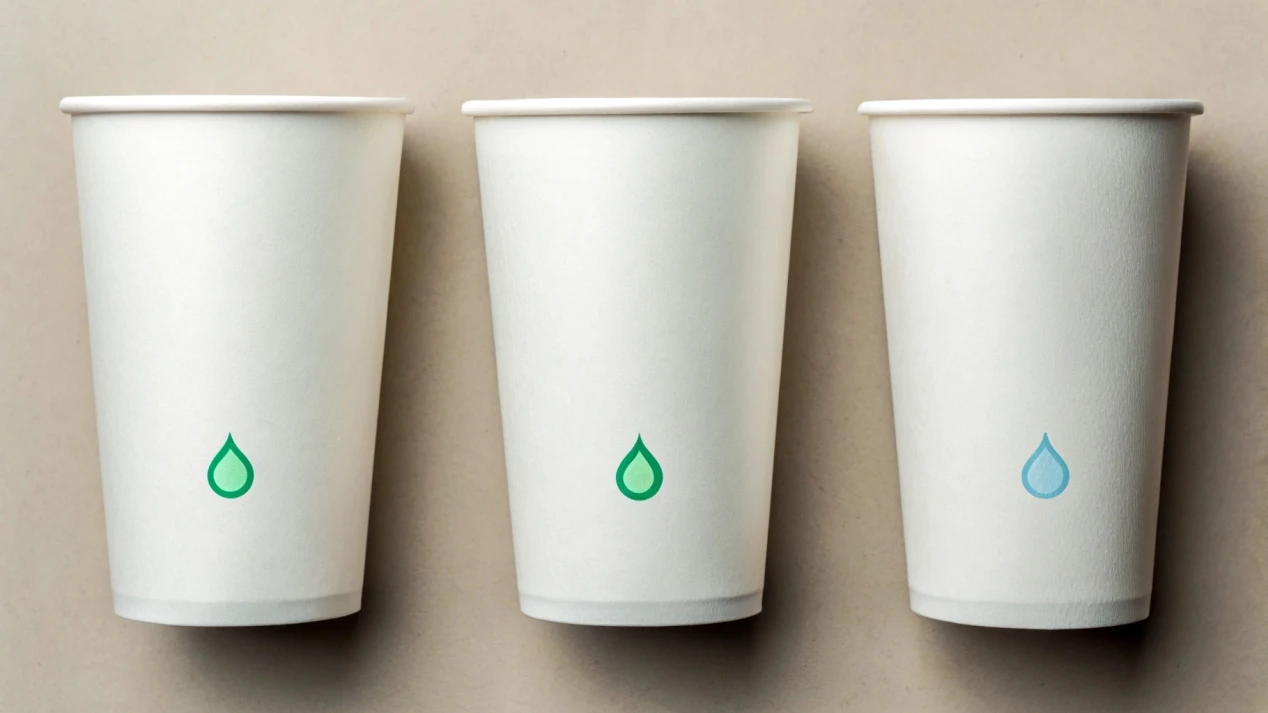
This is where my expertise as a manufacturer becomes crucial for my clients. The term "eco-friendly" can be misleading if you don't understand the full picture. A cup is only as green as the system designed to dispose of it. For years, the industry standard was a polyethylene (PE) plastic lining, which is difficult to recycle. Today, we have much better options that I regularly produce. The key is to match the material to the disposal facilities available in your local area.
| Material Type | How It Works | Best For Cafes Who… |
|---|---|---|
| PLA-Lined Cups | Lined with a plant-based bioplastic (Polylactic Acid). | …have access to a commercial composting facility that accepts these products. |
| Aqueous Coated Cups | Uses a water-based coating, making it "plastic-free." | …want to use their existing paper recycling stream. It's easier to process. |
| Recycled Content Cups | Made from post-consumer recycled paper. | …want to reduce the demand for virgin trees from the very start. |
| Reusable Mugs | Ceramic or glass for in-house use. | …want the lowest possible carbon footprint for their dine-in customers. |
The "best" choice depends entirely on your local infrastructure. A compostable cup that ends up in a landfill is a wasted opportunity. I always advise my clients to call their local waste management service first.
How Can Optimizing Your Supply Chain Reduce Cup Miles?
You found a great eco-cup, but don't consider its journey. The shipping emissions can erase your efforts. Let's look at how smart sourcing can slash your hidden carbon footprint.
Reduce "cup miles" by sourcing from domestic or regional manufacturers to cut transport emissions. Also, consolidate your orders into fewer, larger deliveries to make each truck journey more fuel-efficient.

My factory's location and logistics are things I discuss with clients all the time. A cup's journey to your cafe is a huge part of its total carbon footprint. A container of cups traveling thousands of miles across the ocean has a much higher environmental cost than a truckload driven from a neighboring state or province. This is what we call "cup miles."
Prioritize Local Manufacturers
Whenever possible, partnering with a domestic or regional supplier is one of the most effective ways to lower your carbon footprint. You drastically reduce the fossil fuels burned for transportation. This not only helps the planet but can also shorten lead times and reduce shipping costs, which is a direct benefit to your bottom line.
Consolidate Your Orders
Another simple but powerful strategy is to plan your inventory needs to allow for fewer, larger deliveries. A single, fully loaded truck is far more fuel-efficient than four half-empty ones making separate trips. I work with my clients to establish a predictable ordering schedule that maximizes the efficiency of each shipment. This small logistical change reduces both fuel consumption and operational costs for everyone involved.
Will Customer Incentives Actually Encourage Reusable Cups?
You want to reduce waste, but customers still grab disposable cups. Your green efforts feel pointless. But you can change their behavior with simple, proven incentives that actually work.
Yes, they are highly effective. A small discount for bringing a reusable cup rewards good behavior. Selling branded tumblers also promotes reuse while marketing your brand outside your cafe.
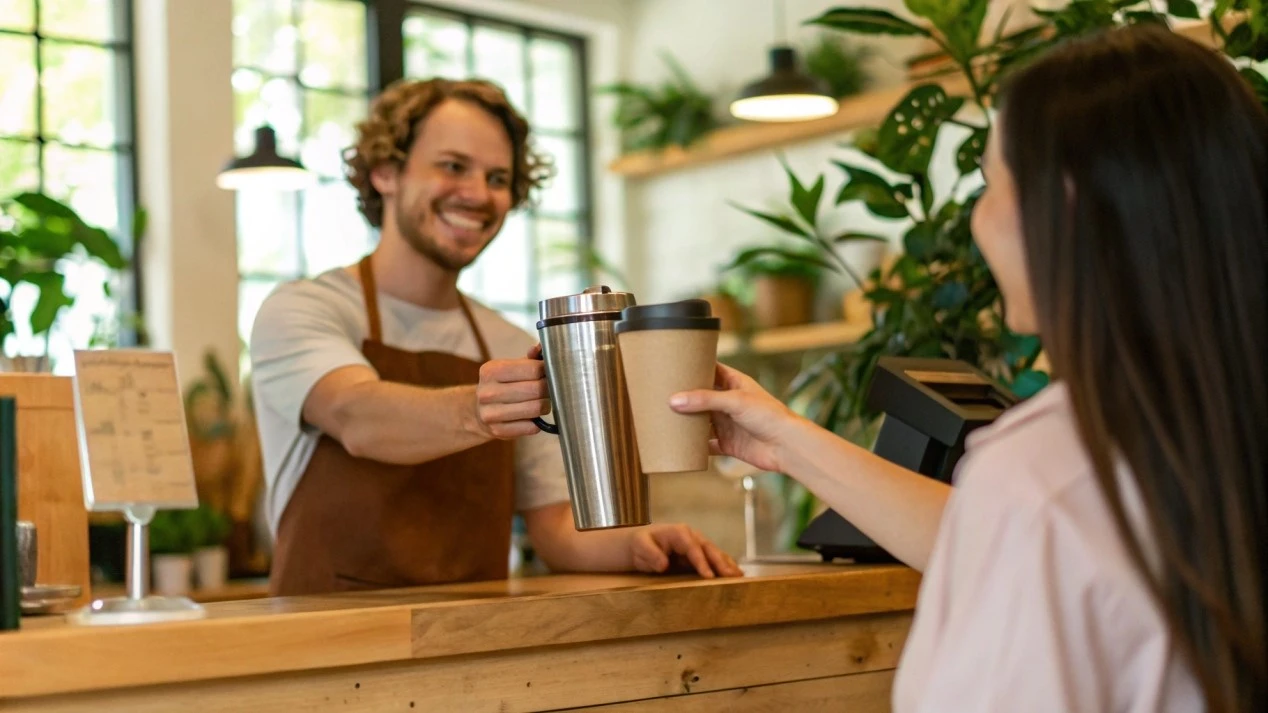
I've seen cafe owners succeed and fail at this for over a decade. The key is to make the sustainable choice the easy and rewarding choice for the customer. You have the power to "nudge" people toward better habits. A small discount of $0.10 or $0.25 might not seem like much, but it's a powerful psychological signal. It tells your customers that you value their effort and that you are a partner in sustainability. This builds a positive community around your brand.
Another fantastic strategy is to sell your own branded reusable cups. This achieves three goals at once:
Reduces Waste: It gives customers a high-quality option to use again and again.
Creates Revenue: It's a retail product with a healthy profit margin.
Free Marketing: Your customers become walking advertisements, carrying your logo with them wherever they go.
Finally, for customers dining in, train your staff to serve their drinks in ceramic mugs by default. The simple question, "Is this for here or to go?" can dramatically cut down on the number of single-use cups that are used for only a few minutes before being thrown away.
How Do You Set Up a Recycling Program That Actually Works?
You have a recycling bin, but it's a contaminated mess. This means nothing gets recycled anyway. Let's fix this with a clear system that ensures your efforts aren't wasted.
Create a dedicated station with clearly labeled bins for cups, lids, and waste. Use visuals. Most importantly, partner with a waste service that actually accepts your specific type of cup.
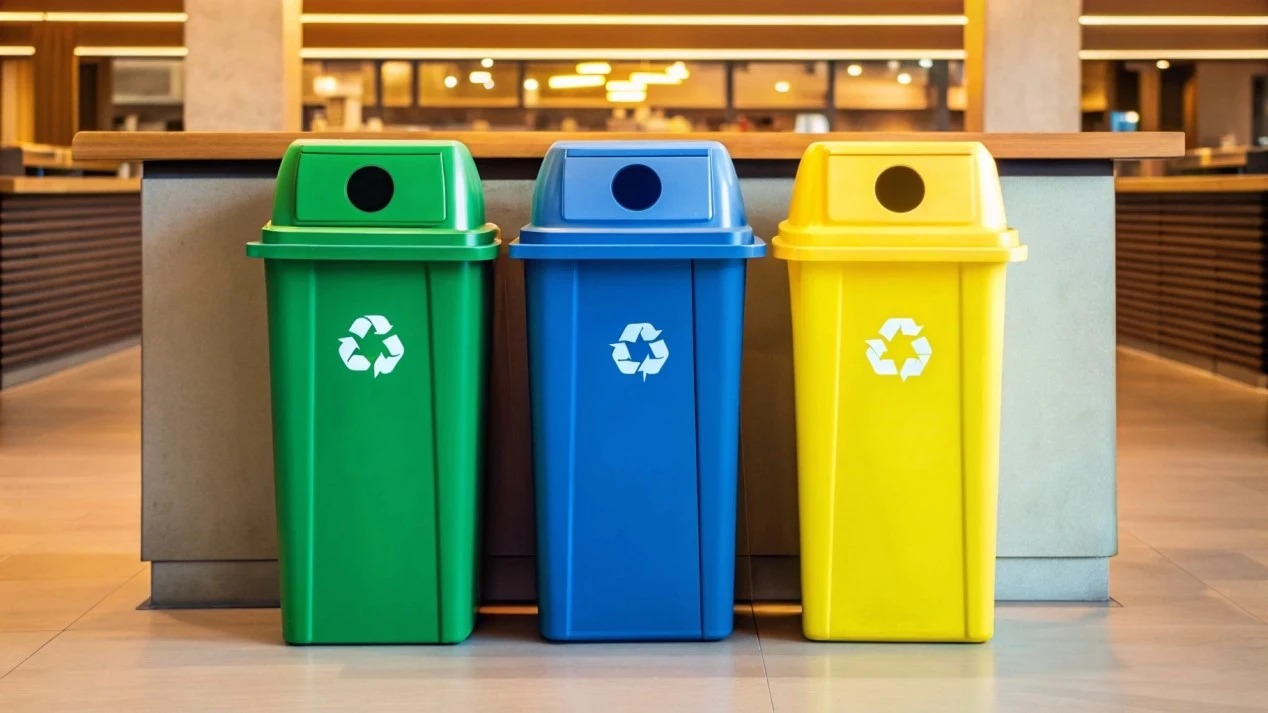
A cup is only sustainable if it's disposed of properly. This is the final, crucial step, and it's where most programs fail. The number one enemy of recycling is contamination. One person throwing leftover coffee and a banana peel into the cup bin can ruin the entire batch, sending it all to the landfill. A successful program requires two things: clarity for the customer and the right backend partner.
First, set up a clear and simple sorting station. Don't just have one bin labeled "Recycling." Create separate, clearly marked openings for:
Liquids: A place to pour out leftover drinks.
Lids: Usually a different type of plastic.
Cups/Sleeves: The paper component.
Landfill/Waste: For anything else.
Use simple pictures and minimal text. The easier you make it, the more likely customers will do it correctly.
Second, you must confirm that your waste management service can actually process your cups. If you use PLA compostable cups, you need a partner who provides commercial composting services. If you use aqueous-coated recyclable cups, confirm with your provider that they can handle that material. This simple phone call can be the difference between a successful green initiative and a failed one.
Conclusion
Reducing your coffee cup's footprint is a journey. By combining smart material choices with efficient logistics, customer engagement, and proper disposal, you can lead with sustainable, responsible business practices.