

Are Paper Cups Actually A Sustainable Choice?
Leave a message
Are Paper Cups Actually a Sustainable Choice?
You grab a paper cup for your coffee, feeling good about choosing it over plastic. But then you hear they are difficult to recycle and still harm the environment. So, what's the real story?
The sustainability of paper cups is complicated. While they come from a renewable resource, their plastic lining makes most of them difficult to recycle. True eco-friendliness depends on the materials used, like a PLA compostable lining, and proper disposal.
In my 20+ years of manufacturing paper products, I've seen the industry evolve. Many believe paper is the perfect solution, but it has its own challenges. Let's break down the facts so you can understand the real environmental impact of a paper cup and make a truly informed decision.
Are paper cups environmentally friendly?
It feels like a simple question, but the answer is complex. You want to make the green choice, but are you sure a paper cup isn't trading one environmental problem for another?
Paper cups are often more eco-friendly than plastic cups because they are made from a renewable resource and biodegrade faster. However, their production requires significant energy and water, and the plastic lining on most cups hinders recycling.
The debate between paper and plastic isn't black and white. From sourcing materials to disposal, both have an impact. I've worked with countless clients to navigate these issues. It's about understanding the entire life cycle of the cup, not just what it's made from.
A Tale of Two Cups
To truly understand the environmental impact, we have to look at the whole picture, from creation to disposal. Paper cups come from trees, a renewable resource, which is a major advantage over plastic cups made from non-renewable oil. However, turning those trees into cups is an energy-intensive process that uses a lot of water.
The biggest environmental issue for paper cups is their plastic lining. Most are coated with polyethylene (PE) to keep them waterproof, but this makes them difficult to recycle. While recyclable, they can't just be thrown in with other paper products; they require special facilities to separate the plastic from the paper fibers. As a result, many end up in landfills.
Plastic cups, on the other hand, often use fewer resources to produce. Their main downfall is their origin from fossil fuels and their extremely slow decomposition rate, which can be up to 450 years, leading to long-term pollution and microplastics.
Here's a comparison:
| Feature | Paper Cups | Plastic Cups |
|---|---|---|
| Raw Material | Trees (Renewable) | Petroleum (Non-renewable) |
| Production Impact | High water and energy use | Lower resource use but reliant on fossil fuels |
| Recyclability | Challenging due to plastic lining; requires special facilities [1] | Can be recycled, but most are not |
| End of Life | Biodegrades faster but plastic lining persists | Takes hundreds of years to decompose; creates microplastics |
How long does a paper cup take to biodegrade?
You toss a paper cup away, thinking it will break down quickly like any other paper product. But months later, you might see that same cup still sitting there, fully intact. How can this be?
A paper cup's decomposition time depends heavily on its lining and the environment. The paper itself can break down in a few months, but a standard plastic (PE) lining can persist for 20 years or more in a landfill.
When I first started, many people assumed "paper" meant "instantly biodegradable." The reality is that the thin plastic coating, essential for function, is what causes the problem. Let's explore how different linings and conditions dramatically change the timeline.
The Lining Makes the Difference
The term "biodegradable" can be misleading when it comes to paper cups. While the paper fiber itself is organic and breaks down, the waterproof lining is the critical factor.
PE (Polyethylene) Lined Cups: This is the most common type of lining. PE is a plastic derived from petroleum. In an ideal composting environment with plenty of oxygen and microbes, the paper part of the cup might decompose in a few weeks or months. However, in a typical landfill with little oxygen, this process slows dramatically. The PE plastic lining itself doesn't truly biodegrade for a very long time, taking anywhere from 20 to 500 years to break down into smaller pieces.
PLA (Polylactic Acid) Lined Cups: This is a "bioplastic" lining made from renewable resources like corn starch. PLA is certified to be commercially compostable. In an industrial composting facility with high temperatures (140°F / 60°C) and moisture, a PLA-lined cup can fully decompose into carbon dioxide and water in about 90 to 180 days. However, it will not break down quickly in a backyard compost pile or a landfill.
Aqueous Coated Cups: This is a newer technology using a water-based coating that is repulpable. These cups are designed to break down in standard paper recycling systems without needing special facilities, which makes them much easier to recycle. Some can also biodegrade within a few months to a year under the right conditions.
Are paper cups renewable or nonrenewable?
We often associate paper with trees, which seems like a good thing. But does using paper cups mean we're depleting our forests, or is it a truly sustainable cycle?
Paper cups are made from a renewable resource: wood fiber from trees. When sourced from responsibly managed forests where trees are replanted, they represent a sustainable cycle, which is a key advantage over plastic cups made from non-renewable fossil fuels.
This is one of the core reasons my company focuses on paper. With practices like those certified by the Forest Stewardship Council (FSC), we can ensure that the wood we use is harvested in a way that protects forests for the future. It's a stark contrast to drilling for oil.
###The Cycle of a Renewable Resource
The "renewable" aspect of paper cups is their strongest environmental selling point. Here's how it works:
Sustainably Managed Forests: The paper for most cups comes from "working forests."These are forests specifically grown and managed for harvesting. Responsible forestry practices ensure that for every tree cut down, multiple new trees are planted. This creates a continuous cycle of growth and renewal. In the U.S., for example, forests are strong, and over a billion trees are planted annually, ensuring that forest land is not depleted. This is why the U.S. pulp and paper industry is not linked to global deforestation.
Carbon Sequestration: These working forests act as vital carbon sinks. As trees grow, they absorb CO2 from the atmosphere and store it, which helps clean the air. Responsibly managing these forests helps maintain this important environmental benefit.
Contrast with Non-Renewable Resources: This sustainable cycle is the opposite of how plastics are made. Plastic cups are derived from petroleum (crude oil), which is a finite, non-renewable resource. The extraction and processing of oil have significant environmental impacts, including greenhouse gas emissions and the risk of oil spills. Once we use up the world's oil reserves, they are gone for good.
Choosing paper from certified, managed forests supports a circular system rather than a linear one that ends with resource depletion. It's why sourcing is so crucial in my line of work. I always ensure our materials come from suppliers who share our commitment to keeping forests healthy and productive for generations.
Why can't paper cups be recycled?
You finish your drink, rinse the paper cup, and toss it in the recycling bin with other paper items. It seems like the right thing to do, but you've heard that most of these cups end up in a landfill anyway. Why is that?
The main reason paper cups are difficult to recycle is their plastic lining. This waterproof coating, usually polyethylene (PE), is tightly bonded to the paper and cannot be easily separated in standard paper recycling mills.
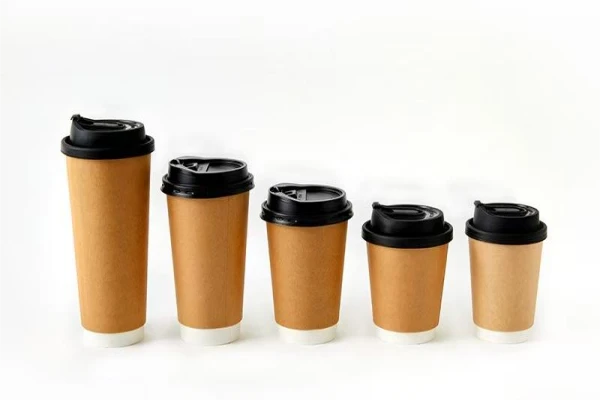
Dealing with this lining has been a big challenge for my entire career. It's a classic case where the feature that makes a product work-its waterproof liner-also complicates its end-of-life. However, progress is being made.
The Separation Problem
Recycling paper works by mixing it with water to create a slurry of paper pulp. The fibers are then cleaned and pressed into new paper. The problem with paper cups is that the plastic lining doesn't break down in this process.
Contamination: When a PE-lined cup enters a standard paper recycling stream, the plastic film contaminates the entire batch of paper pulp. This can ruin the quality of the recycled product, so many facilities simply filter out the cups and send them to the landfill to avoid this issue. Even liquid residue or leftover food in the cups can cause contamination.
Specialized Facilities are Required: There are specialized mills that have the technology to separate the plastic lining from the paper fiber. In these facilities, the cups are pulped for a longer time, allowing the paper fibers to separate. The plastic lining is then screened out. While the paper fiber can be made into new products, the leftover plastic is often used for energy or, in some cases, ends up as waste.
Growing, but Limited, Access: The number of mills that can handle paper cups is growing. In North America, there are now about 40 such facilities, and major cities like New York and San Francisco accept paper cups in their recycling programs. However, this infrastructure is still not widely available everywhere, so for many communities, landfill remains the only option. This is why "wishcycling"-throwing a cup in the bin hoping it gets recycled-can sometimes cause more problems for recycling centers.
Conclusion
Paper cups are a more sustainable choice than plastic due to their renewable source. However, their eco-friendliness is compromised by recycling difficulties. Innovations in compostable and water-based linings are making them a better choice for the planet.


