

Biodegradable Cups Vs. Compostable Cups: Are You Choosing The Right Eco-Friendly Solution?
Leave a message
Biodegradable Cups vs. Compostable Cups: Are You Choosing the Right Eco-Friendly Solution?
Navigating the world of eco-friendly packaging can be confusing, with terms like "biodegradable" and "compostable" often used interchangeably. But for businesses striving for true sustainability, misunderstanding these differences can lead to costly mistakes and greenwashing claims that harm your brand.
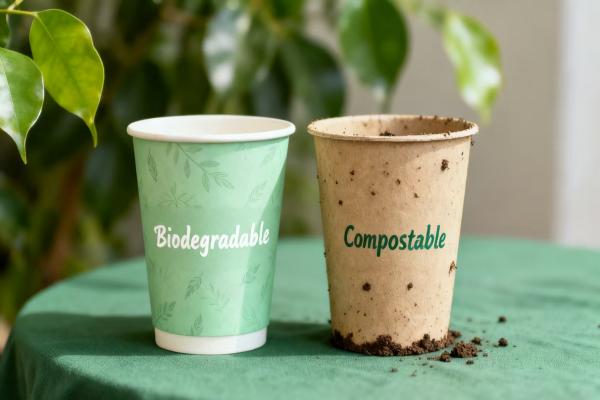
Biodegradable cups break down naturally over an undefined period, often leaving residue, whereas compostable cups break down into non-toxic, nutrient-rich soil within a specific timeframe (usually 90 days) under controlled industrial composting conditions, verified by certifications. This distinction is crucial for effective waste management and environmental impact claims.
In my 20+ years at Amity Packaging, I have seen the paper packaging industry evolve dramatically. Our mission is to empower everyone who uses paper cups and bowls to truly understand paper packaging. Jonh, our expert, always stresses that knowing your materials is not just good for business; it is vital for the planet. Let us cut through the jargon and explain exactly what these terms mean for your purchase decisions.
What is the actual difference between biodegradable and compostable cups?
The terms "biodegradable" and "compostable" are often thrown around interchangeably, causing confusion for buyers trying to make responsible choices. Do you really know what each term implies for your environmental footprint?
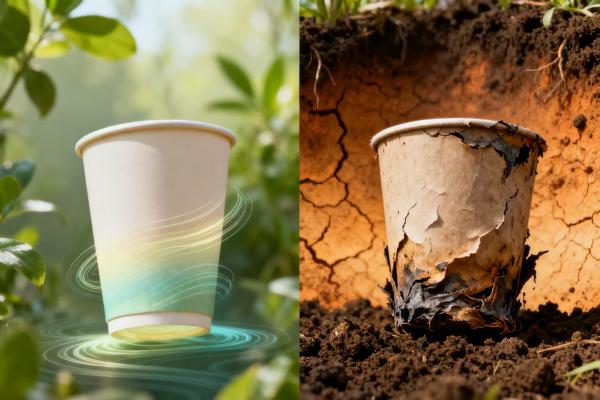
The key difference lies in the conditions and timeframe for degradation: biodegradable cups will break down naturally but without a specific timeline or guaranteed non-toxic residue, while compostable cups are certified to break down into nutrient-rich humus within 90 days under controlled industrial composting facilities, leaving no harmful traces.
My team at Amity Packaging often helps clients understand these crucial distinctions. Jonh, with his 15 years of manufacturing expertise, always makes it clear that the devil is in the details when it comes to material science. I know that true sustainability is about transparency and accuracy, not just buzzwords. Let me explain these differences in more depth so you can confidently make the right choice.
Defining the Ecological Impact of Each Term
Understanding the nuances between biodegradable and compostable is critical for effective waste management and marketing. It is not just about a material decaying; it is about how, where, and what it leaves behind.
Biodegradable: A Broad and Vague Term: When a product is labeled "biodegradable," it simply means it can be broken down by naturally occurring microorganisms (like bacteria and fungi) into natural elements such as water, carbon dioxide, and biomass. However, the term does not specify how long this process takes or under what conditions it occurs. A plastic bag might be biodegradable in 500 years in a landfill, but that does not make it environmentally friendly now. Biodegradable products can break down into tiny plastic fragments (microplastics) if the conditions are not ideal, which can still harm ecosystems. This lack of specific standards means "biodegradable" alone offers limited assurance of environmental benefit in real-world disposal scenarios. We always caution against relying solely on this label.
Compostable: A Defined and Certified Process: Compostable products are a much more specific category. For a cup to be certified compostable, it must meet strict scientific standards, like the American ASTM D6400 or European EN 13432. These standards require the product to:
Degrade completely: It must break down into natural, non-toxic components (CO2, water, inorganic compounds, and biomass).
Disintegrate quickly: At least 90% of the material must break into pieces smaller than 2mm within 12 weeks.
Not harm plant growth: The resulting compost must be non-toxic and support plant life.
Break down within a specific timeframe: Typically 90 days in an industrial composting facility.
The key here is the industrial composting facility. These facilities provide the optimal levels of heat, moisture, and microorganisms needed for compostable materials to break down effectively. My team strongly advocates for compostable solutions when the local infrastructure allows for it, as it offers a verified, closed-loop solution.
The Crucial Role of Certifications: Third-party certifications, such as those from the Biodegradable Products Institute (BPI) in North America or TÜV AUSTRIA (formerly Vincotte) in Europe, are essential. These certifications mean the product has been independently tested and proven to meet the compostable standards. Without such certification, a "compostable" claim is just marketing. We guide our clients toward certified compostable materials like PLA when they want a truly sustainable option.
| Feature | Biodegradable Cups | Compostable Cups | Importance for Buyers |
|---|---|---|---|
| Definition | Breaks down naturally by microbes | Breaks down entirely into non-toxic humus | Defines true environmental benefit |
| Conditions | No specific conditions or timeline | Requires industrial composting facility | Determines proper disposal methods |
| Residue | Can leave microplastics or toxic residue | Leaves no toxic residue; creates nutrient-rich soil | Impacts long-term environmental health |
| Timeline | Undefined; can take hundreds of years | Certified to break down within ~90 days | Crucial for effective waste management |
| Certifications | Generally none for specific breakdown | Requires rigorous third-party certifications (e.g., BPI, EN 13432) | Verifies claims, ensures legitimate eco-friendly product |
By understanding these clear distinctions, you can avoid misconceptions and make truly impactful choices for your business and the environment, ensuring your materials contribute positively to a circular economy.
What Are Compostable Cups Lined With?
You know paper cups need a barrier to hold liquids, but how can a paper cup be compostable if it still needs a lining? What innovative material makes this possible without leaving harmful plastic behind?
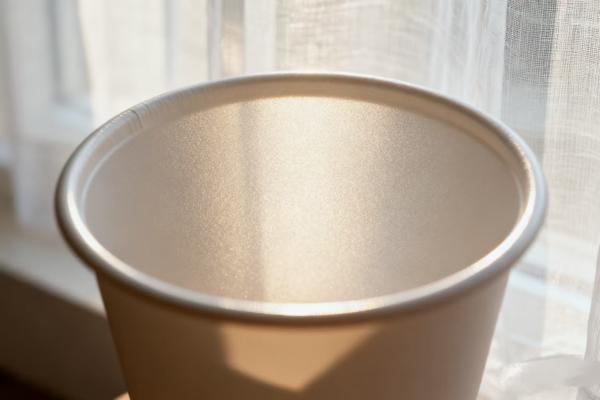
Compostable cups are typically lined with Polylactic Acid (PLA), a bioplastic derived from renewable resources like corn starch, sugarcane, or tapioca. This PLA lining provides the necessary leak-proof barrier, yet it is designed to fully break down into natural components under specific industrial composting conditions.
At Amity Packaging, we pride ourselves on staying at the forefront of material innovation. Our commitment to sustainability means actively seeking and utilizing materials that genuinely support environmental protection. Jonh, our mechanical engineer, is always evaluating new materials. He ensures that our choices are practical and eco-conscious, so our clients can trust our compostable cup solutions.
The Science of PLA as a Compostable Lining
Polylactic Acid (PLA) is the unsung hero of many compostable products, offering a viable alternative to traditional petroleum-based plastics. Its unique properties allow it to function effectively as a barrier while being environmentally responsible in its end-of-life.
What is PLA? A Plant-Based Polymer: Unlike conventional plastics (like PE), which are derived from fossil fuels, PLA is a bioplastic made from fermented plant starches. Common sources include corn, sugarcane, and cassava (tapioca root). The glucose from these plants is converted into lactic acid through fermentation, which is then polymerized to create PLA. This renewable resource base is a significant environmental advantage, as it reduces reliance on finite fossil fuels. My team ensures we source this raw material from suppliers who adhere to our strict sustainability commitment.
Barrier Properties for Liquid Containment: PLA possesses excellent barrier properties against water and oil. When used as a thin coating on paperboard, it creates a robust, leak-proof internal surface, allowing the paper cup to hold hot or cold liquids without quickly becoming soggy or leaking. This functionality is crucial for maintaining the performance expectations of a disposable cup, ensuring that beverages are contained reliably from filling to consumption.
Compostability under Industrial Conditions: The magic of PLA lies in its ability to break down under specific conditions. In an industrial composting facility, which maintains temperatures between 55-60°C (130-140°F) and controlled moisture levels, microorganisms consume the PLA. It metabolizes into carbon dioxide, water, and biomass in about 90 days. This process ensures that the cup fully biodegrades and adds valuable nutrients to the soil without leaving behind microplastics or toxic residues. It is important to emphasize that PLA typically does not compost effectively in backyard compost bins or landfills, as these environments lack the necessary heat and microbial activity.
Thermal Limitations and Innovation: While excellent for cold drinks, earlier versions of PLA had a lower heat tolerance, making them unsuitable for very hot beverages, as they could soften too much. However, advancements in PLA technology have led to high-heat PLA (H-PLA) formulations, often achieved through crystallization or blending, that can withstand temperatures suitable for hot coffees and teas. This innovation has broadened the application of PLA-lined compostable cups, making them versatile for a wider range of food service items. We continuously keep up with the latest innovations in eco-friendly materials to improve product performance.
Environmental Benefits: By choosing PLA-lined compostable cups, businesses contribute to reducing plastic pollution, decreasing reliance on fossil fuels, and diverting waste from landfills. When properly composted, these cups can help create nutrient-rich soil, supporting a circular economy.
| Aspect | PLA (Polylactic Acid) Lining | Traditional PE Lining (for comparison) |
|---|---|---|
| Material Source | Renewable plant starches (corn, sugarcane, tapioca) | Finite fossil fuels (petroleum) |
| Compostability | Fully compostable in industrial facilities (90 days) | Not compostable; persists in environment |
| Degradation Product | CO2, water, biomass, nutrients (non-toxic) | Microplastics, persists for potentially hundreds of years |
| Barrier Performance | Excellent for water/oil; good for hot/cold (with H-PLA) | Excellent for water/oil; good for hot/cold |
| Environmental Impact | Reduces fossil fuel reliance, aids circular economy (if composted) | Contributes to plastic pollution, landfill burden |
The development and adoption of PLA as a lining material is a testament to the industry's drive for more sustainable packaging, allowing paper cups to remain functional while being truly compostable.
Why are biodegradable and compostable materials so crucial for businesses?
In today's market, customers are increasingly conscious of their purchases' environmental impact. Are you aware of how choosing unsustainable packaging options could hurt your brand and bottom line?
Biodegradable and compostable materials are crucial for businesses because they meet growing consumer demand for sustainability, enhance brand reputation, comply with evolving environmental regulations, and contribute to diverting waste from landfills, fostering a positive public image and securing long-term market relevance.

At Amity Packaging, our eco-driven mindset is an integral part of our business strategy. We firmly believe that business growth must align with environmental protection. Jonh and I have seen firsthand how strategically adopting sustainable practices can be a powerful differentiator. It is not just about being green; it is about smart business.
The Multifaceted Benefits of Sustainable Packaging for Businesses
The shift towards biodegradable and compostable materials is more than a trend; it is a strategic imperative that offers substantial competitive advantages and safeguards a business's future.
Meeting Consumer Demand and Building Brand Loyalty: Modern consumers, particularly younger demographics, prioritize sustainability. They actively seek out brands that demonstrate environmental responsibility. By using compostable cups, businesses can directly appeal to this market segment, boosting customer loyalty and attracting new eco-conscious clients. Transparency about your materials and disposal methods strengthens trust and creates a positive emotional connection with your brand. This leads to repeat business and positive word-of-mouth.
Enhancing Brand Reputation and Image: In a crowded marketplace, sustainability can be a key differentiator. Brands that visibly commit to eco-friendly practices are often perceived as more innovative, ethical, and forward-thinking. This positive brand image extends beyond just the product; it reflects on the company's overall values and corporate social responsibility (CSR). A strong eco-friendly reputation can lead to increased brand equity and make a business more attractive to employees, partners, and investors.
Compliance with Evolving Regulations and Future-Proofing: Governments worldwide are implementing stricter regulations on single-use plastics and promoting circular economy principles. By proactively embracing compostable alternatives, businesses can stay ahead of impending bans and taxes on conventional plastics. This foresight not only ensures compliance but also positions the business as a leader in sustainable practices, minimizing the risk of future operational disruptions and costly transitions.
Reducing Environmental Impact and Supporting a Circular Economy: The most direct benefit is the reduction of plastic waste in landfills and oceans. Choosing properly certified compostable materials, especially when paired with accessible composting infrastructure, allows packaging to return to the earth as valuable soil amendments. This supports a genuinely circular economy where resources are reused and regenerated, significantly lessening the ecological footprint of a business over time. Our goal is to partner with global clients to promote these eco-friendly products.
Operational Benefits and Cost Savings (Long-Term): While the initial cost of compostable packaging might sometimes be slightly higher, the long-term benefits can offset this. This includes avoiding potential fines for non-compliance, gaining access to markets that demand sustainable packaging, and potentially reduced waste disposal costs if composting facilities offer lower rates than traditional landfilling. It also reduces the reputational damage and lost sales associated with being perceived as environmentally irresponsible.
| Business Benefit | How Eco-Materials Deliver | Impact on Business Longevity |
|---|---|---|
| Customer Appeal | Meets consumer demand for sustainability | Increased loyalty, new customer acquisition |
| Brand Image | Positions business as ethical, innovative, responsible | Enhanced reputation, stronger brand equity |
| Regulatory Compliance | Future-proofs against plastic bans/taxes | Avoids fines, ensures market access, leadership position |
| Environmental Impact | Reduces plastic waste, supports circular economy | Lower ecological footprint, positive societal contribution |
| Operational Efficiency | Potentially lowers waste costs, opens new markets | Long-term cost savings, sustainable growth |
By making conscious choices about their materials, businesses are not just reacting to environmental concerns; they are actively shaping a more sustainable future for themselves and the planet, truly becoming promoters and enablers in their industry.
How quickly do biodegradable cups decompose in real-world scenarios?
You have heard that biodegradable cups break down naturally, but what does "naturally" truly mean outside of a perfect lab setting? Will these cups truly disappear quickly in a common environment like a landfill or the ocean?
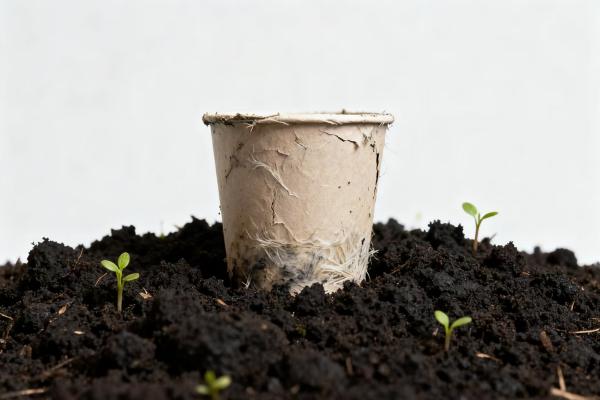
In real-world scenarios, "biodegradable" cups decompose very slowly, if at all, especially in landfills or marine environments lacking the specific conditions (oxygen, moisture, microbes, high temperatures) required for proper breakdown. Without industrial composting, they can persist for decades, fragmenting into microplastics and failing to deliver their promised environmental benefits.
This is an area where I have seen a lot of misunderstanding, and Jonh always makes sure to manage expectations. At Amity, our commitment to environmental responsibility means we are honest about the limitations of products. Simply labeling something "biodegradable" does not guarantee a quick, clean disappearance; reality is often far more complex.
The Harsh Reality of Biodegradable Degradation in Varied Environments
The term "biodegradable" without specific certifications often creates an illusion of environmental friendliness that does not hold up in common disposal scenarios. The conditions for true biodegradation are rarely met in nature or our current waste infrastructure.
Landfill Environments: A Biological Desert: Contrary to popular belief, modern landfills are designed to minimize decomposition. They are typically anoxic (lacking oxygen) and dry, tightly packed environments. Even organic materials like food waste struggle to break down quickly here. A "biodegradable" cup, especially one not certified compostable, will find it nearly impossible to decompose fully or quickly in a landfill. Instead, it might break down very slowly, anaerobically producing methane (a potent greenhouse gas), or persist for many decades, effectively acting like conventional plastic. The conditions needed for specific microbes to eat the cup are simply not present.
Marine Environments: A Slow and Fragmented Process: The ocean presents an even more challenging environment for degradation. While microorganisms exist, the cold temperatures, lack of consistent oxygen, and specific microbial communities in marine waters mean that most "biodegradable" plastics break down extremely slowly, if at all. Instead of disappearing, they often fragment into microplastics. These tiny plastic pieces are just as harmful as those from conventional plastics, entering the food chain and accumulating in marine life. A "biodegradable" label on a cup does not mean it is ocean-safe.
Home Composting: Insufficient Conditions: Many consumers imagine "biodegradable" products breaking down in a backyard compost pile. However, most materials, particularly PLA-lined cups (even certified compostable ones), require the higher temperatures and controlled microbial activity of an industrial composting facility. A home compost pile rarely reaches the sustained temperatures (55-60°C) necessary to effectively break down these materials within a reasonable timeframe. They will likely persist for years or remain largely intact.
The Problem of Mislabeling and Greenwashing: The lack of strict regulation around the term "biodegradable" has led to widespread greenwashing. Companies can label products as such even if they only break down under perfect lab conditions that do not exist in the real world. This misleads consumers and businesses, diverting attention and resources from truly sustainable disposal solutions like certified industrial composting for compostable products. My team always emphasizes the importance of certified compostable products over vaguely "biodegradable" ones.
The Case for Certified Compostable: This is why choosing certified compostable materials (e.g., BPI-certified PLA-lined cups) is so critical. These products are designed to decompose under specific, managed conditions in industrial composting facilities. When these facilities are available and products are properly collected and processed, they return to the earth as healthy soil rather than polluting land or sea.
| Environment | Conditions Present | Decomposition Rate of "Biodegradable" Cups | Impact on Environment |
|---|---|---|---|
| Landfill | Anoxic, dry, tightly packed | Very slow to none | Persists, potentially releases methane |
| Marine | Cold, low oxygen, dispersed microbes | Extremely slow, fragments into microplastics | Harmful to marine life, enters food chain |
| Home Compost | Lower temps, inconsistent conditions | Very slow, incomplete breakdown | May remain intact, frustrates proper composting efforts |
| Industrial Compost | High temps, controlled moisture/microbes | Rapid (if certified compostable) | Breaks down into CO2, water, biomass, non-toxic soil (ideal) |
In conclusion, while the intention behind "biodegradable" is good, its real-world performance often falls short. For genuine environmental benefit and responsible waste management, certified compostable products processed in appropriate industrial facilities are the more reliable choice.
Conclusion
Distinguishing biodegradable from compostable cups is crucial for genuine sustainability. Biodegradable implies slow, uncertified breakdown, while compostable ensures certified, rapid decomposition into soil in industrial composting. Choosing truly compostable, especially those with PLA lining, is vital for brand reputation, compliance, and effective waste diversion, although their real-world decomposition relies heavily on accessible industrial composting.


