What Are The 3 Main Types Of Disposable Paper Cups?
Leave a message
What Are the 3 Main Types of Disposable Paper Cups?
Not all paper cups are made the same. The right choice depends on heat insulation, moisture resistance, and the product you serve.
Single wall, double wall, and ripple wall cups each serve different purposes-from cost-saving hot cups to grip-enhanced premium options for hot beverages.

In over 21 years of manufacturing cups for clients worldwide, I've seen misunderstandings about cup types lead to wrong orders that cost time and money. A cup might hold coffee but fail for iced drinks-or vice versa. Knowing the core types is essential.
How Do Single Wall, Double Wall, and Ripple Wall Cups Differ?
These three hot cup types vary in construction, insulation, grip, and price.
Single wall is the simplest and cheapest, double wall adds insulation, ripple wall adds both insulation and grip.

When I first started, a chain café upgraded from single wall to double wall for takeaway lattes-it cut sleeve costs entirely. Ripple cups later became their premium option for customers who wanted the best hand-feel.
Cup Construction Comparison
| Type | Structure | Benefits | Common Use |
|---|---|---|---|
| Single Wall | One paperboard layer, coated inside. | Lowest cost; works with sleeves. | Coffee, tea when paired with sleeve. |
| Double Wall | Inner cup plus outer layer with air gap. | Better insulation; cool to hold. | Premium coffee, soup. |
| Ripple Wall | Double wall with corrugated outer layer. | Best grip; top insulation. | Upscale hot drinks, without sleeves. |
Cost rises from single to double to ripple wall due to extra materials and steps.
What Coatings Work Best for Each Cup Type?
Hot and cold drinks need different barrier coatings inside-and sometimes outside-the cup.
Hot cups use inner linings (PE, PLA, aqueous), cold and dessert cups often use double-sided coatings to combat condensation.

I explain to clients: Aqueous coating is moving fast in market share for eco reasons, but traditional PE lining still leads for cost efficiency. PLA is the mid-tier eco upgrade.
Coating Options
| Coating | Properties | Sustainability |
|---|---|---|
| PE | Reliable plastic lining; waterproof. | Widely recyclable, not compostable. |
| PLA | Plant-based bioplastic; waterproof. | Compostable; higher cost. |
| Aqueous | Water-based, plastic-free. | Compostable, recyclable; newest tech. |
Double-sided coatings are common for cold and dessert cups to handle outside moisture.
How Do Cold Cups Differ from Hot Cups?
Cold drink cups are made to resist outside moisture from condensation.
They use double-sided coatings to keep cups rigid and dry, making them more expensive than single-coated hot cups.

I once saw a new café open with hot cups for iced coffees-within hours, cups were soft and leaking. Switching to true cold cups fixed it immediately.
Cold Cup Features
| Construction | Coating | Typical Product |
|---|---|---|
| Single wall, stiff board | Inner and outer PE/PLA/Aqueous lining | Iced coffee, soda, smoothies |
The outer coating is the shield against damp hands and table rings.
Why Are Dessert Cups Built Stronger?
Dessert cups are made for heavy, frozen contents and long moisture exposure.
They have thicker paperboard and often double-sided coating to prevent collapse or sogginess.
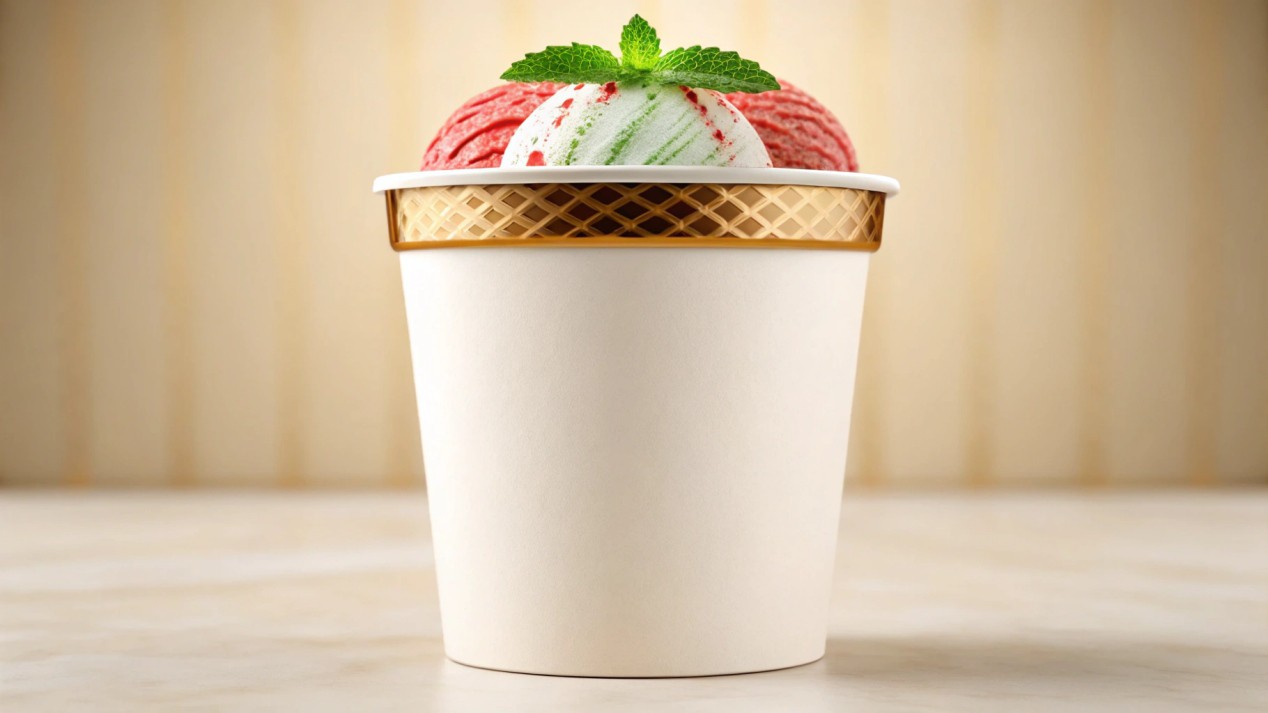
In producing for gelato brands, I've learned they care as much about the cup's sturdiness in a freezer case as they do about print quality. Heavy board is non-negotiable.
Dessert Cup Specs
| Shape | Board Weight | Coating | Uses |
|---|---|---|---|
| Short, wide-mouth | High GSM (e.g., 300–350) | Double-sided PE/PLA/Aqueous | Ice cream, frozen yogurt, fruit salads |
Heavier board increases both performance and cost.
Conclusion
Match your cup type to the product: single wall for economy, double or ripple wall for hot-drink comfort, double-coated for cold or dessert use-ensuring performance, safety, and brand quality.