What Are The Differences Of Single Layer Instant Noodle Cups And Double Layer Instant Noodle Cups?
Leave a message
What are the Differences of Single Layer Instant Noodle Cups and Double Layer Instant Noodle Cups?
Instant noodles have become a global staple, valued for their convenience, affordability, and quick preparation. Yet, one often overlooked element that significantly influences the eating experience is the instant noodle cup itself. Whether you are a food manufacturer, a restaurant offering takeaway noodles, or a consumer who enjoys a quick meal at home, understanding the differences between single layer instant noodle cups and double layer instant noodle cups can help you make better choices.
This guide dives deep into their structural design, material quality, insulation properties, and practical applications-ensuring you have the clarity needed when selecting the right cup for your business or everyday use.
Why the Design of Instant Noodle Cups Matters
At first glance, a cup may just look like a simple container. However, the design of instant noodle cups plays a critical role in both safety and functionality. They must hold hot liquid, withstand boiling water, and remain comfortable to hold. A poorly designed cup can lead to leaks, burns, or soggy packaging that negatively impacts both customer satisfaction and brand reputation.
Before exploring the detailed differences, let's establish why the construction of single and double layer cups exists in the first place.
Single Layer Instant Noodle Cups: Simplicity and Affordability
Single layer cups are the most common type in the market, often used for budget-friendly products and mass distribution.

Key Characteristics
Material: Usually made from paperboard or plastic with a thin coating for leak resistance.
Lightweight: Easy to transport and cost-effective for manufacturers.
Production Scale: Ideal for mass production, allowing food brands to keep costs down.
Pros
Lower cost compared to double layer options.
Suitable for dry noodles or smaller portion sizes.
Widely available and compatible with standard lids.
Cons
Limited insulation, making the cup hot to touch.
May soften or lose rigidity when exposed to boiling water for extended periods.
Less premium in appearance, which can impact brand image.
In short, single layer instant noodle cups are perfect for businesses focused on affordability and fast turnover but may not meet the expectations of premium or dine-in brands.
Double Layer Instant Noodle Cups: Comfort and Performance
As consumer expectations rise, more brands are turning to double layer designs for a better dining experience. These cups are engineered to offer both practicality and premium presentation.
Key Characteristics
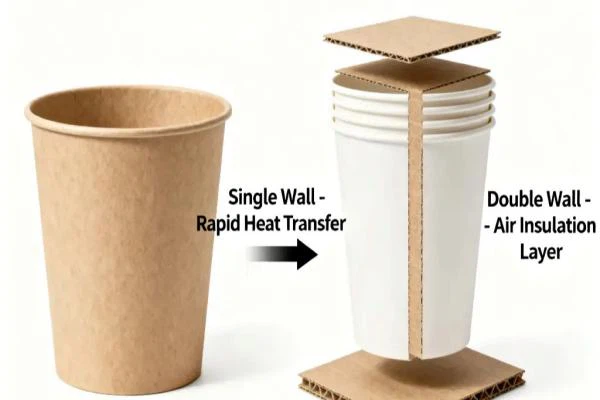
Two-Layer Structure: An inner layer for food safety and leak protection, with an outer sleeve for insulation.
Heat Insulation: Keeps the cup cooler to hold, even with boiling water inside.
Strength and Durability: Less likely to deform under pressure or during delivery.
Pros
Superior heat resistance, enhancing safety.
Premium appearance that elevates brand image.
Better suited for delivery services or dine-in experiences.
Cons
Higher manufacturing and shipping costs.
Slightly heavier than single layer cups.
Ultimately, double layer instant noodle cups cater to businesses that prioritize brand value, customer satisfaction, and food safety.
Comparing Single vs. Double Layer Instant Noodle Cups
To decide between single and double layer noodle cups, one must consider both operational and branding factors.
Insulation and Safety
Single Layer: Transfers heat quickly, making the cup hot to handle.
Double Layer: Provides insulation, ensuring safer handling.
Cost Efficiency
Single Layer: Budget-friendly, ideal for low-cost noodles.
Double Layer: Higher initial cost but enhances customer experience.
Brand Perception
Single Layer: Associated with economy and mass-market appeal.
Double Layer: Conveys a premium, eco-conscious, and customer-first image.
Application Scenarios
Single Layer: Convenience stores, low-cost product lines, emergency rations.
Double Layer: Premium restaurants, online food delivery, specialty noodle brands.
Material Considerations for Instant Noodle Cups
The choice between single and double layers is not the only factor; the materials used also affect functionality.
Paperboard with Coating
Provides leak resistance and maintains structure but varies in eco-friendliness depending on coating type.
Biodegradable Coatings
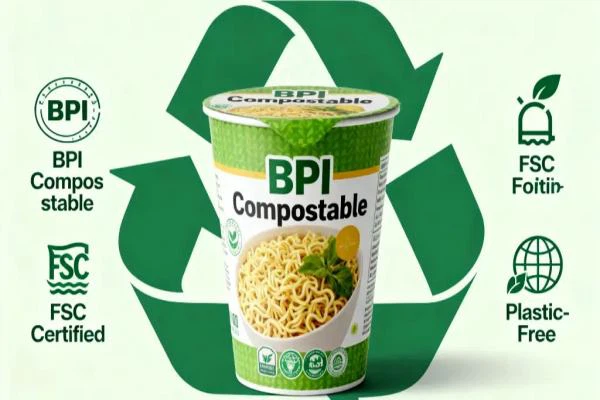
Plant-based or water-based coatings are becoming popular for eco-friendly noodle cups.
Reinforced Kraft Paper
Strong, durable, and sustainable-often used in double layer cup production for premium branding.
By choosing eco-friendly materials, businesses not only meet consumer demands but also comply with evolving regulations on single-use plastics.
Which Instant Noodle Cup is Right for You?
The decision between single and double layer cups should align with your brand strategy, budget, and target market.
Startups or budget-focused businesses may find single layer cups to be the most practical choice.
Established or premium brands aiming to enhance customer experience and safety should consider investing in double layer cups.
Regardless of the choice, ensuring that the instant noodle cups are made from safe, food-grade, and preferably eco-friendly materials will always remain the priority.
Final Thoughts
The humble instant noodle cup is much more than just a container-it is an essential part of the customer experience. From cost-effective single layer cups to premium double layer options, each has its role in the foodservice and retail landscape. Businesses that carefully evaluate their packaging not only protect food quality but also elevate brand image and customer loyalty.
If your company is looking for high-quality and customizable instant noodle packaging solutions, Amity Packaging offers innovative options tailored to meet both practical and branding needs. Choosing the right cup today sets the foundation for stronger customer trust tomorrow.